The Everest Base Camp Comfort Trek offers a unique blend of adventure and comfort, providing trekkers with a chance to experience the majesty of the Everest region without sacrificing essential amenities. Unlike traditional base camp treks that may require a more rugged, basic experience, this trek ensures a high level of comfort throughout the journey. The trek starts from Lukla, following the scenic routes through Sherpa villages like Namche Bazaar, Tengboche, and Dingboche. Along the way, trekkers will stay in carefully selected, well-equipped lodges that offer private rooms, warm bedding, and hot showers, which are a luxury in the Himalayas. With trained guides and porters, trekkers are provided with a sense of security and convenience, allowing them to focus on the spectacular views and natural beauty surrounding them.
The trek offers an unparalleled experience of Nepal’s Everest region with a comfortable pace and high-quality services. Whether you’re marveling at the views of the iconic peaks like Everest, Lhotse, and Nuptse, or exploring the Buddhist monasteries along the way, this trek caters to those looking to enjoy the journey without the harsher conditions typically associated with trekking in such high-altitude environments. The Everest Base Camp Comfort Trek is perfect for those who seek an adventure without compromising on the comfort of their stay and the overall experience.
Best Everest Trekking Blogs to Read Before You Go
Discover essential insights, tips, and firsthand stories from experienced trekkers in these top Everest trekking blogs—perfect for planning your adventure to the world's highest peak.
The Necessary Permits for Everest Base Camp Trekking
Comfortable Stays on the Way to Everest Base Camp
Step by Step to the Top: Elevation Guide for Everest Base Camp
How to Choose the Right Everest Base Camp Trek Route
Top Tips for a Successful Everest Base Camp Trek
Cost of Everest Base Camp Trek: A Step-by-Step
Is Everest Base Camp Trekking Hard?
Everest Base Camp Trek in April
Everest Base Camp Trek in March
Top Most Popular Places in Everest Region Trekking
Best Time For Everest Base Camp Helicopter Tour
The Ultimate Heli Tour to Everest Base Camp: A bird’s-Eye Adventure
Exploring Namche Bazaar: The Gateway to the Everest Region
Everest Base Camp vis Cho La Pass Trek 2024
Which Lake is Better: Gokyo or Tilicho?
Everest Base Camp Trek vs Annapurna Base Camp Trek
Pikey Peak Trek: The Best View of Everest
Exploring the Everest Region: A Trekking Adventure of a Lifetime
Mastering Everest: Complete Guide to Trekking to Everest Base Camp
Challenges of Exploring Mount Everest
Conquering the Roof of the World: A Comprehensive Guide to Mount Everest
A Complete Guide To Everest Base Camp Trek- 2022/2023
The Ultimate Guide to Trekking in Nepal’s Off the Beaten Path Routes
Everest Base Camp Trek by Road: Tips, Guide & Itinerary
What to Pack for Everest Base Camp Trek
Why Lukla Airport Is Called the World’s Most Dangerous Airport
Fun Facts About the Everest Base Camp Trek
Top Seasons for Trekking and Tours in Nepal
Everest Base Camp Comfort Trekking Permits
To trek to Everest Base Camp, trekkers need to obtain several permits to ensure safe passage through the region. The essential permits required for the Everest Base Camp Comfort Trek are the Sagarmatha National Park Permit and the TIMS (Trekkers' Information Management System) Card. The Sagarmatha National Park Permit grants access to the protected area surrounding Mount Everest, ensuring that trekkers adhere to conservation efforts while in the region. The TIMS card helps the government track the trekkers and ensures their safety during the journey.
Himalayan Forever Treks helps streamline the permit process for trekkers, ensuring all necessary paperwork is completed before the trek begins. As part of our service, we take care of securing these permits for you, which is one less thing to worry about when preparing for this incredible adventure. Our knowledgeable team will ensure that all your permits are valid and processed, allowing you to focus solely on your trekking experience, confident that everything is in place for a smooth journey.
Everest Base Camp Comfort Trekking Route
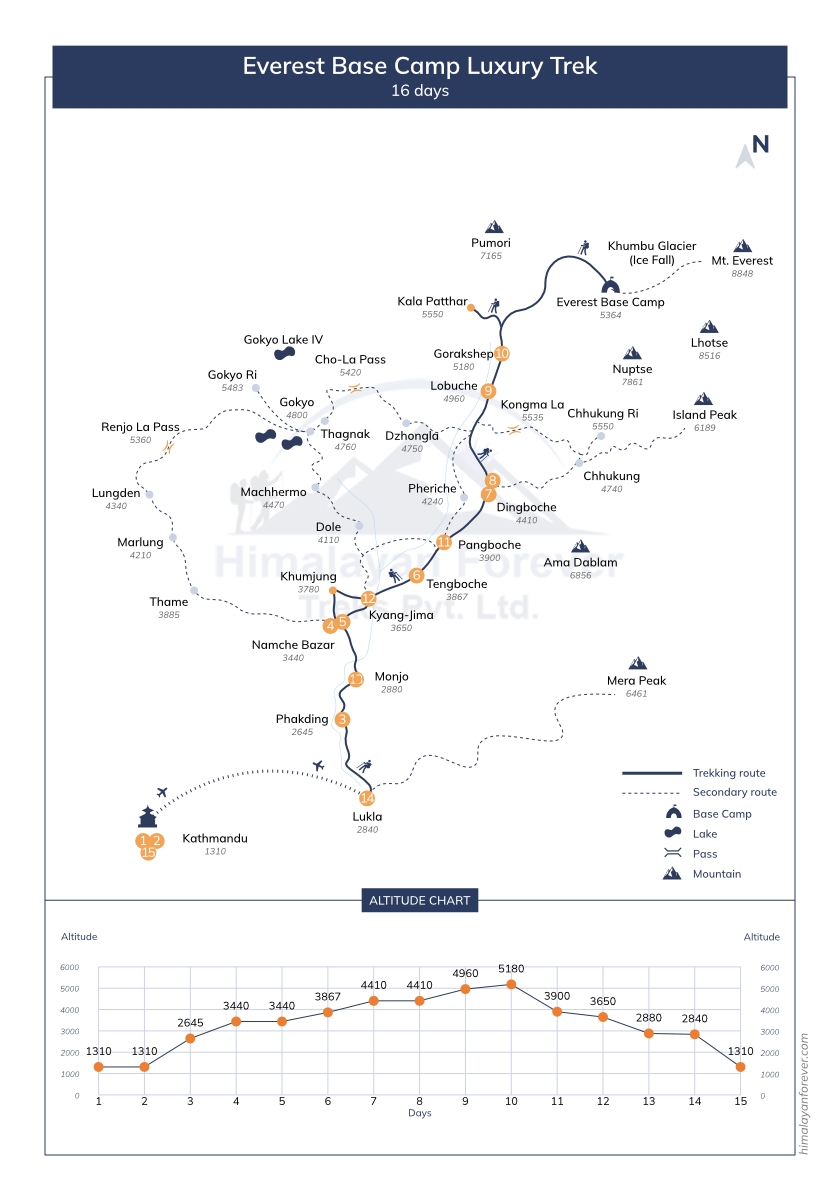
The Everest Base Camp Comfort Trekking Route is a well-established path that has been developed to provide trekkers with a gradual, comfortable ascent to Everest Base Camp. The trek begins with a scenic flight from Kathmandu to Lukla, the gateway to the Everest region. From Lukla, the trek passes through lush valleys, picturesque villages, and ancient monasteries. The first major stop is Namche Bazaar, the bustling Sherpa town, which serves as an acclimatization point. From here, trekkers continue through the serene landscapes of Tengboche with its famous monastery, then onward to Dingboche and Lobuche, where trekkers begin to feel the thinning air of higher altitudes.
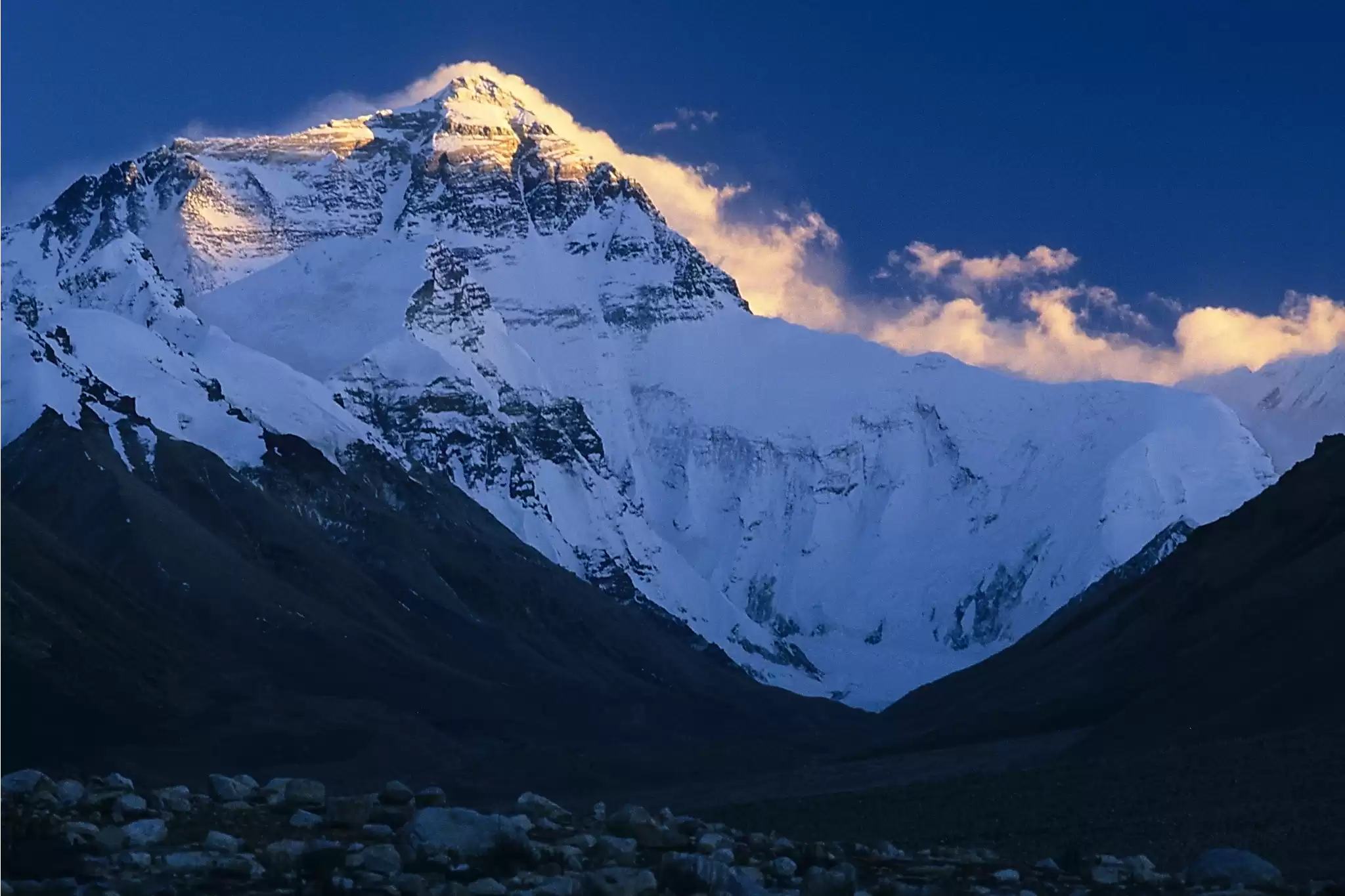
The final push to Everest Base Camp takes you along the Khumbu Glacier, where you can enjoy breathtaking panoramic views of Mount Everest, Lhotse, Nuptse, and other towering peaks. Unlike the more strenuous routes, the Everest Base Camp Comfort Trek is designed to provide ample time for acclimatization and to allow trekkers to ascend at a more relaxed pace. The inclusion of comfortable accommodations along the way ensures that you can rest and rejuvenate after each day's trek, making it an ideal option for those seeking a more laid-back trekking experience.
Everest Base Camp Comfort Trekking Difficulty
The Everest Base Camp Comfort Trek is considered moderate in terms of difficulty, making it accessible to trekkers with basic fitness and some prior trekking experience. While the trek involves significant elevation gains (Everest Base Camp is at 5,364 meters), the slower pace and more comfortable accommodations minimize the physical strain typically associated with high-altitude trekking. However, due to the altitude, there are challenges that must be respected, including potential altitude sickness. This is why acclimatization is an essential part of the trek, and the journey is designed to allow for gradual elevation increases and proper rest.
Although the trek itself does not involve technical climbing or extreme physical exertion, the altitude can be a factor, so it is important for trekkers to be in good physical health and prepared for long days of walking. The most challenging sections are the final approaches to Everest Base Camp and the long descent back to Lukla. However, with proper preparation, a healthy pace, and support from professional guides and porters, the trek remains accessible to most people. Himalayan Forever Treks ensures that the journey is as comfortable as possible, with a focus on safety and well-being throughout the entire trek.
Planning Your Everest Base Camp Comfort Trek
Before setting foot on this exhilarating journey, proper planning is essential. Choosing the right tour operator is crucial to ensure a seamless and enjoyable experience. Look for operators with a reputation for providing luxurious amenities and excellent customer service. Additionally, consider the best time to undertake the trek, typically during the spring and autumn months when the weather is favorable and the skies are clear.
Acclimatization is another important aspect to consider. The trek to Everest Base Campinvolves ascending to high altitudes, which can pose health risks if not approached cautiously. Plan for adequate rest days and gradual altitude gain to allow your body to adjust to the thin air.
The Route: Exploring Everest Base Camp
The journey to Everest Base Camp is not just about reaching the destination but also about the incredible experiences along the way. As you trek through the picturesque Himalayan landscapes, you'll encounter breathtaking vistas of snow-capped peaks, serene mountain villages, and vibrant Buddhist monasteries.
Luxury accommodations dot the route, offering plush rooms, gourmet dining, and rejuvenating spa treatments after a day of trekking. Whether it's cozy mountain lodges or deluxe tented camps, you'll find comfort and relaxation amidst the rugged terrain.
Luxurious Amenities on the Trek
One of the highlights of the Everest Base Camp Luxury Trek is the array of premium amenities available to travelers. Indulge in sumptuous meals prepared by skilled chefs using fresh, locally sourced ingredients. After a day of hiking, unwind with a soothing massage or soak in a hot tub overlooking the majestic mountains.
Expert guides accompany you every step of the way, providing valuable insights into the local culture, flora, and fauna. Their expertise ensures a safe and enriching experience, allowing you to focus on soaking in the beauty of your surroundings.
Safety and Comfort Measures
Safety is paramount on any trek, especially in the challenging terrain of the Everest region. Luxury trek operators prioritize the well-being of their guests, providing access to medical facilities and emergency evacuation services if needed. Additionally, they supply high-quality gear and equipment to ensure your comfort and safety throughout the journey.
Pricing and Packages
While luxury comes at a price, Everest Base Camp Luxury Trek packages vary to accommodate different budgets. Compare offerings from various operators to find a package that suits your preferences and financial considerations. Keep in mind that the cost often includes accommodations, meals, permits, guide services, and transportation, offering excellent value for the experience.
Experiencing the Everest Region
Beyond the trek itself, the Everest region offers a wealth of cultural and sightseeing opportunities. Immerse yourself in the rich Tibetan Buddhist heritage as you visit ancient monasteries and interact with local Sherpa communities. Explore the bustling streets of Namche Bazaar, the gateway to the Everest region, and shop for unique souvenirs to commemorate your journey.
Sustainability and Responsible Tourism
As stewards of the environment, luxury trek operators are committed to sustainable and responsible tourism practices. They minimize their ecological footprint by implementing waste management systems, promoting energy conservation, and supporting local conservation initiatives. By choosing a responsible operator, you can enjoy your trek knowing that you're contributing to the preservation of this pristine wilderness.
1. What is the Everest Base Camp Comfort Trek?
The Everest Base Camp Comfort Trek is a modified version of the classic Everest Base Camp trek, designed for trekkers who want to experience the grandeur of the Everest region without sacrificing comfort. While the traditional trek involves basic teahouse accommodations, this comfort trek offers upgraded, more comfortable lodging, better meals, and a more relaxed trekking pace. It’s perfect for those who want to reach Everest Base Camp while enjoying a higher level of comfort and a more luxurious trekking experience in the heart of the Himalayas.
2. How is the Everest Base Camp Comfort Trek different from the standard trek?
The main difference between the Everest Base Camp Comfort Trek and the standard trek lies in the level of accommodation and service. On this trek, you will stay in premium lodges and higher-end teahouses with better amenities, such as private rooms, better bedding, hot showers, and more varied food options. The trekking route is similar to the classic Everest Base Camp trek, but with a more relaxed pace and additional acclimatization days to ensure a comfortable and safe experience.
3. How long does the Everest Base Camp Comfort Trek take?
The Everest Base Camp Comfort Trek typically takes 14 to 16 days, depending on the specific itinerary. This includes time for acclimatization and exploration. The trek begins with a scenic flight to Lukla and continues through Sherpa villages, leading to Everest Base Camp. The trek is carefully planned with enough rest days to allow for proper acclimatization to the altitude, which is essential for a safe and enjoyable journey to Everest Base Camp.
4. What is the difficulty level of the Everest Base Camp Comfort Trek?
The Everest Base Camp Comfort Trek is considered moderate to challenging, as it involves trekking at high altitudes. However, it is designed with comfort in mind and includes extra acclimatization days to help reduce the risk of altitude sickness. The trek covers a variety of terrain, from lush forests and picturesque villages to rocky paths and high-altitude landscapes. While it requires good physical fitness, the more relaxed pace makes it accessible to a wider range of trekkers compared to the traditional Everest Base Camp trek.
5. What kind of accommodation can I expect on the Everest Base Camp Comfort Trek?
On the Everest Base Camp Comfort Trek, you will stay in premium teahouses and lodges, which are selected for their comfort and quality. These accommodations provide private rooms with comfortable beds, warm blankets, and clean facilities. Most lodges have hot showers (in lower elevations), modern amenities, and even Wi-Fi in some areas. While the rooms are basic by international standards, they are far superior to the standard teahouses typically used on the classic Everest Base Camp trek. The goal is to ensure that you have a comfortable and restful experience during your trek.
6. What type of food is available on the Everest Base Camp Comfort Trek?
The food on the Everest Base Camp Comfort Trek is a combination of local Nepali, Tibetan, and Western-style dishes. At higher elevations, the menu may be limited, but you can expect a variety of options such as dal bhat (lentil soup with rice), momo (dumplings), pasta, noodles, pancakes, and more. In the upgraded teahouses and lodges, the quality of food is better than on the standard trek, with fresher ingredients and more variety. As with any high-altitude trek, it's essential to stay hydrated and choose meals that are easier to digest in the altitude.
7. Is a guide and porter necessary for the Everest Base Camp Comfort Trek?
Yes, having a guide and porter is highly recommended for the Everest Base Camp Comfort Trek. Our experienced guides are knowledgeable about the trail, local culture, and safety measures, ensuring that you have a safe and enjoyable trek. They are also trained in first aid and altitude sickness prevention. Porters can help carry your luggage, allowing you to trek with a lighter load, making the journey more comfortable. At Himalayan Forever Treks, we provide professional guides and porters to ensure your comfort and safety throughout the trek.
8. How high is Everest Base Camp, and what should I know about altitude sickness?
Everest Base Camp sits at an altitude of 5,364 meters (17,598 feet). Trekking to such high altitudes can pose a risk of altitude sickness, which is why proper acclimatization is essential. The Everest Base Camp Comfort Trek includes rest days at strategic points, such as Namche Bazaar and Dingboche, to help your body adjust to the changing altitude gradually. Our guides are trained to recognize the symptoms of altitude sickness, and we encourage trekkers to stay well-hydrated, avoid overexertion, and follow the pace of the group.
9. What is the weather like on the Everest Base Camp Comfort Trek?
The weather on the Everest Base Camp Comfort Trek varies with altitude and season. During the spring (March to May) and autumn (September to November), the weather is typically clear, with daytime temperatures ranging from 10°C to 20°C (50°F to 68°F) at lower elevations, but temperatures can drop to freezing or below at night and at higher altitudes. Winter (December to February) can be very cold, with snow and freezing temperatures, while summer (June to August) brings monsoon rains, which can make trekking conditions challenging. Therefore, spring and autumn are the best seasons for the trek.
10. Do I need any special permits for the Everest Base Camp Comfort Trek?
Yes, trekkers need two main permits for the Everest Base Camp trek: a Sagarmatha National Park Permit and a TIMS (Trekkers’ Information Management System) Card. These permits are required to enter the protected area of the Everest region and to ensure the safety and regulation of trekking activities. Himalayan Forever Treks will arrange all necessary permits on your behalf, so you don’t need to worry about the paperwork.
11. Can I extend my trek or combine it with other treks?
Yes, you can customize your itinerary and extend your trek or combine it with other routes. Many trekkers choose to add a visit to Gokyo Lakes, explore the Everest Panorama Trek, or even venture into the remote valleys around the Everest region. Himalayan Forever Treks can help design a trek that matches your interests, whether you want a more relaxed schedule or a longer, more challenging adventure.
12. Why should I choose Himalayan Forever Treks for the Everest Base Camp Comfort Trek?
Himalayan Forever Treks specializes in creating personalized, high-quality trekking experiences. With years of experience in the Everest region, we prioritize safety, comfort, and responsible tourism. Our expert guides, well-maintained logistics, and attention to detail ensure a smooth and memorable trek. We take pride in offering a premium trekking experience while supporting local communities in the Everest region. By choosing us, you are guaranteed a hassle-free, enjoyable journey to one of the most iconic destinations on Earth—Everest Base Camp.
Is the Everest Base Camp Luxury Trek suitable for beginners?
While the trek is manageable for individuals with a reasonable level of fitness, some hiking experience is recommended due to the altitude and terrain.
What is the best time to go on the trek?
The trek is best undertaken during the spring (March to May) and autumn (September to November) seasons when the weather is favorable and the skies are clear.
How do I prepare for high altitude?
Prioritize physical fitness, acclimatization, and hydration to minimize the risk of altitude-related illnesses.
What happens in case of an emergency?
Luxury trek operators have robust emergency protocols in place, including access to medical facilities and helicopter evacuation services if necessary.
What should I pack for the trek?
Essential items include sturdy hiking boots, warm layers, a down jacket, sunscreen, sunglasses, and a refillable water bottle.
Why Choose Himalayan Forever Treks
Himalayan Forever Treks stands out as a premier trekking company offering a mix of adventure and comfort in Nepal’s Everest region. Our commitment to ensuring the best trekking experience begins with our personalized service, expert guides, and meticulously selected accommodations. We understand that trekking to Everest Base Camp is a once-in-a-lifetime experience for many, and we are dedicated to making it as memorable, safe, and enjoyable as possible. From the moment you arrive in Kathmandu until your return, our team is with you every step of the way, offering guidance, support, and expertise.
Our trekking routes are carefully crafted to allow for optimal acclimatization, ensuring that your Everest adventure is both safe and comfortable. We offer high-quality services, including well-maintained equipment, nutritious meals, and modern amenities at the teahouses. With Himalayan Forever Treks, you can trust that your trek will be led by experienced, professional guides who have a deep knowledge of the Everest region. Our team is passionate about providing an authentic and enjoyable trekking experience, allowing you to immerse yourself in the culture, landscape, and beauty of the Himalayas without compromising on comfort. Whether you're a seasoned trekker or a first-time visitor, our tailored approach ensures that every trekker enjoys the journey to the fullest.
For more information or to book your Everest Base Camp Comfort Trek, please contact us at Himalayan Forever Treks. We are excited to help you explore on this unforgettable adventure!
Mode of Trekking: Lodges and Guest-Houses till Lukla to Lukla.
Trekking Grade:Moderate to Adventurous due to high altitude.
Area of Trekking:Far North Mid-East, around Khumbu-Everest region.
Highest points:Kalapathar Hill top at 5,643 m / 18,514 feet and Everest Base Camp 5,364 m / 17, 598 feet high.
People and culture:Populated by Highlanders the Sherpa tribes follows strong Tibetan Buddhism and similar cultures.
Trekking duration:12 Nights and 13 Days (from Lukla to Lukla).
Total Trip:16 Nights / 17 Days from arrival to main departures.
Best Seasons:Nearly months of the year, except for monsoon wet months of mid-June to mid-September. The best seasons are spring and autumn / fall, the spring time begins from March to May and autumn from September to November.
Interested people can enjoy the trek during winter times of Christmas and New Year Holidays, however much cold temperatures. But most days are bright and clear with sunshine, short daylight hours during autumn and winter times.
Upon your arrival at Tribhuvan International Airport in Kathmandu, you will be warmly greeted by Himalayan Forever's representative and transferred to a luxurious 5-star hotel. After settling in, you can relax and unwind, enjoying the amenities and comfort of your accommodation.


Today is dedicated to exploring the cultural treasures of the Kathmandu Valley. You will visit UNESCO World Heritage Sites such as Swayambhunath Stupa, Pashupatinath Temple, Boudhanath Stupa, and Kathmandu Durbar Square, soaking in the rich history and spirituality of these ancient landmarks. In the evening, return to your 5-star hotel for a comfortable overnight stay.

An early morning charter flight from Kathmandu to Lukla offers sweeping aerial views of the Everest massif and Dudh Koshi valley (approx. 30–35 minutes). Upon landing at the quaint Lukla airstrip, you’ll begin your trek by descending through pine and rhododendron forests toward the Dudh Koshi River. The well-trodden trail meanders past traditional Sherpa villages—Tyangboche, Benkar, and Ghat—before reaching the riverside settlement of Phakding. Here, enjoy your first teahouse dinner in the Khumbu region amid friendly Sherpa hospitality.
Continue trekking along the banks of the Dudh Koshi River, crossing several suspension bridges. As you ascend, you'll be rewarded with your first glimpse of Everest. Arrive at Namche Bazaar, the bustling market town and gateway to the Everest region.
Today is reserved for acclimatization. You can hike to Everest View Hotel for stunning panoramic views of Everest, Lhotse, and Ama Dablam. Alternatively, explore the local market and visit the Sherpa Museum to learn about the culture and history of the region.
The trail ascends through rhododendron and pine forests to reach Tengboche. Visit the famous Tengboche Monastery, the largest monastery in the Khumbu region, and enjoy breathtaking views of Everest, Lhotse, and Nuptse.
The trail descends to Debuche and crosses the Imja River before ascending to Pangboche. From Pangboche, the trail climbs steadily to Dingboche, a picturesque village surrounded by snow-capped peaks.
Another day for acclimatization in Dingboche. You can hike to Nagerjun Hill for spectacular views of the Khumbu Valley and towering peaks like Ama Dablam and Island Peak.
The trail climbs gradually along the moraine of the Khumbu Glacier, offering magnificent views of the surrounding mountains. Arrive at Lobuche, a small settlement with basic teahouses.
Today is the highlight of the trek! Trek to Everest Base Camp, the starting point for Everest expeditions. Enjoy the stunning views of the Khumbu Icefall and surrounding peaks. After spending some time at Base Camp, return to Gorakshep for overnight stay.
Early morning hike to Kala Patthar for sunrise views over Everest, the highest point of the trek. Descend to Gorakshep for breakfast and continue trekking back to Pangboche.
The trail descends to Thyangboche and continues through rhododendron and pine forests to reach Kyang-Jima, a small settlement located above Namche Bazaar.
Descend to Namche Bazaar and continue trekking downhill to Monjo, a quiet village situated near the entrance of Sagarmatha National Park.
The final day of trekking! The trail descends through forests and Sherpa villages to reach Lukla. Celebrate the successful completion of your trek with your guide and porters.
Take an early morning flight from Lukla to Kathmandu. Upon arrival, transfer to your hotel and enjoy a free afternoon to relax or explore Kathmandu on your own.
After breakfast, our representative will transfer you to Tribhuvan International Airport for your international departure. Bid farewell to the majestic Himalayas and the vibrant land of Nepal, taking with you unforgettable memories of the Everest Base Camp Trek.


The Everest Base Camp Luxury Trek was an incredible journey that perfectly balanced the rugged adventure of trekking with the comforts of luxury. The lodges were exquisite, offering beautiful rooms, excellent service, and breathtaking views of the mountains. Our guide was extremely knowledgeable and provided fascinating insights into the local culture and geography. The trek itself was challenging yet immensely rewarding, with each step bringing us closer to the majestic Everest. This trek is a must-do for anyone seeking a high-end adventure in the Himalayas.
The Everest Base Camp Luxury Trek was an extraordinary experience that combined adventure with comfort. The accommodations were top-notch, providing cozy lodges with excellent amenities and breathtaking views. Our guide was highly professional, offering insightful commentary on the local culture and the majestic mountains. The trek itself was challenging but incredibly rewarding, with each day bringing new and spectacular scenery. This luxury trek is perfect for those who want to experience the beauty of Everest without sacrificing comfort.
Clothing
Handwear
Footwear
Gear
Miscellaneous
The food on the Everest Base Camp Comfort Trek is a combination of local Nepali, Tibetan, and Western-style dishes. At higher elevations, the menu may be limited, but you can expect a variety of options such as dal bhat (lentil soup with rice), momo (dumplings), pasta, noodles, pancakes, and more. In the upgraded teahouses and lodges, the quality of food is better than on the standard trek, with fresher ingredients and more variety. As with any high-altitude trek, it's essential to stay hydrated and choose meals that are easier to digest in the altitude.
Yes, having a guide and porter is highly recommended for the Everest Base Camp Comfort Trek. Our experienced guides are knowledgeable about the trail, local culture, and safety measures, ensuring that you have a safe and enjoyable trek. They are also trained in first aid and altitude sickness prevention. Porters can help carry your luggage, allowing you to trek with a lighter load, making the journey more comfortable. At Himalaya Forever Treks we provide professional guides and porters to ensure your comfort and safety throughout the trek.
The weather on the Everest Base Camp Comfort Trek varies with altitude and season. During the spring (March to May) and autumn (September to November), the weather is typically clear, with daytime temperatures ranging from 10°C to 20°C (50°F to 68°F) at lower elevations, but temperatures can drop to freezing or below at night and at higher altitudes. Winter (December to February) can be very cold, with snow and freezing temperatures, while summer (June to August) brings monsoon rains, which can make trekking conditions challenging. Therefore, spring and autumn are the best seasons for the trek.
Yes, trekkers need two main permits for the Everest Base Camp trek: a Sagarmatha National Park Permit and a TIMS (Trekkers’ Information Management System) Card. These permits are required to enter the protected area of the Everest region and to ensure the safety and regulation of trekking activities. Himalayan Forever Treks will arrange all necessary permits on your behalf, so you don’t need to worry about the paperwork.
The Everest Base Camp Comfort Trek is a tailored trekking experience that focuses on providing enhanced comfort and convenience. While the traditional Everest Base Camp trek involves staying in basic teahouses, the Comfort Trek offers upgraded lodgings with improved amenities, better quality food, and more personalized services.
Enhanced Accommodation:Stay in upgraded lodges or luxury teahouses that offer more comfortable beds, private rooms, and improved facilities compared to standard teahouses.
Better Meals: Enjoy higher-quality meals with a variety of options, including international and local cuisine.
Additional Services:Some itineraries include amenities such as hot showers, Wi-Fi, and even spa services at certain lodges.
Personalized Experience:Smaller group sizes and additional support, including private guides and porters, enhance the overall experience.
The Comfort Trek is similar in difficulty to the standard Everest Base Camp trek, involving trekking at high altitudes, with steep ascents and variable weather conditions. Proper acclimatization and physical preparation are essential. The enhanced accommodations and services do not alter the physical demands of the trek.
Permits: Ensure all necessary trekking permits, including the Sagarmatha National Park Permit and TIMS Card, are arranged.
Local Customs: Respect local customs and traditions, especially when visiting monasteries and interacting with local communities.
Communication: Keep in regular contact with your trekking agency for updates on your trek’s arrangements and any necessary preparations.
Enhanced Comfort:Enjoy a more comfortable trekking experience with upgraded accommodations and better amenities.
Scenic Views:Experience breathtaking views of Mount Everest and the surrounding peaks.
Cultural Exposure: Engage with the local Sherpa culture while staying in more comfortable lodges.
The main difference between the Everest Base Camp Comfort Trek and the standard trek lies in the level of accommodation and service. On this trek, you will stay in premium lodges and higher-end teahouses with better amenities, such as private rooms, better bedding, hot showers, and more varied food options. The trekking route is similar to the classic Everest Base Camp trek, but with a more relaxed pace and additional acclimatization days to ensure a comfortable and safe experience.
The Everest Base Camp Comfort Trek typically takes 9 to 14 days, depending on the specific itinerary. This includes time for acclimatization and exploration. The trek begins with a scenic flight to Lukla and continues through Sherpa villages, leading to Everest Base Camp. The trek is carefully planned with enough rest days to allow for proper acclimatization to the altitude, which is essential for a safe and enjoyable journey to Everest Base Camp.
The Everest Base Camp Comfort Trek is considered moderate to challenging, as it involves trekking at high altitudes. However, it is designed with comfort in mind and includes extra acclimatization days to help reduce the risk of altitude sickness. The trek covers a variety of terrain, from lush forests and picturesque villages to rocky paths and high-altitude landscapes. While it requires good physical fitness, the more relaxed pace makes it accessible to a wider range of trekkers compared to the traditional Everest Base Camp trek.
Everest Base Camp sits at an altitude of 5,364 meters (17,598 feet). Trekking to such high altitudes can pose a risk of altitude sickness, which is why proper acclimatization is essential. The Everest Base Camp Comfort Trek includes rest days at strategic points, such as Namche Bazaar and Dingboche, to help your body adjust to the changing altitude gradually. Our guides are trained to recognize the symptoms of altitude sickness, and we encourage trekkers to stay well-hydrated, avoid overexertion, and follow the pace of the group.
Yes, you can customize your itinerary and extend your trek or combine it with other routes. Many trekkers choose to add a visit to Gokyo Lakes, explore the Everest Panorama Trek, or even venture into the remote valleys around the Everest region. Himalayan Forever Treks can help design a trek that matches your interests, whether you want a more relaxed schedule or a longer, more challenging adventure.
Himalayan Forever Treks specializes in creating personalized, high-quality trekking experiences. With years of experience in the Everest region, we prioritize safety, comfort, and responsible tourism. Our expert guides, well-maintained logistics, and attention to detail ensure a smooth and memorable trek. We take pride in offering a premium trekking experience while supporting local communities in the Everest region. By choosing us, you are guaranteed a hassle-free, enjoyable journey to one of the most iconic destinations on Earth—Everest Base Camp.
Accommodation:You’ll stay in upgraded lodges or luxury teahouses that offer more comfort, including features like western-style toilets, better bedding, and often en-suite bathrooms.
Meals:Meals are typically of higher quality, with a variety of options. Some lodges offer multi-course meals and international cuisine in addition to traditional Nepali dishes.
On the Everest Base Camp Comfort Trek, you will stay in premium teahouses and lodges, which are selected for their comfort and quality. These accommodations provide private rooms with comfortable beds, warm blankets, and clean facilities. Most lodges have hot showers (in lower elevations), modern amenities, and even Wi-Fi in some areas. While the rooms are basic by international standards, they are far superior to the standard teahouses typically used on the classic Everest Base Camp trek. The goal is to ensure that you have a comfortable and restful experience during your trek.

| No of people | Price per person |
|---|---|
| 1 - 1 | $1,550 |
| 2 - 4 | $1,275 |
| 5 - 7 | $1,250 |
| 8 - 12 | $1,225 |
| 13 - 20 | $1,200 |
| No of people | Price per person |
|---|---|
| 1 - 1 | $2,199 |
| 2 - 4 | $2,050 |
| 5 - 7 | $1,999 |
| 8 - 12 | $1,950 |
| 13 - 20 | $1,900 |
| No of people | Price per person |
|---|---|
| 1 - 1 | $1,240 |
| 2 - 4 | $990 |
| 5 - 8 | $970 |
| 9 - 12 | $950 |