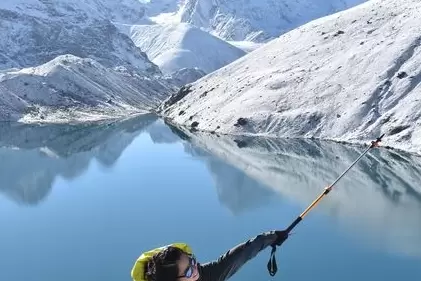
The Everest Three Passes Trek stands as one of the most challenging yet rewarding adventures in the Himalayas. This comprehensive journey traverses three formidable high-altitude passes—Kongma La, Cho La, and Renjo La—each exceeding 5,000 meters, while exploring hidden valleys, pristine lakes, and bringing you face-to-face with the world's highest peaks. Unlike the standard Everest Base Camp Trek, this expedition demands both physical endurance and mental resilience, offering a deeper connection with the Khumbu region that few trekkers experience.
Best Everest Three Passes Trekking Blogs to Read Before You Go
Discover essential insights, tips, and firsthand stories from experienced trekkers in these top Everest Three Passes trekking blogs—perfect for planning your adventure to the world's highest peak.
The Necessary Permits for Everest Base Camp Trekking
Comfortable Stays on the Way to Everest Base Camp
Step by Step to the Top: Elevation Guide for Everest Base Camp
How to Choose the Right Everest Base Camp Trek Route
Top Tips for a Successful Everest Base Camp Trek
Cost of Everest Base Camp Trek: A Step-by-Step
Is Everest Base Camp Trekking Hard?
Everest Base Camp Trek in April
Everest Base Camp Trek in March
Top Most Popular Places in Everest Region Trekking
Best Time For Everest Base Camp Helicopter Tour
The Ultimate Heli Tour to Everest Base Camp: A bird’s-Eye Adventure
Exploring Namche Bazaar: The Gateway to the Everest Region
Everest Base Camp vis Cho La Pass Trek 2024
Which Lake is Better: Gokyo or Tilicho?
Everest Base Camp Trek vs Annapurna Base Camp Trek
Pikey Peak Trek: The Best View of Everest
Exploring the Everest Region: A Trekking Adventure of a Lifetime
Mastering Everest: Complete Guide to Trekking to Everest Base Camp
Challenges of Exploring Mount Everest
Conquering the Roof of the World: A Comprehensive Guide to Mount Everest
A Complete Guide To Everest Base Camp Trek- 2022/2023
The Ultimate Guide to Trekking in Nepal’s Off the Beaten Path Routes
Everest Base Camp Trek by Road: Tips, Guide & Itinerary
What to Pack for Everest Base Camp Trek
Why Lukla Airport Is Called the World’s Most Dangerous Airport
Fun Facts About the Everest Base Camp Trek
Top Seasons for Trekking and Tours in Nepal
The Everest Three Passes Trek stands as one of the most challenging yet rewarding adventures in the Himalayas. This comprehensive journey traverses three formidable high-altitude passes—Kongma La, Cho La, and Renjo La—each exceeding 5,000 meters, while exploring hidden valleys, pristine lakes, and bringing you face-to-face with the world's highest peaks. Unlike the standard Everest Base Camp Trek, this expedition demands both physical endurance and mental resilience, offering a deeper connection with the Khumbu region that few trekkers experience.
The three passes circuit represents the crown jewel of Everest region trekking. This adventure combines the popular highlights of both the Gokyo Valley Trek and Everest Base Camp route while adding the challenging element of crossing three demanding mountain passes. Each pass presents unique challenges and rewards trekkers with unparalleled mountain vistas that showcase the Himalayas from perspectives most visitors never witness.
While routes like the Gokyo with Everest Base Camp via Cho-La Pass Trek cross one or two passes, the Three Passes Trek completes the full circuit. This creates a circular route through the Khumbu region, avoiding retracing your steps and maximizing exposure to diverse landscapes. The journey ventures beyond the busy teahouse trails into more remote territories where authentic Sherpa culture thrives undisturbed.
The trek differs significantly from shorter options like the Everest Short Trek or even the comfortable Everest Base Camp Comfort Trek. It requires commitment, preparation, and respect for high-altitude environments that can test even seasoned trekkers.
Kongma La claims the title of the highest pass on the circuit, standing tall at 5,545 meters. This is typically the first pass trekkers encounter when following the anti-clockwise route from Namche Bazaar. The approach to Kongma La begins from Chukung, a small settlement in the Imjatse Valley that serves as a base for Island Peak Climbing expeditions.
The ascent to Kongma La tests your acclimatization and endurance. The trail climbs steeply through moraines and rocky terrain, with patches of ice depending on the season. From the summit, you're rewarded with breathtaking views of Makalu, the world's fifth-highest mountain, along with Lhotse, Nuptse, and the imposing south face of Ama Dablam. The descent toward Lobuche crosses the Khumbu Glacier, requiring careful navigation across unstable rocky terrain.
This pass is less frequently crossed than Cho La, meaning you'll likely encounter fewer trekkers. The solitude adds to the adventure but also demands self-reliance and proper preparation.
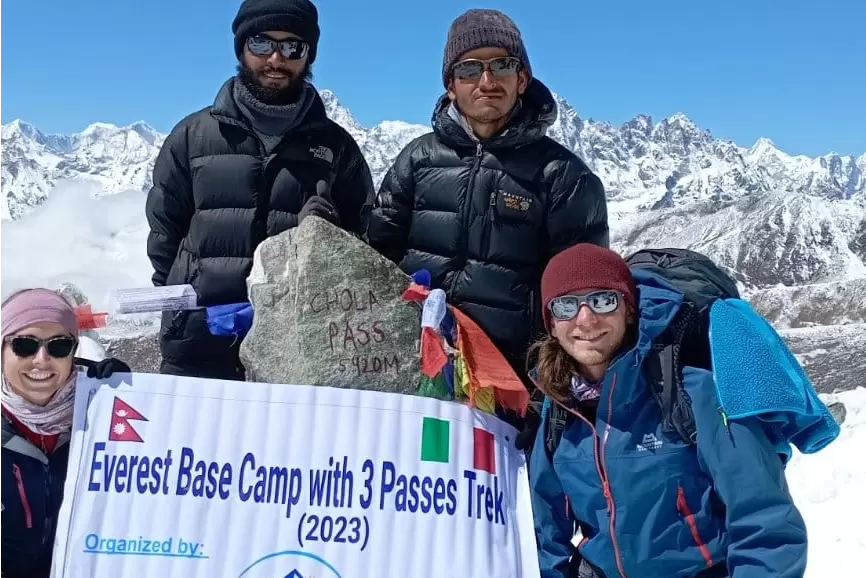
Cho La Pass, at 5,420 meters, carries a reputation as the most technically challenging of the three passes. Unlike Kongma La or Renjo La, Cho La often requires negotiating snow and ice fields, particularly on the western descent. Many trekkers crossing during winter months or early spring find themselves using crampons and ice axes.
The eastern approach from Dzongla involves a steady climb across rocky terrain before reaching the glacier section near the summit. Weather conditions on Cho La can change rapidly, with afternoon clouds frequently obscuring the pass. Early morning starts are essential not only for avoiding weather deterioration but also for witnessing the spectacular sunrise over the Himalayas.
The western descent toward Gokyo proves more demanding than the ascent. The steep, icy slope requires concentration and sure-footedness. Once past this section, the trail eases as it drops into the beautiful Gokyo Valley, where turquoise lakes reflect the surrounding snow-capped peaks.
Renjo La, at 5,370 meters, serves as the final pass on the anti-clockwise circuit. While technically the lowest of the three, it shouldn't be underestimated. The ascent from Gokyo involves a long, sustained climb with limited water sources along the way. Starting early ensures you complete the crossing before afternoon winds intensify.
The summit rewards you with perhaps the most comprehensive panorama of the trek. From here, you can see Everest, Lhotse, Makalu, Cho Oyu—four of the world's five highest peaks—along with the entire Gokyo Lake system spread below. The view rivals or even surpasses the famous vista from Kalapathar.
The descent toward Thame takes you into quieter valleys rarely visited by standard trekking routes. Thame itself, a traditional Sherpa village, offers cultural insights often missed by trekkers focused solely on Everest Base Camp.
No Everest region trek compares to reaching Everest Base Camp itself. The journey from Gorakshep to base camp crosses the Khumbu Glacier's western moraine. During climbing season (April-May and September-October), the base camp transforms into a colorful tent city where expeditions prepare for summit attempts.
The landscape here embodies the term "arctic zone"—a harsh, otherworldly environment of ice, rock, and thin air. The massive Khumbu Icefall looms above, its constantly shifting seracs and ice towers presenting the first major obstacle for climbers attempting Everest's south route.
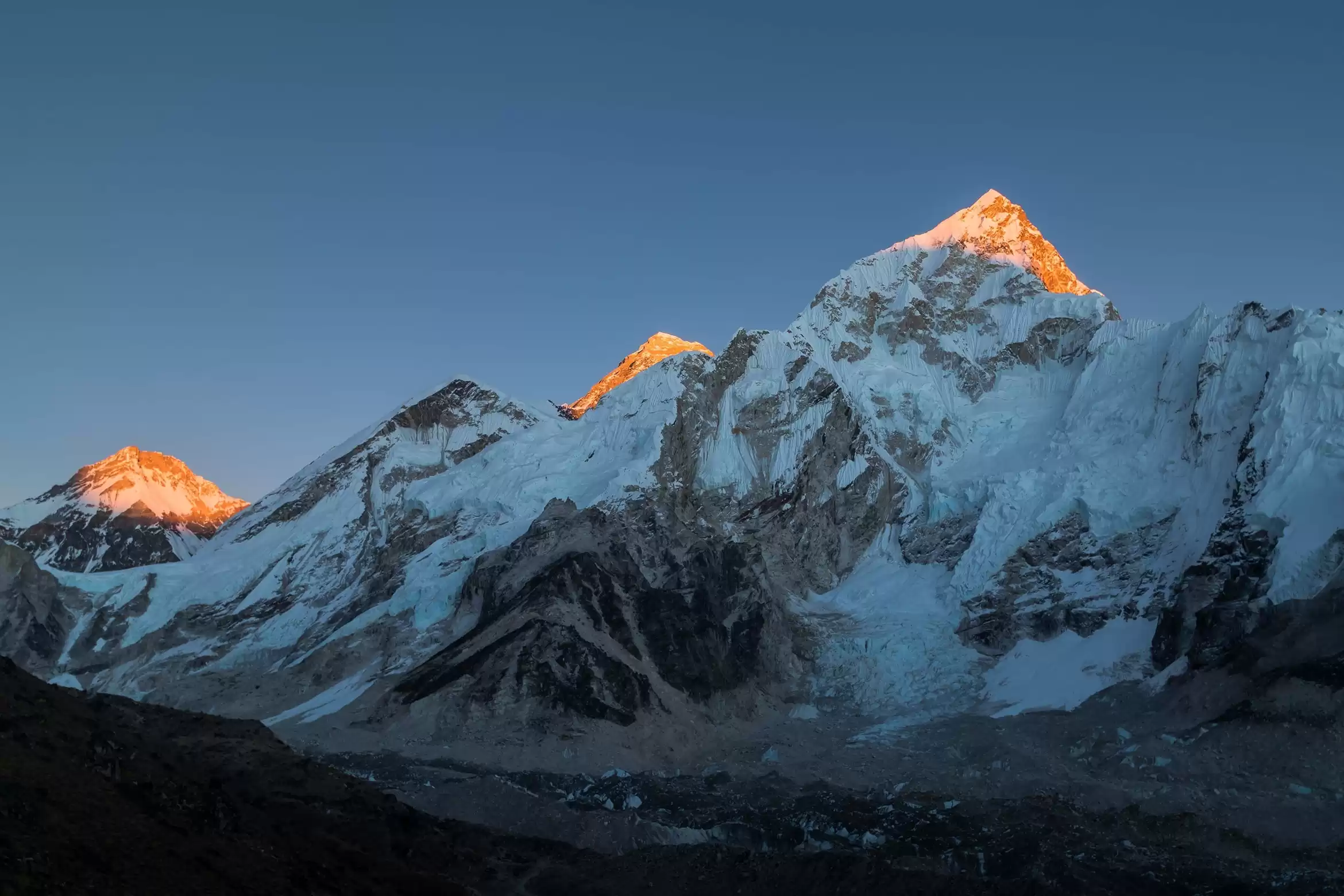
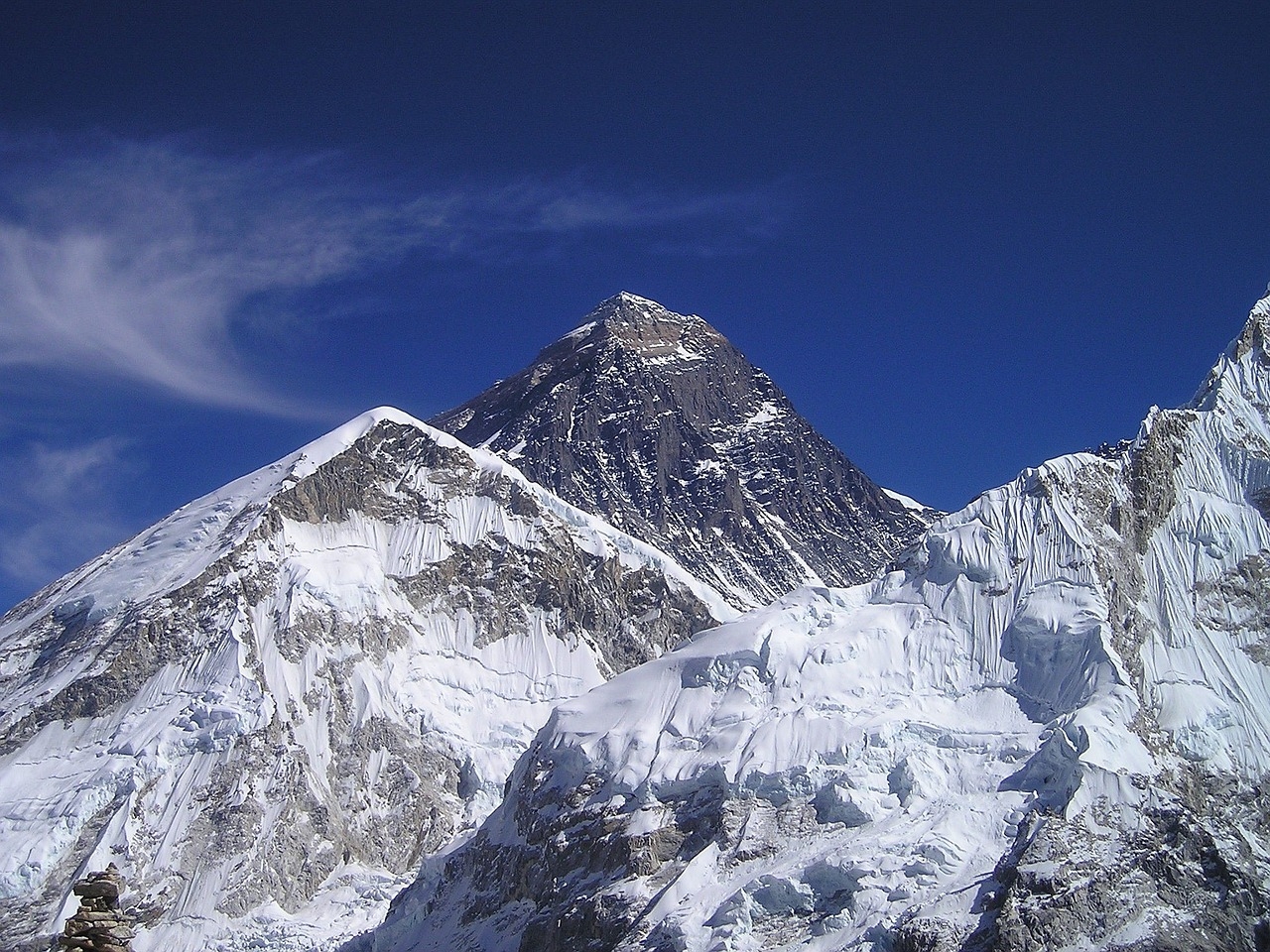
Kalapathar, meaning "black rock" in Nepali, offers the trek's closest and most dramatic views of Everest. The pre-dawn climb from Gorakshep brings you to this rocky prominence just as sunrise illuminates the world's highest peak. The golden light gradually spreading across Everest's pyramid, Nuptse's massive wall, and the surrounding giants creates an unforgettable spectacle.
Many trekkers consider Kalapathar the emotional high point of the journey. Unlike Everest Base Camp, which sits below surrounding peaks, Kalapathar provides an elevated vantage point with unobstructed sightlines to the entire Everest massif.
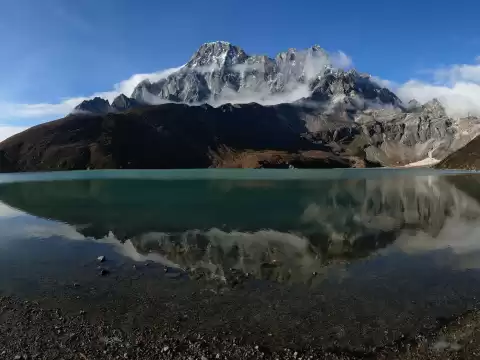
The Gokyo Valley contains six pristine high-altitude lakes, their distinctive turquoise color contrasting sharply with the surrounding white peaks. The main village of Gokyo sits beside the third lake, providing a serene base for exploration. The tranquility here differs markedly from the busier Everest Base Camp route.
Climbing Gokyo Ri (5,357 meters) offers views rivaling Kalapathar but with a different perspective. The panorama includes Cho Oyu, the world's sixth-highest mountain, which dominates the northern horizon. The early morning climb takes about two hours, with each step revealing more of the spectacular landscape.
The entire trek unfolds within Sagarmatha National Park, a UNESCO World Heritage Site protecting 1,148 square kilometers of high-altitude ecosystem. The park safeguards rare species including snow leopards, red pandas, and Himalayan tahr, though spotting wildlife requires patience and luck. More commonly observed are Himalayan monal pheasants and various species of high-altitude birds.
The park's vegetation zones change dramatically with altitude. Lower elevations near Namche Bazaar feature forests of rhododendron, pine, and juniper. These give way to alpine scrub, which eventually yields to the barren, rocky terrain above 5,000 meters. Trekking through these ecological zones provides constant environmental variety.
The Three Passes Trek demands excellent physical conditioning. While experience with treks like the Annapurna Base Camp Trek or Manaslu Circuit Trek provides useful preparation, this journey pushes fitness levels higher. Daily walking times often exceed six to eight hours, with several days involving more than ten hours of trekking.
Unlike the more moderate Annapurna Circuit Trek, which allows gradual altitude gain, the Three Passes involves repeated climbs above 5,000 meters. Your body must recover from these high-altitude excursions while maintaining enough energy for the next challenge.
Begin training at least three to four months before departure. Focus on cardiovascular endurance through activities like running, cycling, or swimming. Aim for at least five cardio sessions weekly, gradually increasing duration and intensity. Include elevation gain by hiking with a weighted backpack, progressively adding weight to simulate trekking conditions.
Strength training, particularly for legs and core, prevents injury during long descents. Exercises like squats, lunges, and step-ups build the muscular endurance needed for sustained climbing and descending. Don't neglect flexibility work—yoga or stretching routines maintain joint mobility and reduce injury risk.
If possible, complete a multi-day trek in the months leading up to your Everest adventure. Options like the Ghorepani Poon Hill Trek or Langtang Valley Trek provide excellent preparation while testing your gear and acclimatization response.
Acute Mountain Sickness (AMS) poses the greatest risk on high-altitude treks. Symptoms typically manifest above 2,500 meters and can range from mild headaches and nausea to life-threatening conditions like High Altitude Pulmonary Edema (HAPE) or High Altitude Cerebral Edema (HACE).
The key to preventing AMS lies in proper acclimatization—allowing your body time to adapt to decreasing oxygen levels. The standard rule "climb high, sleep low" guides safe altitude gain. This means you can trek to higher elevations during the day but should sleep at progressively moderate altitudes to aid adaptation.
Well-designed itineraries include dedicated acclimatization days at key locations. Namche Bazaar (3,440 meters) typically hosts your first rest day. Rather than remaining sedentary, use this day for a short hike to higher elevations—perhaps the Everest View Hotel or nearby villages—before returning to Namche for the night.
Additional acclimatization stops occur at Dingboche (4,410 meters) or Chukung, and at Gokyo (4,790 meters). These rest days aren't optional luxuries but essential safety measures that significantly reduce AMS risk and improve your trekking experience.
Unlike fast-paced itineraries, taking adequate time for acclimatization increases summit success rates on the passes. Rushing increases not only health risks but also reduces enjoyment, as AMS symptoms make it difficult to appreciate the stunning surroundings.
Monitor yourself and teammates for AMS symptoms: persistent headaches, nausea, dizziness, unusual fatigue, or sleep disturbances. Early recognition allows for timely intervention—either resting at current altitude, descending to lower elevations, or seeking medical assistance.
Never ignore symptoms or push through serious discomfort. Descent remains the most effective treatment for AMS. Having a qualified guide or doctor, as some expedition companies provide, offers additional safety through professional symptom assessment and treatment decisions.
Spring, particularly April and May, represents the primary trekking season for the Three Passes. Temperatures warm progressively, with daytime highs at lower elevations reaching 15-20°C, though nights remain cold, especially above 4,000 meters. The weather generally stabilizes after winter, offering clearer skies and better pass conditions.
This season coincides with Everest climbing expeditions, meaning Base Camp buzzes with activity. While some trekkers prefer quieter periods, witnessing climbing preparations adds fascinating dimension to the experience. Additionally, lower-elevation rhododendron forests burst into bloom, painting hillsides with vibrant reds, pinks, and whites.
The main drawback of spring trekking is crowding, particularly on the standard Everest Base Camp route sections. However, the Three Passes circuit's more demanding nature means it attracts fewer trekkers than the Everest Base Camp Trek, maintaining a sense of wilderness even during peak season.
Many consider autumn the ideal Three Passes trekking season. Following the monsoon, the atmosphere clears, offering exceptional mountain visibility. October particularly shines with stable weather, moderate temperatures, and crystal-clear Himalayan views. Festival season, especially Dashain and Tihar, provides opportunities to experience Sherpa cultural celebrations.
Temperatures during autumn prove comfortable for trekking, though they drop significantly at night above 4,000 meters. Pack adequate warm layers and a quality sleeping bag rated to at least -15°C. The passes typically remain snow-free or have minimal snow compared to winter or early spring.
Autumn's popularity means trails see increased traffic, particularly on the main Everest route. Booking accommodations in popular stops like Namche, Dingboche, and Gorakshep becomes more competitive. However, the Three Passes route's more challenging nature naturally filters crowds, especially on the passes themselves.
Winter trekking (December-February) requires serious preparation and experience. While possible, temperatures plummet to -20°C or lower at high elevations. The passes accumulate significant snow, making crossings more technical and potentially dangerous. Many teahouses close during winter, limiting accommodation options.
However, winter offers unparalleled solitude and pristine mountain views in clear weather. Trekkers willing to face harsh conditions and potential route changes experience the Khumbu region in its most pristine, untouched state. Consider winter trekking only if you have significant high-altitude experience and accept the increased risks.
Monsoon season (June-August) sees few trekkers due to heavy rainfall, clouds obscuring mountains, and increased landslide risk. However, the trek remains technically possible, particularly focusing on rain-shadow areas. The Gokyo Valley Trek portion receives less precipitation than the main Everest route. Wildflowers bloom, and the landscape turns lush green during monsoon months.
Layering proves essential for managing the dramatic temperature variations encountered during the trek. Base layers should include moisture-wicking thermal tops and bottoms for cold morning starts and high-altitude sections. Mid-layers like fleece jackets or down vests provide insulation, while a waterproof, windproof shell jacket and pants protect against precipitation and wind.
Bring multiple pairs of hiking socks, including warmer options for high altitudes. A warm beanie, sun hat, neck gaiter or buff, and insulated gloves protect extremities from cold and sun. Don't forget quality sunglasses with UV protection—high-altitude sun reflection off snow causes intense glare.
For lower elevations, lightweight hiking pants and quick-dry shirts suffice. As you gain altitude, you'll layer on warmer clothing. The ability to easily add or remove layers throughout the day proves more valuable than any single heavy garment.
Invest in high-quality, well-broken-in trekking boots with ankle support. The terrain varies from smooth trails to rocky scrambles and potentially icy sections on the passes. Waterproof boots keep feet dry during stream crossings and in case of snow or rain.
Trekking poles significantly reduce stress on knees during long descents and provide stability on uneven terrain. Many trekkers find them indispensable, particularly when crossing glacial moraines or navigating steep sections.
A comfortable, properly fitted backpack (30-40 liters) carries your daily essentials—water, snacks, extra layers, camera, and personal items. Porter services handle the bulk of your gear, but your daypack must fit comfortably for 6-10 hours of daily trekking.
While not always necessary, carrying microspikes or light crampons provides security on potentially icy pass sections, especially Cho La. Many trekkers manage without them during dry autumn months, but spring and winter crossings often require additional traction.
A headlamp with extra batteries proves essential for pre-dawn starts to Kalapathar or the passes. Bring a quality sleeping bag rated to at least -15°C, as teahouse blankets may prove insufficient at high altitudes. A sleeping bag liner adds warmth and hygiene.
High-altitude sun protection requires both high-SPF sunscreen and lip balm with SPF. The sun's intensity increases with elevation, and reflection off snow doubles exposure. Water purification tablets or a filter system ensures safe drinking water throughout the trek, reducing plastic bottle consumption.
Basic first aid supplies, including altitude sickness medication (Diamox), pain relievers, blister treatment, and any personal medications prove essential. Electrolyte supplements help maintain hydration and energy levels at altitude. Energy bars, nuts, and chocolate provide quick calories during long trekking days.
Respecting local culture and environment ensures sustainable tourism in the Khumbu region. Always walk clockwise around Buddhist monasteries, stupas, and mani walls. Remove shoes before entering monasteries and homes. Ask permission before photographing people, and respect privacy.
Environmental responsibility means packing out all trash, using refillable water bottles instead of buying plastic, and sticking to established trails to prevent erosion. The fragile high-altitude ecosystem takes decades to recover from damage. Toilet paper should be packed out or properly disposed of in designated facilities.
Support local economy by staying in teahouses, eating in their dining rooms, and hiring local guides and porters through reputable companies. This direct support helps communities maintain infrastructure and preserve their culture while benefiting economically from tourism.
Unlike expeditions requiring camping, like the Upper Dolpo Trek or Kanchenjunga Base Camp Trek, the Three Passes Trek follows established teahouse routes. These basic lodges offer simple rooms with twin beds, thin mattresses, and shared bathroom facilities. Expect minimal heating—bring a warm sleeping bag regardless of teahouse blankets.
Teahouses become more basic with increasing altitude. Lower-elevation lodges in places like Namche Bazaar offer hot showers, WiFi, and varied menu options. Higher lodges focus on providing essential shelter and meals, with limited amenities. Rooms at Gorakshep and Gokyo remain unheated, making evening temperatures uncomfortably cold.
Booking ahead during peak season proves wise, though most trekkers arrange accommodation through their trekking company. Teahouse owners typically expect guests to eat meals at their lodge if staying the night—this unwritten rule sustains the local economy and keeps accommodation costs low.
Teahouse menus offer surprising variety, from traditional dal bhat (lentil soup with rice) to international favorites like pizza, pasta, and pancakes. Dal bhat, the Nepali staple, provides excellent value with unlimited refills and balanced nutrition for sustained energy. Many trekkers adopt the phrase "dal bhat power, 24 hour" as their trekking mantra.
Higher elevations limit fresh produce availability, with menus simplified and prices increased to reflect difficult resupply logistics. Vegetables grown in greenhouses at Namche and nearby villages provide some fresh options, but above 4,000 meters, expect primarily carbohydrate-heavy meals and preserved ingredients.
Boiled or treated water costs money at teahouses but proves essential for hydration. Bringing water purification tablets reduces costs and environmental impact. Hot drinks—lemon tea, ginger tea, hot chocolate—provide comfort during cold evenings and help maintain hydration.
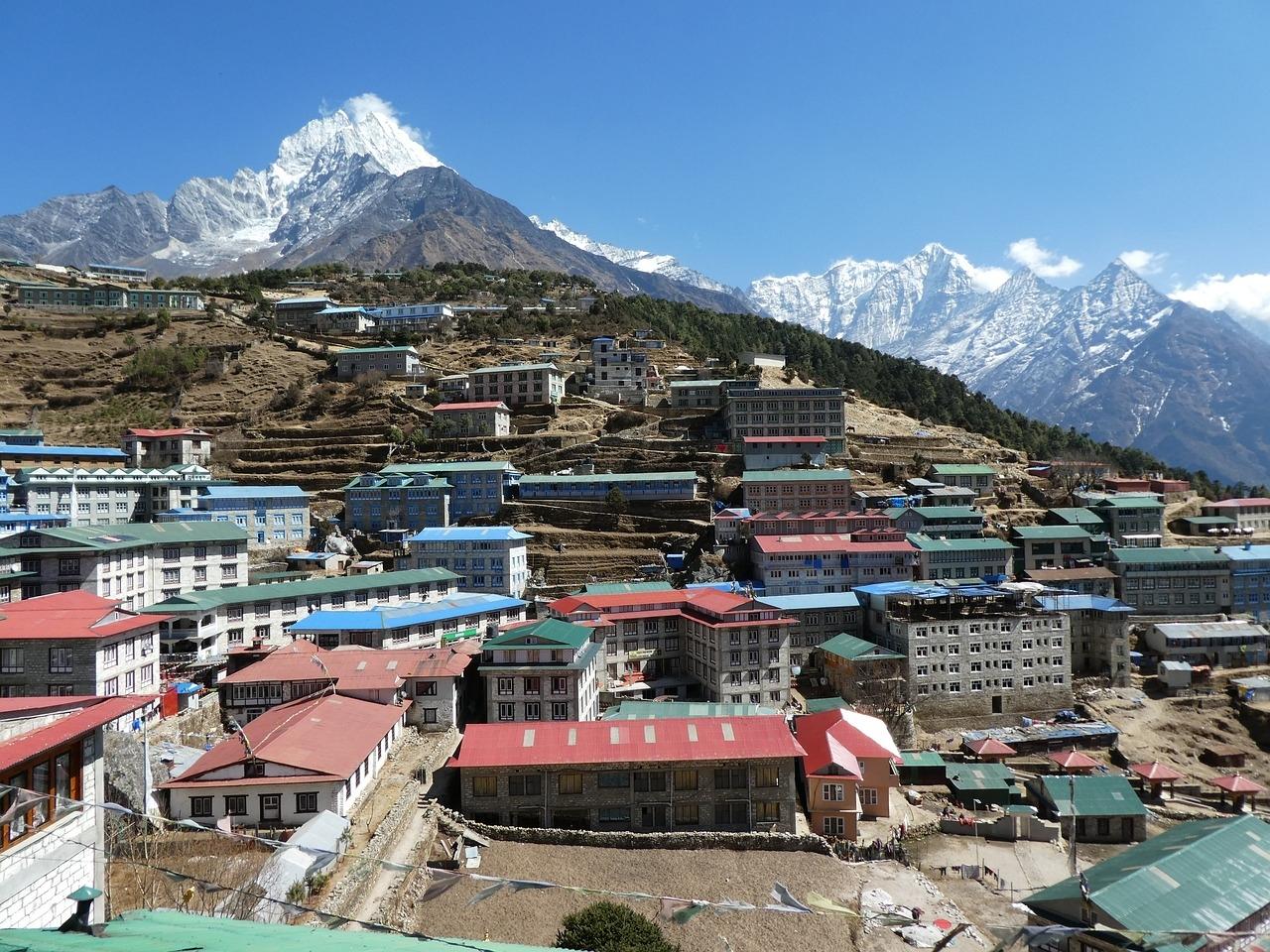
Namche Bazaar, perched in a horseshoe-shaped amphitheater at 3,440 meters, serves as the Khumbu region's commercial and cultural heart. This bustling town evolved from a small trading post into a thriving hub serving thousands of annual trekkers while maintaining its Sherpa character.
The Saturday market brings villagers from surrounding areas to buy and sell goods, offering glimpses into local life beyond tourism. The Sherpa Culture Museum provides excellent context about Sherpa history, climbing heritage, and traditional lifestyles. Namche's bakeries, restaurants, and shops offer last chances to purchase quality gear or supplies before heading higher.
Buddhism permeates Khumbu culture, with monasteries, stupas, and prayer flags marking the landscape. Tengboche Monastery, the region's most significant Buddhist monastery, hosts morning and evening prayer ceremonies open to respectful visitors. The monastery's location provides stunning views of Ama Dablam, Everest, and surrounding peaks.
Thame Monastery, over 500 years old, sees fewer visitors than Tengboche but offers equally rich spiritual atmosphere. The monks' dedication to preserving Tibetan Buddhist traditions continues despite modern influences. Visiting during prayer ceremonies provides moving insights into Sherpa spiritual life.
Mani walls, carved with Buddhist mantras, line trails throughout the region. Always pass these on the left (clockwise) to respect Buddhist practice. Prayer wheels should be spun clockwise, sending prayers skyward with each rotation.
The Sherpa people's legendary hospitality stems from both cultural tradition and economic necessity in one of the world's harshest environments. Their resilience, humor, and warmth despite challenging living conditions inspire trekkers worldwide. Learning basic Nepali phrases—"Namaste" (hello/thank you), "Mitho chha" (delicious), "Dhanyabad" (thank you)—shows respect and often results in warmer interactions.
Many Sherpa families have climbing heritage, with members working as guides, porters, or in expedition support. Conversations reveal incredible stories of mountain adventures, family histories, and the profound changes tourism brought to their communities over recent decades.
The Three Passes Trek represents the ultimate Everest region challenge, surpassing the Everest Base Camp Trek in both duration and difficulty. While EBC focuses on a single destination, the Three Passes explores multiple valleys, passes, and viewpoints, providing more comprehensive Khumbu immersion.
The Gokyo with Everest Base Camp via Cho-La Pass Trek covers significant ground but crosses only one high pass compared to three. It serves as a middle ground between the standard EBC trek and the full Three Passes circuit.
For those seeking luxury, the Everest Base Camp Comfort Trek offers upgraded accommodations and shorter daily distances. However, comfort comes at the cost of adventure—the Three Passes' raw, challenging nature provides satisfaction that pampered trekking cannot match.
Trekkers who complete the Three Passes often seek similar challenges elsewhere in Nepal. The Manaslu Circuit Trek offers comparable difficulty with the advantage of fewer crowds and distinctive cultural experiences in the shadow of the world's eighth-highest mountain.
The Annapurna Circuit Trek, particularly when combined with Annapurna Base Camp, provides excellent training for the Three Passes. The Thorong La pass (5,416 meters) prepares you for high-altitude challenges while the circuit's diverse landscapes and cultures create a rich trekking experience.
For remote adventures beyond established routes, treks like Upper Mustang Trek or Lower Dolpo Trek explore restricted areas with preserved Tibetan Buddhist culture and stark, otherworldly landscapes. These demanding treks reward adventurous spirits seeking paths less traveled.
The trek begins with a dramatic flight from Kathmandu to Lukla's Tenzing-Hillary Airport, one of the world's most challenging airstrips. The 30-minute flight crosses lush valleys before descending dramatically into Lukla's mountain-perched runway. Weather delays frequently occur—build flexibility into your schedule.
Alternative options include the Everest Base Camp Trek by Road, which drives to Salleri or Phaplu, adding extra trekking days but avoiding flight-dependent schedules. This option provides a more gradual approach and showcases lower-elevation Sherpa villages.
For ultimate luxury, consider the Everest Trek Return by Helicopter, which allows you to trek up and fly back, maximizing mountain time while reducing overall trip duration. Helicopter flights also offer aerial perspectives of the Himalayas impossible to achieve on foot.
Comprehensive travel insurance covering high-altitude trekking (up to 6,000 meters) proves absolutely essential. Standard policies exclude trekking above 3,000-4,000 meters. Ensure your policy covers emergency helicopter evacuation, which can cost USD 5,000-10,000.
Medical coverage should include altitude-related illnesses, as standard health insurance may exclude adventure sports. Read policy terms carefully regarding pre-existing conditions, coverage limits, and claim procedures. Companies specializing in adventure travel insurance understand trekking-specific risks and offer appropriate coverage.
While experienced trekkers can navigate the Three Passes independently using maps and GPS, hiring a guide significantly enhances the experience. Local guides provide cultural insights, handle lodge bookings, navigate in poor visibility, and offer crucial support if altitude issues arise. Their route knowledge proves invaluable for timing pass crossings and avoiding weather hazards.
Porters carry your main gear, allowing you to trek with only a light daypack. This dramatically improves enjoyment and energy conservation. Ethical porter practices include providing adequate clothing, fair wages, insurance, and reasonable load limits (maximum 20-30 kg including their own gear). Reputable companies ensure proper porter treatment.
Supporting local employment through guide and porter hire directly benefits Khumbu communities. Many guides speak excellent English and enjoy sharing their culture and mountain knowledge. The relationships formed often transform a trek from a tourist experience into genuine cultural exchange.
The Himalayas present endless photographic opportunities, from intimate cultural moments to sweeping mountain panoramas. Sunrise and sunset provide the most dramatic light, with alpenglow painting peaks in shades of gold, pink, and orange. Early morning starts to Kalapathar or Gokyo Ri reward photographers with incredible conditions.
Wide-angle lenses capture expansive mountain scenes and dramatic landscapes, while telephoto lenses isolate distant peaks and compress mountain layers. A standard zoom (24-70mm equivalent) handles most situations. Protect equipment from cold temperatures, which drain batteries quickly—carry spares in warm inner pockets.
Dust and potential precipitation require weather-sealed cameras or protective covers. The high-altitude sun creates harsh midday shadows; polarizing filters reduce glare and enhance blue skies. However, remember to experience moments directly, not solely through a viewfinder—balance photography with presence.
Drone usage in Sagarmatha National Park is prohibited without special permits. Respect these regulations, as they protect both wildlife and the peaceful mountain environment. Even with permits, flying near monasteries or over villages shows disrespect to local culture and spiritual practices.
Always ask permission before photographing people, particularly Sherpa villagers and monks. Many locals have grown weary of cameras thrust in their faces without courtesy. A smile, gesture, and basic Nepali greeting establish rapport before requesting photos.
Avoid photographing religious ceremonies without explicit permission from monastery authorities. Some rituals remain private or sacred, closed to outsiders. When granted access, maintain respectful distance and silence, minimizing disruption to spiritual practices.
Beyond altitude sickness, trekkers face various health challenges. Gastrointestinal issues from contaminated water or food represent the most common complaint. Water purification and careful food choices minimize risk. Stick to freshly cooked hot meals; avoid raw vegetables and unpeeled fruit at higher elevations.
Dehydration accelerates altitude sickness and reduces physical performance. Drink at least three to four liters daily, more during strenuous days. Dark urine indicates insufficient hydration. Cold temperatures reduce thirst sensation, but hydration needs remain high.
Sunburn and snow blindness threaten those unprepared for high-altitude sun intensity. Apply sunscreen liberally and reapply frequently, especially on exposed skin. Quality sunglasses with side shields protect against intense UV reflection off snow and ice.
Serious altitude sickness or injury requires descent and potentially helicopter evacuation. Mobile phone coverage exists in major villages, allowing emergency communication. However, weather can delay helicopter rescues for days. Travel insurance covering evacuation proves essential.
Rescue coordination typically involves your trekking company, insurance provider, and local rescue services. Helicopter landing zones exist at major villages, but weather conditions, particularly clouds and wind, determine flight feasibility. Patience and flexibility become crucial during emergencies.
Most serious health issues can be prevented through conservative pacing, adequate acclimatization, proper hydration, and listening to your body's warning signals. Pride or determination should never override health concerns—mountains remain for future attempts, but health consequences can prove permanent.
The Everest Three Passes Trek demands physical fitness, mental toughness, and respect for high-altitude environments. It rewards these with experiences few mountain adventures can match—standing atop three formidable passes, witnessing Everest from multiple perspectives, exploring pristine valleys, and immersing yourself in authentic Sherpa culture.
This trek isn't for first-time trekkers or those seeking comfort. Unlike easier routes like the Mardi Himal Trek or Ghorepani Poon Hill Trek, the Three Passes requires significant preparation, adequate time, and acceptance of challenges including unpredictable weather, basic accommodations, and the possibility of not completing all objectives if conditions or health dictate otherwise.
For those prepared to meet its demands, the Three Passes Trek represents a pinnacle achievement in Himalayan trekking. The memories forged while traversing these high passes, the camaraderie shared with fellow trekkers and Sherpa staff, and the profound beauty of the Khumbu region create transformative experiences that last far beyond the trek's conclusion.
The mountains teach patience, humility, and appreciation for both human resilience and natural majesty. They remind us of our smallness in the grand scheme while simultaneously revealing our capability to overcome significant challenges. This paradox forms the essence of Himalayan trekking and ensures that those who complete the Three Passes Trek carry its lessons throughout their lives.
Whether you seek personal challenge, spiritual connection, photographic opportunities, or simply the chance to walk among Earth's highest peaks, the Everest Three Passes Trek delivers abundantly. It stands as one of the world's great adventures, accessible yet demanding, popular yet pristine, challenging yet deeply rewarding. The passes await—are you ready to answer their call?
Ready to embark on the adventure of a lifetime? Himalayan Forever Treks specializes in creating unforgettable Everest Three Passes experiences with expert guides, carefully designed itineraries emphasizing proper acclimatization, and unwavering commitment to your safety and enjoyment. Whether you're drawn to this ultimate Khumbu challenge or considering other incredible Himalayan adventures like the Annapurna Base Camp with Ghorepani Poonhill Trek, Langtang Valley and Gosainkunda Trek, or even peak climbing expeditions like Mera Peak Climb and Lobuche East Peak Climb, our team brings over two decades of experience to ensure your journey exceeds expectations. Contact us today to begin planning your Himalayan adventure.
Mode of Trekking: Lodges and Guest-Houses till Lukla to Lukla.
Trekking Grade: Moderate to Adventurous and Challenging in snow condition.
Area of Trekking: Far North Mid-East, around Khumbu-Everest region.
Highest points: Kalapathar Hill at 5,643 m / 18,514 feet and Everest Base Camp 5,364 m / 17, 598 feet. Kongma-La 5,535 m / 18, 160 m, Cho-La Pass 5, 420 m / 17, 782 feet with Renjo-La at 5,360 m / 17, 585 feet and Gokyo-Ri 5,357 m / 17, 575 feet high.
People and culture: Populated by Highlanders the Sherpa tribes follows strong Tibetan Buddhism and similar cultures.
Trekking duration:17 Nights and 18 Days (from Lukla to Lukla).
Total Trip: 20 Nights / 21 Days from arrival to main departures.
Best Seasons: Nearly months of the year, except for monsoon wet months of mid-June to mid-September. The best seasons are spring and autumn / fall, the spring time begins from March to May and autumn from September to November.
Can get snowed sometimes all around the seasons as well in the best time of the year. The Himalayan weather can be unpredictable sometimes, which is one of the most challenging side of the adventure.
Interested people can enjoy the trek during winter times of Christmas and New Year Holidays, however much cold temperatures. But most days are bright and clear with sunshine, short daylight hours during autumn and winter times.


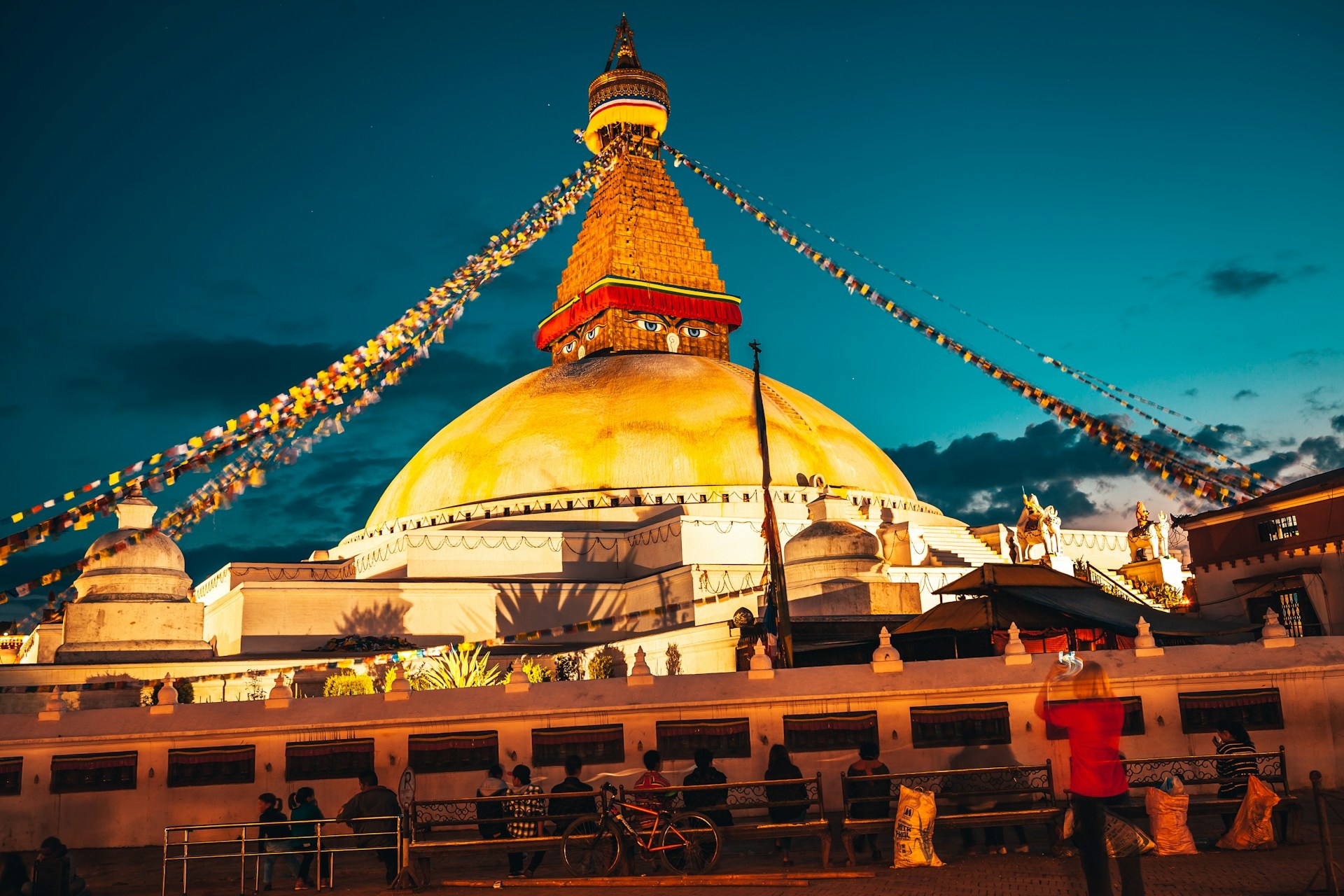
Trekking Preparation Day is spent before the trek to ensure everything is ready. It includes a trek briefing, gear check, permit preparation, and final packing. This day helps you stay safe, confident, and fully prepared for an enjoyable trekking adventure in the Himalayas
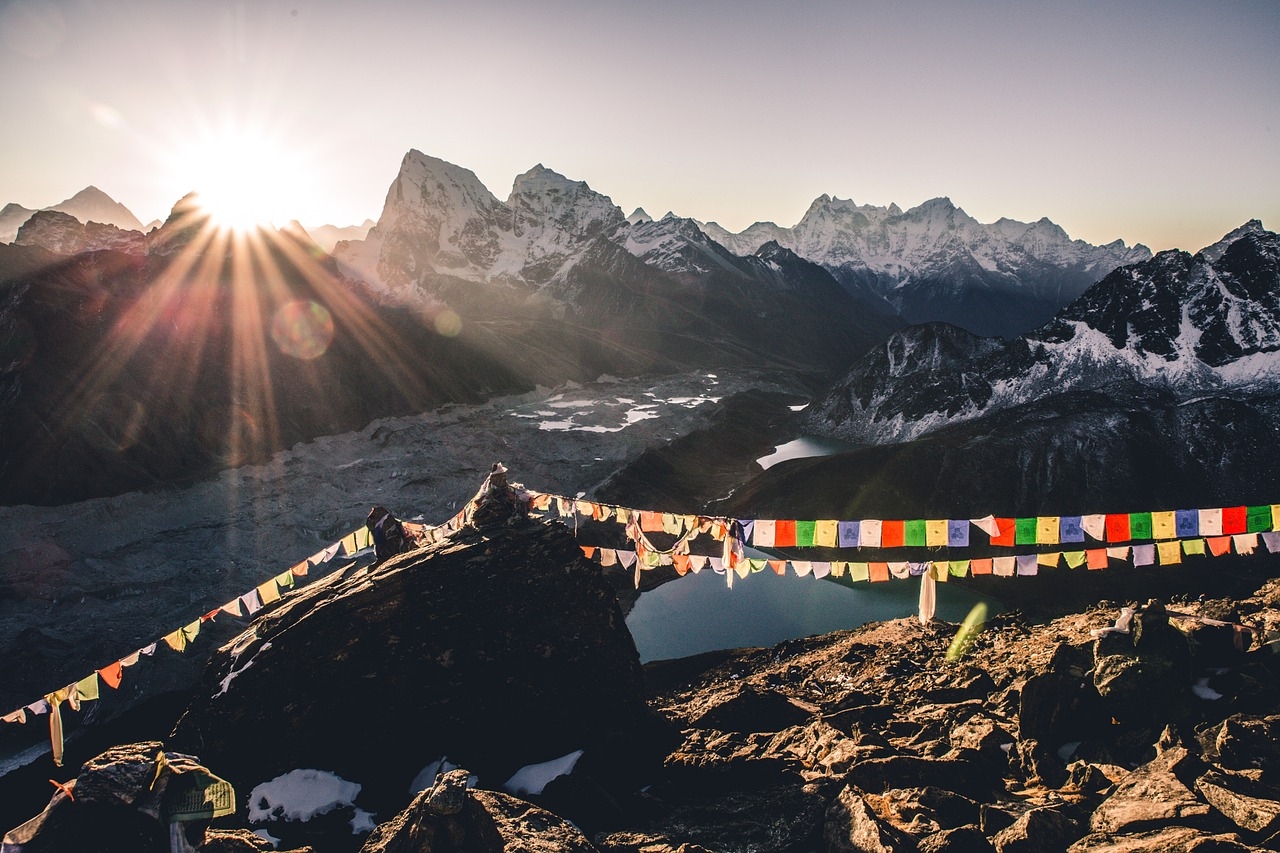


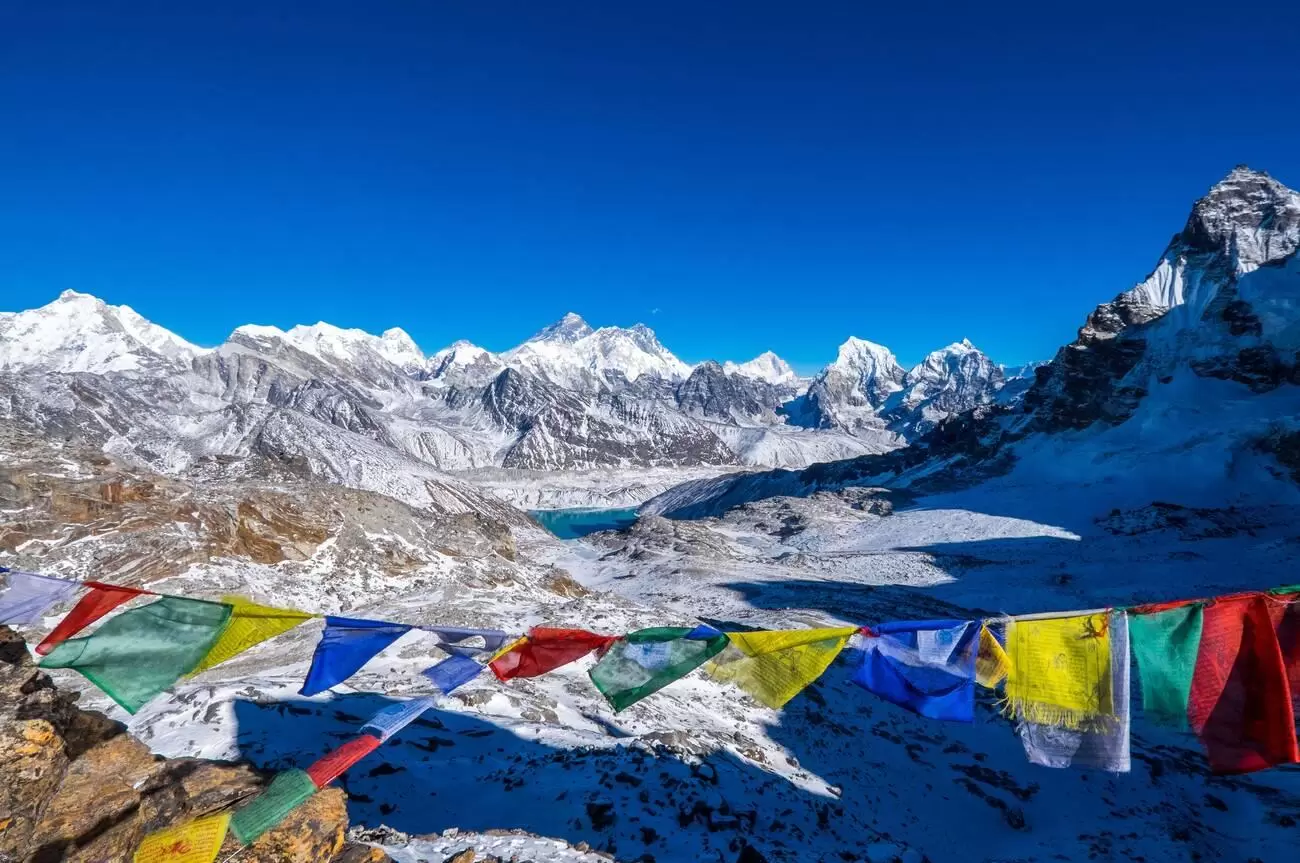

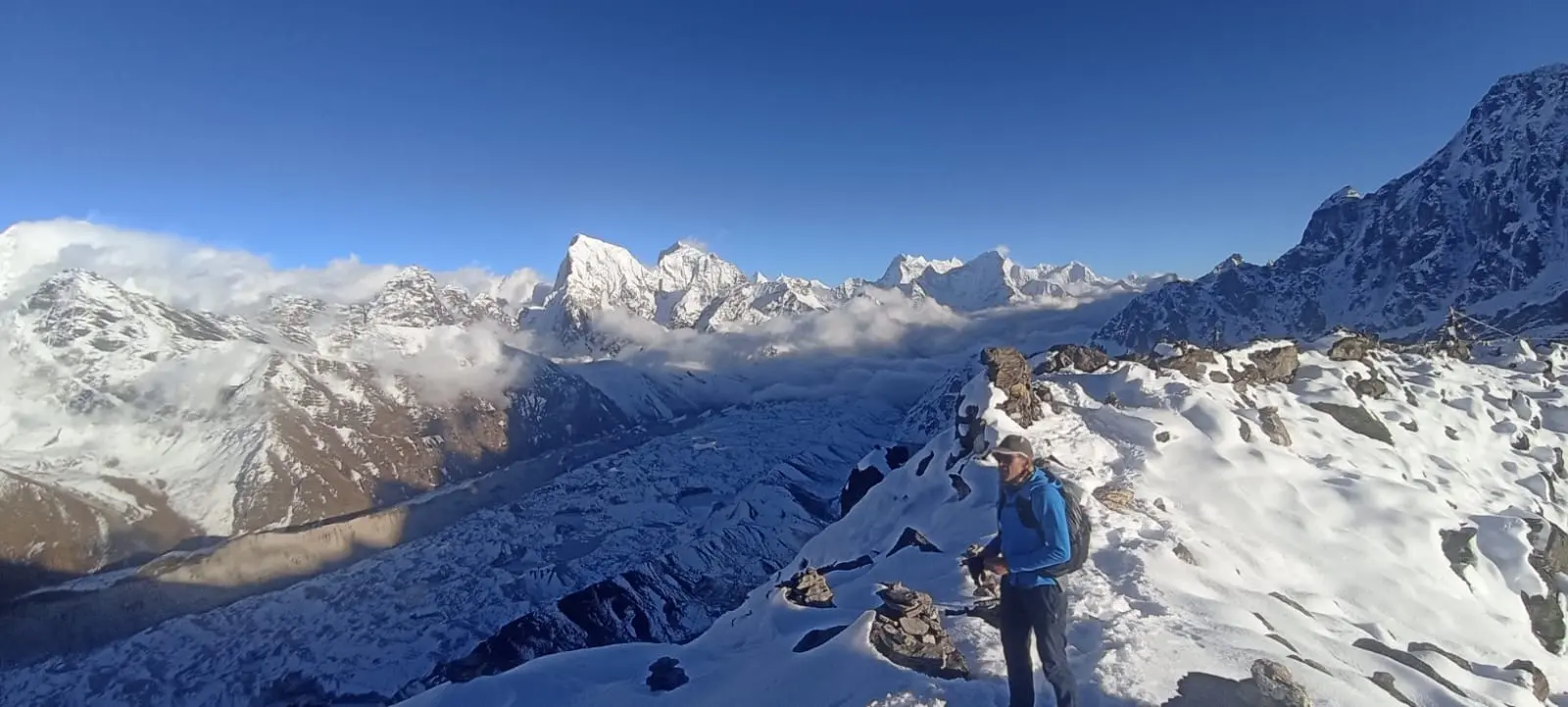
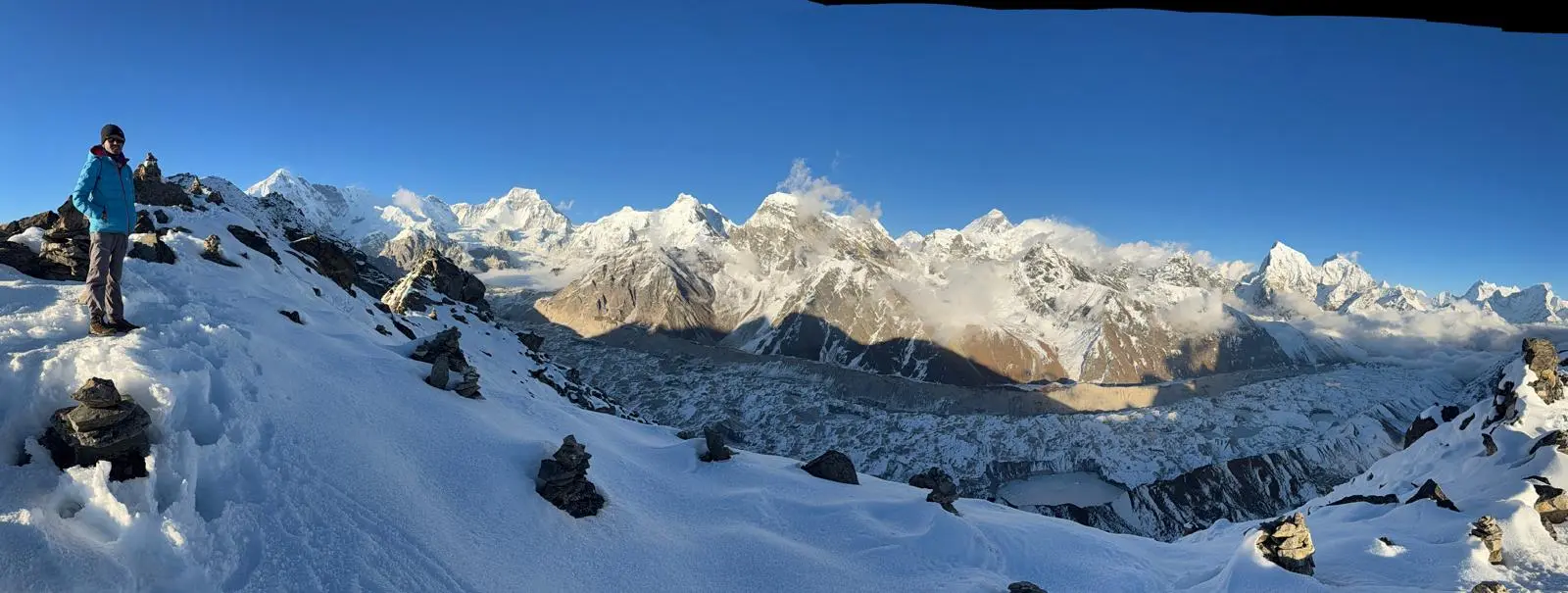
The Everest Three Passes Trekking requires permits to enter the Sagarmatha National Park and the Gaurishankar Conservation Area. Trekkers need the Sagarmatha National Park Entry Permit and the TIMS (Trekkers' Information Management System) card, which are obtainable through registered trekking agencies like Himalayan Forever. These permits support conservation efforts and ensure trekker safety within the protected areas.
The journey to the starting point of the Everest Three Passes Trekking begins with a flight from Kathmandu to Lukla, a small airstrip in the Everest region. Flights to Lukla offer stunning views of the Himalayas, weather permitting. From Lukla, trekkers trek to Phakding or Monjo on the first day, depending on the itinerary, where the trek officially begins.
The starting point for the Everest Three Passes Trekking is Lukla (2,860 meters), reached by a thrilling mountain flight from Kathmandu. Lukla serves as the gateway to the Everest region and the beginning of the trekking journey towards the renowned high passes.
The trek concludes in Lukla, where trekkers catch a return flight to Kathmandu. The departure from Lukla marks the end of an exhilarating journey through the Everest region, offering trekkers a final glimpse of the majestic Himalayan landscapes before returning to civilization.
Communication facilities along the Everest Three Passes Trekking route are available at various points, primarily in villages like Namche Bazaar, Phakding, and Lukla. Most lodges and tea houses offer Wi-Fi and satellite phone services for a fee. However, due to the remote and mountainous terrain, connectivity may be sporadic.
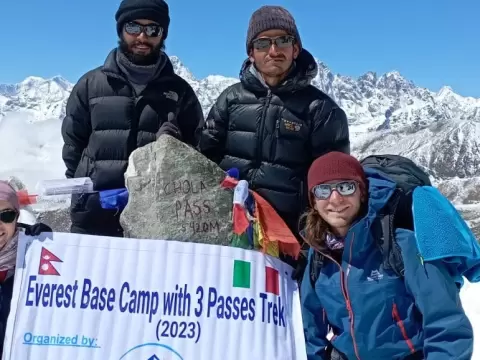
The Everest Three Passes Trekking is considered one of the most challenging trekking routes in the Everest region. It involves crossing three high passes: Kongma La Pass (5,535 meters), Cho La Pass (5,420 meters), and Renjo La Pass (5,360 meters). Trekkers should have excellent physical fitness, previous trekking experience at high altitudes, and be prepared for long daily hikes of 6-8 hours over rugged terrain, including steep ascents and descents.
Accommodation along the Everest Three Passes Trekking route includes basic tea houses and lodges offering shared facilities. Meals served at tea houses feature a variety of local and international dishes, including dal bhat (rice and lentils), soups, noodles, and Tibetan bread. Tea houses provide trekkers with nourishing meals to replenish energy after challenging days of trekking, ensuring comfort and sustenance throughout the journey.
The Everest Three Passes Trekking typically spans around 16-20 days, depending on the chosen itinerary and acclimatization stops. The trekking route leads trekkers through diverse landscapes, including lush forests, glacial moraines, and high-altitude passes. The Everest Three Passes Trekking is a challenging and rewarding adventure that encompasses not only reaching Everest Base Camp and Kala Patthar but also crossing three high passes:
Major attractions along the Everest Three Passes Trekking include:
The optimal seasons for the Everest Three Passes Trekking are spring (March to May) and autumn (September to November). During these periods, the weather is generally stable with clear skies, mild temperatures, and minimal precipitation. These conditions provide ideal trekking conditions, excellent visibility of the surrounding peaks, and opportunities to witness local festivals and cultural events along the route.
Himalayan Forever's team for the Everest Three Passes Trekking consists of experienced trekking guides and support staff who are well-versed in the region's terrain, culture, and safety measures. They ensure a safe and memorable trekking experience by providing expert guidance, logistical support, and cultural insights throughout the journey.
Trekkers undertaking the Everest Three Passes Trekking should be well-prepared for high-altitude trekking, unpredictable weather conditions, and physically demanding terrain. Adequate acclimatization, hydration, and adherence to trekking guidelines are essential for a safe and enjoyable experience in the Everest region.
Himalayan Forever is committed to delivering exceptional trekking experiences with a focus on safety, sustainability, and client satisfaction. With their experienced team, personalized itineraries, and dedication to preserving local cultures and environments, Himalayan Forever ensures trekkers have a memorable, safe, and culturally enriching journey through the Everest Three Passes Trekking. Their local expertise and passion for adventure travel make them a reliable choice for exploring Nepal's Himalayan landscapes.
The Everest Three Passes Trekking offers a challenging yet rewarding adventure through some of the most breathtaking landscapes in the Everest region. Trekkers can expect to conquer high mountain passes, witness iconic Himalayan peaks up close, and immerse themselves in the Sherpa culture and traditions of the Khumbu Valley. The trek combines physical challenge with cultural immersion, providing trekkers with unforgettable memories and a profound connection to the world's highest mountains.
What are the altitude gains and highest points on the Everest Three Passes Trekking?
The trek reaches altitudes of approximately5,535 meters at Kongma La Pass, 5,420 meters at Cho La Pass, and 5,360 meters at Renjo La Pass. Optional side trips to Everest Base Camp and Kala Patthar offer additional high-altitude experiences.
Is it possible to extend the Everest Three Passes Trekking or customize the itinerary?
Yes, Himalayan Forever offers flexible itineraries that can be tailored to include additional days for acclimatization, side trips, or specific interests of trekkers.
What type of clothing and gear are recommended for the Everest Three Passes Trekking?
Sturdy trekking boots, layered clothing suitable for varying temperatures, a down jacket, and a good quality sleeping bag are recommended. A detailed packing list is provided by Himalayan Forever prior to the trek.
Is altitude sickness common on the Everest Three Passes Trekking?
Altitude sickness can affect trekkers due to the high elevation of the trek. Proper acclimatization, hydration, and awareness of symptoms are crucial. Our guides are trained to monitor and assist in such situations.
What should I pack for the Everest Three Passes Trekking?
Essential items include sturdy trekking boots, layered clothing suitable for varying temperatures, a sleeping bag suitable for cold nights, sunscreen, a hat, and a refillable water bottle. Trekking poles are recommended for stability on uneven terrain.
Can I trek solo on the Everest Three Passes Trekking?
While solo trekking is possible, it's recommended to trek with a guide for safety, navigation, and cultural insights. Guides also facilitate permit arrangements, accommodation bookings, and provide support in case of emergencies.
Are there ATM facilities along the trekking route?
ATM facilities are limited along the trekking route. Trekkers should carry enough Nepali currency (cash) for expenses such as meals, drinks, and souvenirs.
How do I prepare physically for the Everest Three Passes Trekking?
Physical preparation should include cardiovascular exercises, strength training, and hiking practice with a weighted backpack to improve stamina and endurance for trekking at high altitudes.
The Everest Three Passes Trekking promises a challenging yet unforgettable adventure through the heart of the Everest region. With Himalayan Forever, trekkers can embark on this transformative journey with confidence, knowing they are supported by experienced guides and a dedicated team committed to creating exceptional trekking experiences in Nepal's Himalayas.
We did the 3 pass trek with Gakul, It was an amazing trip with a super guide, smarter than the unexpected events (like strong snowing). I really reccomend this kind of trip.
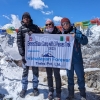
The Everest Three Passes Trek was an overwhelming odyssey of highs and challenges. Conquering Kongma La, Cho-La, and Renjo La brought a sense of achievement, while the serenity of remote landscapes and the iconic Everest region made this journey truly remarkable.
Trekking through Kongma La, Cho-La, and Renjo La felt like an intrepid exploration into Everest's enigma. The towering peaks, the remote realms, and the cultural encounters along the way created an unforgettable tapestry of Himalayan adventure.
The Everest Three Passes Trek offered an elevation extravaganza. Navigating Kongma La's rocky terrain, traversing Cho-La's glacial beauty, and soaking in the panoramic views from Renjo La made this trek a true test of endurance and an immersion into Himalayan grandeur.
Traversing Kongma La, Cho-La, and Renjo La was a mesmeric journey through Everest's majesty. The breathtaking views, the diverse landscapes, and the cultural odyssey through Sherpa villages created an experience that transcended the ordinary.
Leaping across Kongma La, Cho-La, and Renjo La felt like a legendary adventure into the lap of the Himalayas. The raw beauty of the passes, the close encounters with the world's highest peaks, and the camaraderie with fellow trekkers made this journey truly epic.
Crossing the three high passes with Himalayan Forever was the adventure of a lifetime. Kongma La's rocky scramble, Cho La's icy traverse, and Renjo La's steep steps tested every ounce of grit, but the rewards—panoramic Everest views from each summit—made it worth it. We hit Gokyo Lakes' turquoise beauty, summited Gokyo Ri at dawn, and stood at Everest Base Camp amid the icefall. Guides were spot-on with acclimatization and encouragement, keeping us safe through tough days. Teahouses offered cozy refuge after long hauls. For anyone seeking the best Everest Three Passes Trek in Nepal, Himalayan Forever's expertise and warmth turn this beast into an unforgettable triumph.
Himalayan Forever made the Everest Three Passes Trek feel epic yet doable. The route looped through hidden valleys, over Kongma La (that boulder field was brutal but beautiful), Cho La with its glacier crossing, and Renjo La's sweeping vistas of Cho Oyu. Gokyo's serene lakes and the climb to Gokyo Ri stole my heart, while Kala Patthar's sunrise over Everest sealed the deal. Our guide's stories of Sherpa life added soul to the journey, and porters carried loads like champs. Challenging? Yes. Rewarding? Absolutely. If you're googling top high passes treks in Nepal, this company's thoughtful pacing and genuine care make it stand out.
The Everest Three Passes Trek with Himalayan Forever pushed me further than I thought possible. Conquering Kongma La, Cho La, and Renjo La in one go—each over 5,000m—brought raw exhilaration, especially those first glimpses of Lhotse and Makalu from the tops. Side trips to Chhukung Ri and Gokyo Ri delivered jaw-dropping 360° views. Guides monitored altitude closely, shared laughs over garlic soup in teahouses, and ensured we paced right. The Sherpa hospitality felt real and welcoming. This isn't your standard EBC trek; it's deeper, wilder. For serious adventurers hunting the best challenging Himalayan treks in Nepal, Himalayan Forever delivers pure magic.
What a profound journey crossing the Everest Three Passes with Himalayan Forever! Starting in Lukla, weaving through Namche and Tengboche, then tackling the passes in sequence—Kongma La's tough ascent, Cho La's snowy ridge, Renjo La's dramatic descent into quieter valleys. Gokyo Lakes shimmered like jewels, Everest Base Camp felt triumphant, and Kala Patthar's sunrise was poetic. The group's small size fostered real bonds, and guides' knowledge of local culture enriched every step. Food stayed nourishing even high up. If you're after an authentic, off-the-beaten-path Everest Three Passes Trek in Nepal, their human touch and organization make it exceptional.
Himalayan Forever turned the demanding Everest Three Passes Trek into something special. The three passes—Kongma La, Cho La, Renjo La—each offered unique thrills: rocky trails, glacier crossings, stone steps with insane panoramas. Reaching Gokyo Ri for those turquoise lakes and Everest views, then pushing to Base Camp and Kala Patthar, felt like collecting Himalayan treasures. Guides were vigilant about health, sharing tips that kept us strong. Teahouse evenings with hot tea and Sherpa tales were cozy highlights. For anyone searching premier high-altitude treks in Nepal, this company's safety focus and warmth elevate the experience.
My Everest Three Passes Trek with Himalayan Forever was challenging in the best way. Crossing Kongma La felt like a rite of passage, Cho La's icy path demanded focus, and Renjo La rewarded with peaceful Gokyo views. The circuit through Imja Tse and Ngozumpa Glacier valleys was remote and stunning. Guides encouraged us through tough sections, and porters' strength inspired. We celebrated at base camp and savored Gokyo Ri's sunrise. This trek goes beyond EBC—it's wilder, more immersive. Highly recommend Himalayan Forever for the ultimate Everest high passes trek in Nepal; their care made it heartfelt.
Himalayan Forever handled our Everest Three Passes Trek flawlessly. The passes were the stars: Kongma La's boulder-hopping, Cho La's dramatic glacier, Renjo La's final high vantage. Gokyo Lakes and Ri brought serene beauty, while Everest Base Camp and Kala Patthar delivered that iconic rush. Acclimatization days prevented issues, and guides' humor lightened heavy packs. Sherpa culture shone through villages and monasteries. Food (momos, dal bhat) fueled us well. If you're eyeing tough Himalayan adventures in Nepal, this company's expert, supportive approach makes the Three Passes unforgettable
The Everest Three Passes Trek via Himalayan Forever was raw and rewarding. Traversing Kongma La, Cho La, and Renjo La gave triple doses of high-mountain magic—each pass a different angle on Everest, Lhotse, and beyond. Gokyo's glacial lakes felt otherworldly, and summiting Ri and Kala Patthar capped it perfectly. Guides checked vitals daily, shared local lore, and kept spirits high. The remote feel—fewer crowds, more wilderness—made it special. For top-rated challenging treks in Nepal's Everest region, Himalayan Forever's genuine service shines. Left humbled and inspired.
Himalayan Forever made crossing the Everest Three Passes a highlight of my life. Kongma La tested endurance, Cho La brought icy excitement, Renjo La offered serene descent to Thame. We explored Gokyo's pristine lakes, hit Base Camp, and caught Kala Patthar's golden light. Guides were like family—patient, knowledgeable, always ready with encouragement. Teahouses provided warmth after cold nights. This trek's depth (culture, views, challenge) beats standard routes. Searching for the best Everest Three Passes Trek operator in Nepal? Their heartfelt organization delivers
What an incredible Everest Three Passes Trek with Himalayan Forever! The three high passes—Kongma La, Cho La, Renjo La—delivered breathtaking variety: rocky ascents, snowy traverses, panoramic payoffs. Gokyo Ri's views over the lakes and peaks were mesmerizing, Everest Base Camp surreal. Guides managed altitude expertly, porters eased the load. Sherpa hospitality and monastery visits added heart. Tough days were balanced by cozy teahouse evenings. For adventurers wanting the full Himalayan experience in Nepal, this company's warmth and professionalism make it unbeatable. Still buzzing from those summits!
Himalayan Forever guided us through the Everest Three Passes Trek like true pros. Kongma La kicked things off with a grueling boulder scramble, but the view of Ama Dablam from the top made my legs forget the pain. Cho La's glacier crossing was intense—slippery and exhilarating—and Renjo La delivered that peaceful drop into the quieter Gokyo side. Gokyo Ri sunrise over the lakes and Everest was pure magic, and hitting Base Camp felt earned. Guides kept us hydrated, motivated, and laughing through it all. For anyone chasing the ultimate high passes trek in Nepal, this company's care turns a tough journey into something profound.
The Everest Three Passes Trek with Himalayan Forever was raw adventure at its best. We tackled Kongma La first—steep and rocky—then Cho La with its dramatic ice, and finished strong on Renjo La overlooking Cho Oyu. The Gokyo Lakes were breathtakingly blue, and the climb to Gokyo Ri gave us a front-row seat to the entire Khumbu. Kala Patthar sunrise was the cherry on top. Our guide's quiet wisdom about the mountains and Sherpa ways made every evening special. Fewer crowds, more wilderness—this is the deeper Himalayan experience. Highly recommend Himalayan Forever for serious trekkers seeking Nepal's best high passes route
Himalayan Forever made the Everest Three Passes Trek feel challenging yet supported every step. Kongma La tested endurance with its endless rocks, Cho La brought that thrilling glacier moment, and Renjo La rewarded with serene views into the Bhote Koshi valley. Exploring Gokyo's emerald lakes, summiting Ri for 360° panoramas, then pushing to Everest Base Camp—it all built to an incredible crescendo. Guides checked oxygen levels daily and shared heartfelt stories around the stove. Teahouse dal bhat never tasted better after long days. If you're after the best Everest Three Passes Trek in Nepal, their warmth and expertise make it unforgettable
What a beast of a trek—the Everest Three Passes with Himalayan Forever delivered big. Crossing Kongma La felt like climbing through another world, Cho La's snowy ridge gave heart-pounding views, and Renjo La's descent into Gokyo was a gentle exhale after the intensity. Gokyo Ri at dawn, with pink light on Everest and Makalu, left me speechless. Base Camp and Kala Patthar capped it perfectly. Guides were calm under pressure, always ready with encouragement or a hot drink. This isn't easy, but it's transformative. For top challenging Himalayan treks in Nepal, Himalayan Forever stands out with genuine care.
Himalayan Forever turned the Everest Three Passes Trek into a complete Himalayan immersion. We looped through the classic high passes—Kongma La's tough ascent, Cho La's icy thrill, Renjo La's sweeping finale—while hitting hidden gems like Chhukung Ri and the Ngozumpa Glacier. Gokyo Lakes shimmered under clear skies, and the views from Ri and Kala Patthar were next-level. Guides paced us thoughtfully, shared Sherpa folklore, and kept the group vibe positive. Food stayed surprisingly good even at 5,000m+. If you're searching for the ultimate high passes adventure in Nepal, this company's human touch makes the tough days feel meaningful.
The Everest Three Passes Trek via Himalayan Forever was soul-stirring. Kongma La challenged my legs, Cho La tested balance on snow, and Renjo La offered quiet reflection overlooking distant peaks. Gokyo's lakes felt like a reward, Gokyo Ri's summit views were humbling, and Everest Base Camp brought that rush of achievement. Guides monitored us closely, offered gentle motivation, and made teahouse nights cozy with tea and stories. This trek goes beyond the standard path—it's wilder, richer. For adventurers wanting the best Everest high passes trek in Nepal, Himalayan Forever's supportive approach is gold.
Himalayan Forever made our Everest Three Passes Trek feel personal and epic. The three passes each had their own personality—Kongma La rugged, Cho La icy and exposed, Renjo La panoramic and peaceful. We savored Gokyo Lakes' tranquility, the climb to Ri for insane vistas, then the triumphant push to Base Camp and Kala Patthar. Small group meant real friendships formed over garlic soup and laughter. Guides' knowledge of the region added depth. This is the deeper dive into the Khumbu. Searching for premier challenging treks in Nepal? Himalayan Forever delivers heart and skill in spades.
My Everest Three Passes Trek with Himalayan Forever was tough but transformative. Kongma La's boulder field built character, Cho La's glacier crossing thrilled, and Renjo La's high vantage over the lakes was serene payoff. Gokyo Ri sunrise stole the show, Everest Base Camp felt massive, and Kala Patthar views were poetic. Guides kept altitude in check with daily checks and encouragement. Porters' strength inspired us daily. Teahouses offered welcome warmth. For anyone eyeing the best high passes trek Nepal has, Himalayan Forever's genuine care makes it shine. Still replaying those moments
Himalayan Forever handled the Everest Three Passes Trek with real expertise. The passes—Kongma La, Cho La, Renjo La—delivered triple the drama and views: rocky scrambles, snowy ridges, stone-step descents into quieter valleys. Gokyo Lakes and Ri were mesmerizing, Base Camp surreal, Kala Patthar unforgettable. Guides shared laughs, altitude tips, and Sherpa insights that enriched everything. Food fueled us through cold nights. This trek's remoteness and challenge set it apart from standard routes. If you're after an authentic, demanding Himalayan adventure in Nepal, Himalayan Forever is the way to go.
The Everest Three Passes Trek with Himalayan Forever was everything I wanted—challenging, scenic, soulful. Kongma La pushed limits, Cho La brought icy excitement, Renjo La gifted peaceful Gokyo views. Summiting Gokyo Ri for those turquoise lakes and peaks, then reaching Base Camp and Kala Patthar, felt victorious. Guides were patient, vigilant, and full of stories. Group energy carried us through tough sections. This is the full Khumbu experience. For serious trekkers searching top Everest high passes treks in Nepal, Himalayan Forever's warmth and organization make it exceptional. Grateful for every step.
Himalayan Forever made the Everest Three Passes Trek one of the most rewarding challenges I've ever taken on. Kongma La's rocky chaos gave way to incredible Ama Dablam views, Cho La's glacier felt like stepping into another planet, and Renjo La's quiet descent into Gokyo was the perfect breather. Gokyo Ri sunrise over those electric-blue lakes, then the push to Everest Base Camp and Kala Patthar—it all came together beautifully. Guides were incredible: calm, attentive, always ready with a story or a nudge forward. This trek's remoteness and raw beauty set it apart. For the best high passes adventure in Nepal, Himalayan Forever is unbeatable.
Crossing the Everest Three Passes with Himalayan Forever was tough love from the mountains. Kongma La tested my resolve with its endless boulders, Cho La delivered that icy adrenaline rush, and Renjo La rewarded with serene panoramas over Cho Oyu and the lakes. Gokyo's tranquility after the passes, the climb to Ri for those sweeping views, and finally standing at Base Camp—pure triumph. Guides kept us safe with daily health checks and shared warm Sherpa hospitality that made cold nights bearable. Teahouse momos hit different at 5,000m. If you're after a deeper, more challenging Himalayan trek in Nepal, this company's genuine support makes it special
Himalayan Forever turned the Everest Three Passes Trek into something magical and manageable. We conquered Kongma La first—steep and stunning—then Cho La with its snowy thrills, and wrapped up on Renjo La overlooking the quieter side of the Khumbu. Gokyo Lakes were mesmerizing, Gokyo Ri's 360° vista jaw-dropping, and Kala Patthar sunrise over Everest felt like a personal gift. Guides paced us perfectly, offered encouragement when legs burned, and made every teahouse stop feel like home. This isn't just trekking; it's immersion. For anyone searching the ultimate Everest high passes trek Nepal offers, Himalayan Forever delivers heart and expertise.
Beyond Base Camp – The Real Deal The Everest Three Passes Trek with Himalayan Fewer was wilder and more fulfilling than I imagined. The three passes each brought something unique: Kongma La's rugged ascent, Cho La's exposed glacier crossing, Renjo La's peaceful high-point views. Hitting Gokyo Ri for those iconic lakes, then looping to Everest Base Camp and Kala Patthar, completed the full Khumbu circle. Guides were legends—monitoring altitude, sharing laughs, and keeping spirits high through fatigue. Food stayed hearty, and the Sherpa culture added soul. If you're craving a serious, off-the-main-path Himalayan adventure in Nepal, Himalayan Forever makes it feel safe and soul-stirring.
Himalayan Forever guided our Everest Three Passes Trek with real warmth and skill. Kongma La pushed us hard, Cho La thrilled with its ice and exposure, and Renjo La gifted calm after the storm with sweeping valley views. Gokyo Lakes sparkled like nothing else, the Ri summit views were humbling, and reaching Base Camp plus Kala Patthar sunrise felt epic. Guides checked on us constantly, told great mountain tales, and turned tough days into shared victories. This trek's challenge and beauty go far beyond the standard route. For top-tier high passes treks in Nepal, Himalayan Forever stands out with their caring, human approach. Still grinning about it.
Clothing
Handwear
Footwear
Gear
Miscellaneous
Everest region of Khumbu area offers best lodge or hotel accommodation with comprehensive food menu to choose from. From Lukla onwards till Gorakshep with several options from budget, moderate to luxury standard.
But in small isolated places like Dzongla, Thagnak and Lungden the lodge accommodation are very simple and basic. But clean with homely environment and the foods menu with limited varieties.
Trekkers can enjoy rooms with attached bath / toilets, but higher region the toilets and bathe are common. Foods are served in a large warm dining room, the foods served as per the menu from Continental, Chinese, Indian, Tibetan and Nepali. Some lodge restaurants also serves fresh homemade bakeries products.
The most famous and popular is Nepali Dal / Bhat (boiled or steam rice, served with various lentil soups, vegetable or meat mild curry, includes pickles of choice).
The ideal trekking seasons are spring (March to May) and autumn (September to November) when the weather is stable, and the views are clear.
Yes, trekkers need permits, including the Sagarmatha National Park entry permit, the TIMS (Trekkers’ Information Management System) card, and the Gokyo Lakes permit.
While independent trekking is possible, hiring a guide and/or porter is recommended for safety, navigation through high passes, and cultural insights.
The trek overall is not too tough or difficult, the trail is well defined having several nice lodges and settlements. The only hardest is walking fast on high altitude, where one should take it slowly having rest to enjoy the walk each day. The toughest is the climb to high Kalapathar Hill top just for few hours, as well climbing over all three passes. The downhill is equally tough but taking slow will overcome the difficulty. Can be quite arduous and tough if there is snow and ice on the trail crossing the passes.
Yes, the famous and popular Kalapathar Hill, one of the best view-points around the Himalayan region. While visiting Everest base camp, climb to Kalapathar Hill includes in our trekking itinerary. Which is not to be missed, offers grand vista and closest views of Mt. Everest.
It is not that popular as other various scenic destinations around Khumbu.But the Everest Three passes is drawing more interested and adventurers’ trekkers, form last few decades. Trekkers seldom use these route due to its remote and isolated location. But best for trekkers who enjoys sheer complete wilderness.
The Everest Three Passes Trek is a challenging trek in the Everest region of Nepal, which involves crossing three high mountain passes: Kongma La Pass, Cho-La Pass, and Renjo-La Pass. It offers stunning views and a comprehensive Everest experience.
The trek typically takes around 16-20 days, depending on the chosen route, acclimatization days, and individual trekker's pace.
The three passes are Kongma La Pass (5,535m), Cho-La Pass (5,420m), and Renjo-La Pass (5,360m).
The highest point is the summit of Kala Patthar, which stands at an elevation of approximately 5,545 meters (18,192 feet).
The trek passes through Sherpa villages, offering a rich cultural experience. Trekkers can visit monasteries, interact with locals, and witness traditional customs.
Focus on cardiovascular fitness, endurance, and leg strength. A gradual acclimatization process is crucial, and proper trekking gear is necessary.
In all areas around Everest villages and smaller settlements have hydroelectricity or solar power. Trekkers can charge their electronic items, on paying a small fee for each gadgets as per hour basis, the price differs from one place to another.

| No of people | Price per person |
|---|---|
| 1 - 1 | $1,550 |
| 2 - 4 | $1,275 |
| 5 - 7 | $1,250 |
| 8 - 12 | $1,225 |
| 13 - 20 | $1,200 |
| No of people | Price per person |
|---|---|
| 1 - 1 | $1,675 |
| 2 - 4 | $1,375 |
| 5 - 9 | $1,350 |
| 10 - 12 | $1,325 |
| 13 - 20 | $1,300 |
| No of people | Price per person |
|---|---|
| 1 - 1 | $1,550 |
| 2 - 4 | $1,275 |
| 5 - 8 | $1,250 |
| 9 - 12 | $1,225 |
| 13 - 20 | $1,200 |