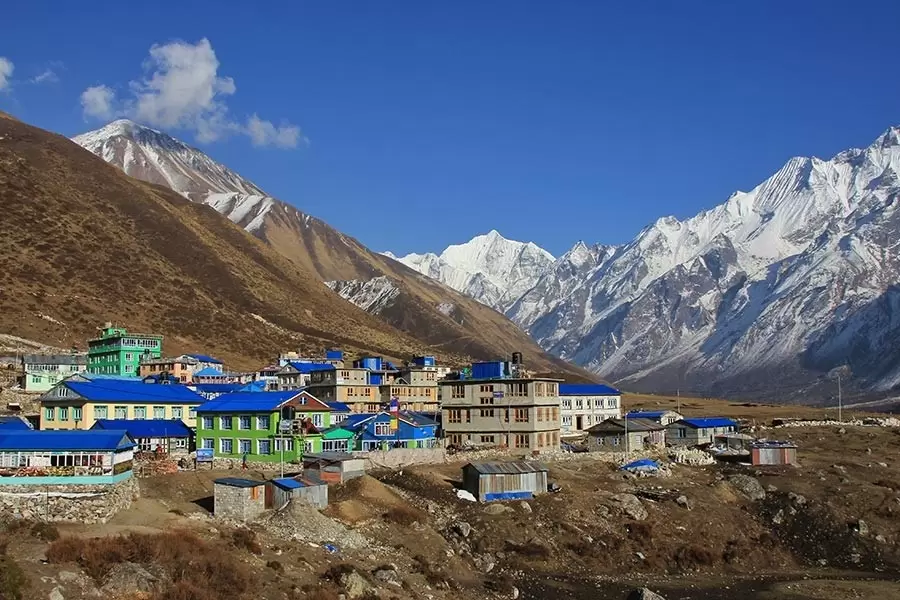
Imagine walking through emerald hills where time seems to have stood still. Where the air carries the scent of pine and juniper, the distant chime of a monastery bell mixes with the laughter of children, and every greeting is offered with a genuine, warm smile. This is the Tamang Heritage Trail—not just a trek, but a profound immersion into the living culture of one of Nepal's most ancient peoples. Far from the crowded tea-house trails, this journey offers a rare, intimate glimpse into authentic Himalayan life, set against the staggering backdrop of the Langtang and Ganesh Himal ranges.
For travelers seeking a path less traveled, the Tamang Heritage Trail is a revelation. It’s an adventure where cultural connection is the highlight, where you don't just see the mountains, but you understand the people who have called them home for millennia. At Himalayan Forever Treks, we believe the best journeys change how you see the world, and this trail, with its focus on community, heritage, and breathtaking scenery, does exactly that.
Ready to walk through living history? Contact our team to start planning your authentic Tamang Heritage Trail adventure.
In a country famed for its towering peaks, the Tamang Heritage Trail stands apart. While treks like the iconic Everest Base Camp Trek deliver legendary mountain vistas, and the Annapurna Circuit Trek offers incredible variety, the Tamang Trail provides something equally precious: an unfiltered cultural heartbeat.
This is a consciously community-focused trek. Developed to bring sustainable tourism directly to Tamang villages after the region faced economic challenges, your journey directly supports local families. You'll sleep in traditional homestays, eat home-cooked meals, and participate in daily life, ensuring your visit has a positive, tangible impact.
| Aspect | What to Expect |
|---|---|
| Primary Focus | Deep Cultural Immersion in Tamang villages, traditions, and daily life. |
| Scenery | Panoramic views of the Langtang, Ganesh, and even Manaslu and Annapurna ranges from high ridges. |
| Accommodation | Authentic homestays and community lodges, offering a true "home away from home" experience. |
| Trekking Style | A moderate circuit trek with significant daily ascents and descents, perfect for culturally curious walkers. |
| Crowds | Very few compared to classic trails—enjoy peace and genuine interaction. |
The trail weaves through villages like Gatlang, Tatopani, and Thuman, each a showcase of exquisite Tamang craftsmanship with ornate wooden windows, stone houses, and ancient monasteries. The highest point, Nagthali Hill (3,165m), offers a 360-degree Himalayan panorama that rivals any vista in Nepal, but it's the warmth of the people you meet along the way that will truly define your experience.
To walk the Tamang Heritage Trail is to step into a living museum of Himalayan culture. The Tamang people, whose name translates to "horse warriors" or "horse traders," have a history stretching back over 3,000 years. Their culture is a vibrant tapestry woven from Tibetan Buddhism and the ancient animist Bon and Shamanistic traditions.
Your senses will be delighted at every turn:
This deep cultural immersion is what sets this trek apart from more physically demanding routes like the Everest Three Passes Trek or the remote Upper Dolpo Trek. It's an accessible, heart-centered journey.
The Tamang Heritage Trail is graded as moderate. It's an excellent choice for:
The Challenge: The difficulty comes less from altitude (it stays below 3,200m) and more from the trail's constant nature. You will face substantial ascents and descents each day—for example, the climb from Tatopani to Nagthali is long and steep. A good baseline fitness level is essential.
The ideal windows are Spring (March to May) and Autumn (September to November).
While a day-by-day itinerary is best discussed when you plan your trip with us, here are the can't-miss experiences that define the trail:
Trekking the Tamang Heritage Trail with a responsible operator is key to ensuring your visit is respectful and beneficial to the communities. At Himalayan Forever Treks, we handle all the logistics so you can focus on the experience.
We Provide:
This trail is a perfect example of the diverse experiences Nepal offers—from the high-altitude challenges of Island Peak Climbing to the serene cultural walks like this one.
The Tamang Heritage Trail is more than a walk; it's an invitation. An invitation to slow down, to connect, to share in the timeless rhythms of Himalayan village life, and to be humbled by the majestic beauty of the mountains that watch over it all.
If you're looking for an adventure that feeds your soul as much as it challenges your body, a journey where you return with stories of people as much as pictures of peaks, then this trail is calling you.
Are you ready to answer the call? Contact Himalayan Forever Treks today. Let's craft your perfect cultural adventure on the Tamang Heritage Trail.
Inspired by Nepal's cultural treasures? Explore our other unique journeys:
For a classic high-mountain experience:Annapurna Base Camp Trek
For a shorter, scenic tea-house loop:Ghorepani Poon Hill Trek
For an epic high-pass circuit:Annapurna Circuit Trek
For a remote and mystical kingdom:Upper Mustang Trek
For a stunning ridge walk:Mardi Himal Trek
For the ultimate Himalayan challenge:Makalu Base Camp Trek
Mode of Trekking: In best available Lodges, Home Stay Guest-Houses.
Trekking Grade:Moderate with Ups and Downhill walks.
Area of Trekking: Langtang Himal range around district of Rasuwa.
Highest points: On top Nagethali Hill at 3, 165 m / 10, 384 feet high.
People and culture: Populated by Tamang the main tribes of Central Himalaya range interwoven to Buddhism religion and cultures.
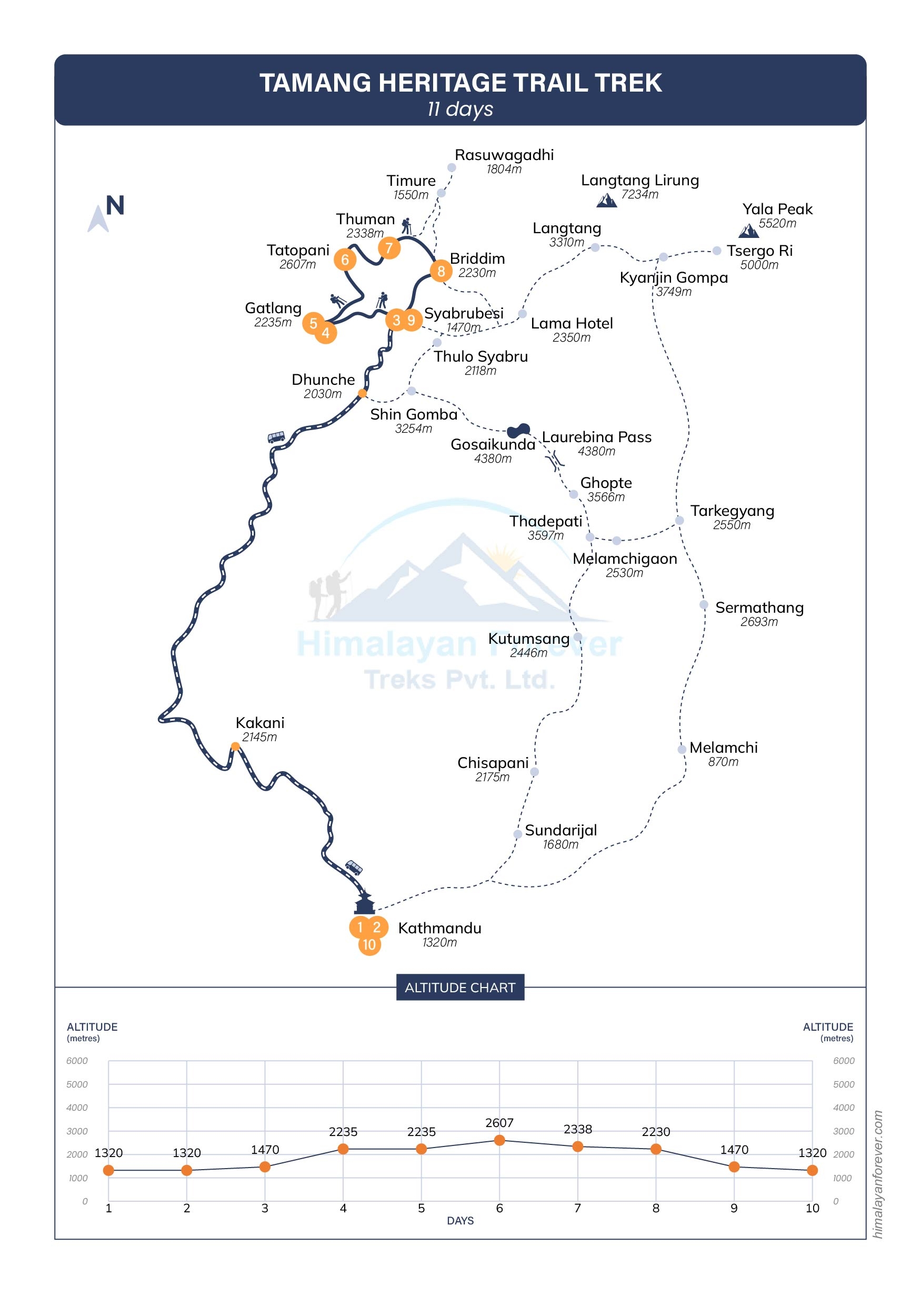
Trekking duration: 07 Nights and 08 Days (with drives both ways).
Total Trip:11 Nights / 12 Days from arrival to main departures.
Best Seasons: Nearly months of the year, except for monsoon wet months of mid-June to mid-September. The best seasons are spring and autumn / fall, the spring time begins from March to May and autumn from September to November.
Interested people can enjoy the trek during winter times of Christmas and New Year Holidays, however much cold temperatures. But most days are bright and clear with sunshine, short daylight hours during autumn and winter times.
On arrival at Kathmandu, Nepal International Airport our guide and staff will receives you with traditional welcome. After knowing the staff of Himalayan Forever Treks, a short drive to your hotels. Located in the heart of a city within an exciting Thamel area, an interesting place where most good hotels and restaurants situated. Reaching at the hotel, check your lovely rooms, after getting refreshed join in for group briefing. Provided by your guide or Group Leader, offers useful and important information of the trek, hotels and local lodge.


Trekking Preparation Day is spent before the trek to ensure everything is ready. It includes a trek briefing, gear check, permit preparation, and final packing. This day helps you stay safe, confident, and fully prepared for an enjoyable trekking adventure in the Himalayas
Morning after breakfast, adventure starts with an interesting drive heading north of Kathmandu valley. Enjoy the exciting ride overlooking beautiful landscapes of rolling green hills and valleys. The drive continues past farm villages and towns, facing views of snow peaks towards north-west. As the road follows to winding uphill to Dhunche, a large town and headquarters of the Rasuwa district. From here entering Langtang National Park, the first park around Nepal Himalayan. Which is also the home of Tamang, the indigenous old tribes interwoven with Buddhism religion and culture. After a short refreshing break at Dhunche, drive continues downhill on winding road to Syabrubesi village for overnight stop.
Syabrubesi a small town with a farm village, the gateways to various exciting adventure and cultural destinations. Where one walk to famous Langtang valley, or towards Ganesh Himal and Ruby valley in the west. As well on the main route to Tibet border towards north, and to our destinations around Tamang Heritage Trail.
Morning walk on the main road for short while, and then leaving the motorable road, using the old walking path. As the path winds uphill through smaller farm area and hamlets, entering cool forest. Enjoy the pleasant walk facing views of snow-clad peaks. Slowly the day completes on reaching a large lovely village at Gatlang, the villagers will receives you with warm welcome. Greets you with Traditional culture offering silk scarf called Khada, and then transfer into a cottage or huts. Which serves a House-Stay, managed by local communities.
Enjoy the afternoon interacting and observing the local farm activities, with typical Nepali or Tamang meals.
Enjoy a leisure free day in Gatlang, having good breakfast, explore the village and its old monastery. The villagers shows you their home-made handicrafts of looms that their wear, traditional Tamang dress. Made from wools and cotton fabrics, enjoy walking around scenic view points, as well enjoy the local foods calledDherro. A staple food of Tamang community and other mountain tribes, it is a thick porridge or mush. Made by cooking stone-ground cornmeal (maize), millet flour (millet powder) or buckwheat flour (buck wheat powder) with salt and water. Includes home-made spicy sauce and soups, seasonal vegetables to add with the Dherro paste, like a porridge.
The village is lively with views of Langtang and Ganesh Himal with some peaks across the border in Tibet. Evening the local will perform traditional folk dance and singing, before normal dinner.
Morning enjoy the surrounding views of peaks and rolling green hills, and then start the walk, leaving Gatlang. After an enjoyable stay, the morning route leads to higher terrain, past several scattered farm land. As walk proceeds towards forest of rhododendron and pine trees, overlooking grand views of peaks.
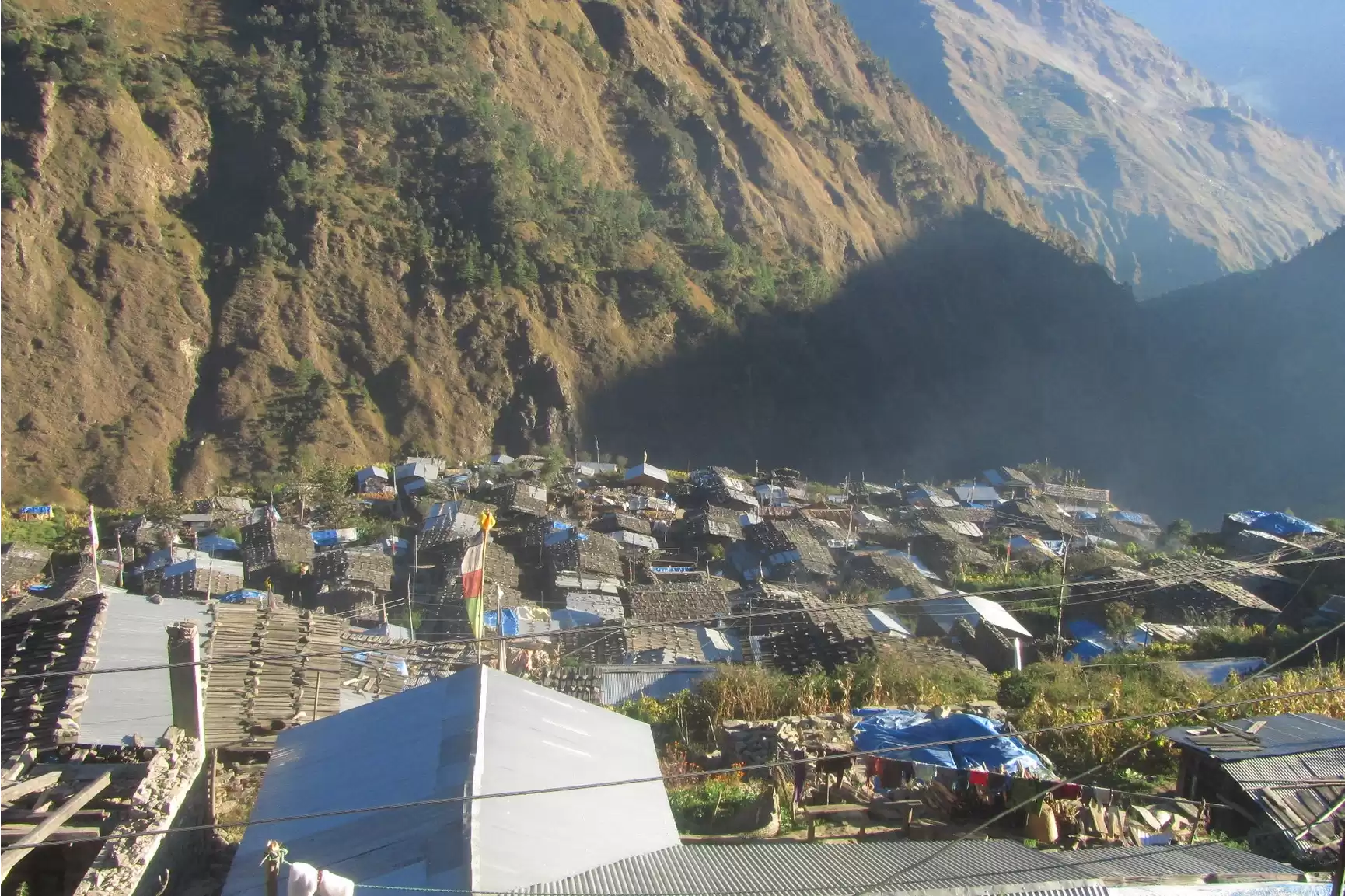
Finally the day ends reaching Tatopani village for overnight stop, the Tatopani means Hot-Water. The village was famous and popular for natural Hot-Spring, but the earthquake of 2015 destroyed the source of the hot-spring.
An interesting village of Tamang communities to brows around this large settlement, enclosed by high rolling hills.
From Tatopani village, enjoying refreshing overnight in a homely comfort lodge, the morning walk continues. Heading close to Nepal and Tibet border, and then our route diverts from the main trail. As climb continues for few hour to the top Nagethali, on the highest point of our adventure. For every hard effort rewards with spectacular panorama of Central and Mid-Western Himalayas, overlooking views of Langtang and Ganesh Himal. Includes distant peaks as far towards Manaslu and Annapurna Himalaya range in the western horizon.
After an enjoyable scenic stop, walk leads down to Thuman the trail follows with short ups and down. Walking into dense lovely forest then reaching Thuman village for overnight halt, in the comfort of a nice simple lodge.
Having ample time to observe the local villager farm life and raising live-stock, and interacting with the Tamang natives. Thuman, an interesting village with impressive ancient culture, and renowned for Shamanic practice.
After an exciting time at Thuman, morning walk leads on moderate winding path of 5 to 6 hours. Facing beautiful scenery, as walk continues reaching a small farm areas at Lingling, walk into rhododendron, oaks and pine tree forest.
Enjoying grand vista of Snow Mountain range, as walk leads further to Briddim village for overnight stop. At Briddim in the comfort of nice Home-Stay hut with interesting activity program as entertainment.
At Briddim enjoy observing the local culture of Tamang, and experience the village farm life. Furthermore performs traditional folk dance, song as lively entertainment for the guest to enjoy. The heritage and culture of Briddim is much similar to its Tibetan predecessors, across the border of Kyirong and Rasuwagaddi.
Enjoy last day trek of the wonderful adventure, morning from Briddim an easy down on gradual path to Syabrubesi village. The walk follows close on the bank of Chilime River to reach final overnight stop in Syabrubesi. After a great experience around the heritage trail of Tamang traditional farm villages around the district of Rasuwa.
Start early morning for a long interesting drive to Kathmandu, an exciting journey following the winding downhill road. Reaching low warm farm villages of Trisuli Bazaar around Nuwakot district. Possible stop for lunch break, the drive continues through nice farm villages and town. Then finally reaching the Kathmandu valley outskirt, and then into hustle bustle city life of Kathmandu.
The drive takes you back to your hotel by late afternoon, enjoy rest of day at leisure.
Last day in Nepal and at Kathmandu, get ready for final departure as per your international flight time. Himalayan Forever Trek guide and staff transfer you to the airport. Bidding farewell to the guide and staff as you depart for homeward bound flight, after a wonderful experience and adventure on Tamang Heritage Trail Trekking.
To trek the Tamang Heritage Trail, trekkers need to obtain the TIMS (Trekkers' Information Management System) card and the Langtang National Park entry permit. These permits contribute to conservation efforts and help manage tourism in the area. Permits can be obtained in Kathmandu or directly in the Langtang region.
The trek usually starts with a drive from Kathmandu to Syabrubesi, the gateway to the Langtang region. From Syabrubesi, trekkers embark on foot, following trails that wind through Tamang villages and picturesque landscapes. Depending on the itinerary and preferences, trekking is the primary mode of transportation throughout the journey.
The Tamang Heritage Trail Trek often starts from Syabrubesi, a scenic village located in the Langtang region. From here, trekkers gradually ascend through terraced fields, dense forests, and traditional Tamang villages. The trail offers glimpses into the Tamang people's lifestyle, culture, and ancient Tibetan-influenced traditions.
The trek typically concludes in the village of Briddim or Gatlang, depending on the chosen route. Trekkers experience the warmth of Tamang hospitality, enjoying cultural programs, local cuisine, and homestay accommodations. After exploring these villages, trekkers may return to Kathmandu via vehicle from Syabrubesi.
Communication facilities along the Tamang Heritage Trail are limited, particularly in remote villages. Guesthouses and lodges may offer basic Wi-Fi and telephone services, but connectivity can be unreliable. It's advisable to inform family and friends about potential communication challenges before embarking on the trek.
The Tamang Heritage Trail is considered a moderate trek suitable for trekkers of various fitness levels. The trail involves daily hikes of 4-6 hours, with gradual ascents and descents. Altitude is not a significant concern, as the maximum elevation is around 3,000 meters, making it accessible to most trekkers with basic preparation.
Accommodation along the Tamang Heritage Trail ranges from basic guesthouses to homestays in traditional Tamang villages. Trekkers experience local hospitality and cultural immersion, staying in simple rooms with shared facilities. Meals are typically served in communal dining areas and feature traditional Tamang cuisine, providing a taste of authentic local flavors.
The Tamang Heritage Trail Trek offers a cultural journey through Tamang villages nestled in the Langtang region's scenic landscapes. Trekkers interact with friendly locals, visit ancient monasteries, and witness traditional ceremonies, gaining insight into the Tamang community's rich heritage and way of life.
The best time to undertake the Tamang Heritage Trail Trek is during the spring (March to May) and autumn (September to November) seasons. These periods offer favorable weather conditions, clear skies, and pleasant temperatures for trekking. Spring showcases blooming rhododendron forests, while autumn provides stunning mountain views without monsoon rains.
Himalayan Forever excels in organizing culturally immersive treks like the Tamang Heritage Trail. Their experienced guides and support team ensure safety, comfort, and meaningful interactions with local communities. They emphasize responsible tourism practices to preserve cultural heritage and support sustainable development in the Langtang region.
Respect for local customs, traditions, and natural surroundings is crucial when trekking through the Tamang Heritage Trail. Trekkers should follow designated trails, avoid disrupting wildlife habitats, and support local economies by patronizing community-run accommodations and businesses.
Choosing Himalayan Forever ensures a well-planned and culturally enriching trekking experience on the Tamang Heritage Trail. Their team's expertise in logistics, safety measures, and cultural interpretation enhances the journey, providing trekkers with memorable encounters and insights into the Tamang way of life.
The best experience on the Tamang Heritage Trail Trek is the opportunity to immerse oneself in the Tamang community's hospitality and cultural traditions. From staying in traditional homestays to participating in local festivities and enjoying panoramic mountain views, every moment offers a deeper appreciation for Nepal's diverse cultural heritage.
What is the accommodation like on the Tamang Heritage Trail?
Accommodation on the Tamang Heritage Trail ranges from basic guesthouses with shared facilities to homestays in Tamang villages. Trekkers experience simple comforts, traditional hospitality, and the chance to engage with local families.
Is altitude sickness a concern on the Tamang Heritage Trail?
Altitude sickness is generally not a major concern on the Tamang Heritage Trail, as the maximum elevation is moderate. However, trekkers should still acclimatize properly, stay hydrated, and be aware of altitude-related symptoms.
What should I pack for the Tamang Heritage Trail Trek?
Pack lightweight, moisture-wicking clothing suitable for layering, sturdy hiking boots, a warm sleeping bag, toiletries, and a first aid kit. It's also advisable to carry personal snacks, water purification tablets, and a camera to capture the scenic landscapes and cultural experiences.
Embarking on the Tamang Heritage Trail with Himalayan Forever Treks, supported by Gakul and Company, was like stepping into a living cultural tapestry. The vibrant Tamang communities, their warm hospitality, and the flawless organization of the trek made it an enriching experience.
For a photographer seeking authenticity, the Tamang Heritage Trail is a paradise. Himalayan Forever Treks, with unwavering support from Gakul and Company, orchestrated a seamless journey through picturesque landscapes and culturally rich Tamang villages. Every frame was a testament to the beauty of Nepal.
The Tamang Heritage Trail, expertly guided by Himalayan Forever Treks and supported by Gakul and Company, is a journey into tranquility. From serene landscapes to the genuine smiles of Tamang locals, every moment felt like a meditation. It was a trek that soothed the soul.
Beyond its scenic beauty, the Tamang Heritage Trail offered a delightful culinary journey. Himalayan Forever Treks, with support from Gakul and Company, ensured we sampled the best of Tamang cuisine. The trek was a treat for the taste buds, complementing the breathtaking views.
As an adventure anthropologist, the Tamang Heritage Trail was a cultural odyssey. Himalayan Forever Treks, in collaboration with Gakul and Company, provided an immersive experience into Tamang traditions. It was a trek where every step told a story of the rich cultural heritage of the Tamang people.
I've trekked in Nepal before, but the Tamang Heritage Trail with Himalayan Forever was something else entirely. This isn't about conquering peaks; it's about being invited into someone's home. In Gatlang, our homestay mother taught me to pat round chapati while laughing at my clumsy hands. In Briddim, a grandfather showed me his Tibetan singing bowl, its hum filling his smoke-warmed kitchen. By day five, I stopped feeling like a tourist. I felt like a niece visiting family I never knew I had.
After four days of walking through terraced fields and pine forests, Tatopani's hot springs were pure heaven. Soaking in 40°C water, steam rising into the cool mountain air, watching local children jump fearlessly between pools. Himalayan Forever had arranged a cold bottle of Everest beer waiting for me afterward. Small detail, huge impact. This trek understands that adventure isn't always about suffering. Sometimes it's about sitting in hot water, drinking cold beer, and feeling deeply grateful to be alive
In Thuman, a 78-year-old woman sat weaving dhaka fabric on a wooden loom older than my country. Her fingers moved impossibly fast, threading stories into cloth. Through our guide's translation, she told me her mother taught her, and her grandmother before that. I bought a metre of her fabric. It now hangs framed in my study. Himalayan Forever facilitated this exchange with such tenderness—never rushing, always translating the jokes between the serious answers. This trek honours its hosts
I wanted to show my mother real Nepal, but she was terrified of high-altitude treks. The Tamang Heritage Trail was our perfect compromise. Gentle gradients, overnight stays at 2,000–2,500m, and days short enough for afternoon rests. Himalayan Forever arranged private transport, ensured her dietary needs were met, and our guide Ramesh walked at her pace without ever making her feel slow. She cried at the farewell—not from exhaustion, but from the warmth of the people. This trek is for everyone.
Our host in Briddim was a Tamang Buddhist priest. Before dawn, he invited us to his small shrine room. The mountains were still dark, just one butter lamp flickering. He chanted softly, the rhythm ancient and steady. No English translation. None needed. Himalayan Forever had asked permission days in advance, respecting that this was his private practice, not a performance. I've never felt more like a guest and less like a customer. This is not a trek. This is a privilege.
My 13-year-old daughter has severe anxiety. She was terrified of the homestay—strange house, strange food, no Wi-Fi. By night two in Gatlang, she was helping the family's youngest daughter with English homework, using hand gestures and Google Translate. They taught her to spin wool. She taught them "cheetah" and "giraffe." Himalayan Forever prepared the family beforehand, explaining her needs with such care. This trek didn't just show my daughter a different culture. It showed her she could belong anywhere.
I study traditional weaving techniques. The Tamang Heritage Trail is a living museum. In Gatlang, natural-dyed wool drying on slate roofs. In Thuman, backstrap looms in almost every home. In Briddim, a woman showed me how to spin nettle fibre—a nearly extinct skill she learned from her great-aunt. Himalayan Forever connected me with master weavers, arranged translation, and never rushed my endless questions. This is the only trek in Nepal that centres women's hands as much as men's mountains.
At a small tea stall in Nagthali, an old man asked where I was from. "South Africa," I said. He nodded, poured my tea, then pointed at his chest. "Tamang," he said. That was the entire conversation. We sat together for twenty minutes, watching clouds swallow the valley, sharing silence. Himalayan Forever's guide later told me this man had never left his district. We spoke no common language, yet we understood everything. This trek reminds you that humanity needs no translation
Everywhere we walked, children ran to greet us. Not asking for money or sweets—just waving, giggling, shouting "Namaste!" until we waved back. One little boy in Gatlang walked with us for an entire kilometre, holding our guide's hand, practising his English numbers. Himalayan Forever employs local guides from these villages, and you feel it. This isn't a trek passing through; it's a community welcoming their own. My face ached from smiling by day two
On most treks, the peaks are the main character. Here, the mountains are a quiet backdrop to the real story: Tamang people, their resilience, their laughter, their wool blankets and butter tea and endless hospitality. I took fewer photos than any trek I've done. I was too busy talking, eating, learning. Himalayan Forever fosters genuine exchange, not performative tourism. This trek is for travellers who want to listen more than they want to conquer.
The Tamang Heritage Trail feels sacred in a completely different way from Gosaikunda. Not the drama of high-altitude lakes, but the quiet devotion of daily life. A woman offering incense at her family shrine before breakfast. A farmer blessing his new plough with marigolds. Our guide Mingmar explained that for Tamang people, holiness isn't in monasteries—it's in the hearth, the field, the loom. This trek taught me that reverence isn't performed. It's lived.
I almost booked Everest Base Camp. I'm so glad I chose this instead. The Tamang Heritage Trail gave me something EBC never could: unhurried connection. I didn't tick off a pass; I learned to roll buckwheat dough. I didn't summit a peak; I held a baby while her mother milked a buffalo. Himalayan Forever curated moments, not milestones. If you're torn between "famous" and "meaningful," choose meaningful. You won't regret it.
I arrived in Gatlang as a guest. I left as a granddaughter. My homestay grandmother, Aama, didn't speak English. I don't speak Tamang. Yet she somehow communicated that I was walking wrong—too stiff, too serious. She pulled me onto her veranda, served butter tea, and pointed at the mountains. "Bistari," she said. Slowly. I spent the afternoon watching her spin wool, saying nothing. She patted my cheek before dinner. I cried that night, quietly, in my blanket. This trek breaks you open in the gentlest way.
I booked this trek six months after my husband passed. I wasn't seeking healing; I just needed to move. Tatopani's hot springs found me anyway. Soaking in that geothermal water, steam blurring the pines, I suddenly remembered him laughing at a terrible hot spring we'd visited in Iceland. I smiled. First time in months. Himalayan Forever's guide noticed my tears and silently placed a cup of ginger tea beside me. No questions. No awkward comfort. Just presence. This trail doesn't fix you. It sits with you until you're ready.
In Thuman, a pack of children hijacked our afternoon. They grabbed our hands, dragged us to a dusty field, and insisted we play dandi biyo. I was hopeless. They shrieked with delight at every failed swing. One little girl, maybe seven years old, patiently demonstrated the grip five times. When I finally hit the stick, she high-fived me like I'd won an Olympic gold. Himalayan Forever simply let it happen—no schedule, no rushing. This trek understands that the best itinerary is no itinerary.
I visited Thuman in 2019 but couldn't afford the handwoven scarf I desperately wanted. Five years later, I returned. The same weaver, Didi, recognized me immediately. She laughed, touched my face, and disappeared into her home. She emerged with the identical scarf—different colours, same pattern. "I saved wool," she said through our guide. "You came back." Himalayan Forever facilitated this reunion with such tenderness. Some trails you walk. This one remembers you.
My 16-year-old son has never known scarcity. In Briddim, our homestay host's son, the same age, owned two shirts, one pair of shoes, and a cracked smartphone shared with three siblings. My son was quiet that night. The next morning, he gave the boy his fleece jacket. Not performative charity—he just handed it over, no speeches. Himalayan Forever handled the exchange with dignity, ensuring it was received as friendship, not pity. This trek educates in ways schools cannot.
He claimed to be 96. Probably 86. Maybe 106. No one knew. He sat outside the Gatlang monastery, spinning a prayer wheel, observing trekkers with amused detachment. On our second afternoon, he gestured me over. Through three layers of translation, he asked if I was happy. Not "how are you?" Not "where are you from?" Just: "Are you happy?" I hesitated. He laughed, patted my hand, and resumed spinning. I'm still thinking about his question six months later.
I kept a journal of every dhaka pattern I saw. Gatlang: bold red stripes, almost geometric. Thuman: softer indigo, floral motifs. Briddim: earth tones, subtle, like forest floor. Each village weaves its own dialect of colour. Himalayan Forever connected me with elders who explained the symbolism—marriage, harvest, protection from spirits. I returned home with two metres of fabric and a thesis-worth of notes. This trek is a textile scholar's dream.
A donkey blocked the trail near Nagthali. Laden with firewood, utterly indifferent to our existence. Our guide laughed, sat on a rock, and lit a cigarette. "We wait," he said. "He moves when he moves." Fifteen minutes later, the donkey yawned and ambled away. That absurd, perfect moment encapsulated this trek. You don't conquer the Tamang Heritage Trail. You surrender to its rhythms. Himalayan Forever never once checked a watch. Neither did I, eventually.
My homestay mother in Gatlang finally relented on our last morning. She showed me how to churn butter tea properly—the wrist flick, the salt pinch, the patience. "No machine," she insisted. "Only hand. Only heart." I've recreated it three times since returning home. It never tastes like hers. I don't mind. Some flavours aren't meant to be replicated, only remembered. Himalayan Forever translated her instructions carefully, preserving every colloquialism. This trek honours knowledge passed through hands, not just words.
I turned 50 on this trek. No cake, no candles, no awkward office celebrations. Just a sunrise walk through misty terraces near Thuman, a flock of crimson finches, and my guide Pasang silently placing a marigold in my palm. "Tamang birthday tradition," he whispered. I later learned it wasn't a tradition at all—he just wanted me to feel seen. This trek doesn't give you parties. It gives you moments so intimate you almost feel guilty remembering them.
A baby goat followed us for three kilometres between Briddim and Thuman. Its owner eventually retrieved it, apologizing profusely. We were all secretly disappointed. Himalayan Forever's guide joked that the goat had probably read good reviews about our group. That silly, warm moment—strangers from six countries laughing over an escaped goat—was when I realized this trek wasn't just about culture. It was about becoming a small, ridiculous, wonderful community.
My homestay host in Gatlang was deaf. I know no sign language. Yet somehow, we communicated for two full days. She taught me her weaving rhythm through touch. I showed her photos of my garden. We shared meals in comfortable silence. On departure, she pressed a small pouch of dried juniper into my palm. No translation needed. Himalayan Forever never interfered, never offered to interpret. They understood that some conversations transcend words.
Storm rolled in around 8pm. Briddim went dark. No lights, no phones, no distractions. Our homestay family lit butter lamps and continued their evening exactly as before—grandmother spinning wool, father repairing a harness, children giggling over homework by candlelight. We sat in the flickering warmth, utterly irrelevant to their competent, beautiful lives. Himalayan Forever had packed headlamps but suggested we wait. "Watch," our guide whispered. "This is the real Tamang heritage." I've never felt so humbled.
We accidentally arrived in Thuman during a village wedding. Himalayan Forever asked permission, and suddenly we were guests, not tourists. I danced badly. I ate from banana leaves. An elderly woman tied a red string around my wrist for protection. The groom, resplendent in handwoven dhaka, shook my hand and thanked me for coming to his country. I hadn't done anything except show up. Yet I felt like I'd received everything.
I took 47 photos on this 11-day trek. Embarrassingly few. But I remember: the weight of wet wool being wrung by strong hands. The smell of pine smoke at 6am. The specific squeak of a wooden loom. A child's sticky fingers reaching for mine. Himalayan Forever never once said "great photo opportunity here!" They understand that the Tamang Heritage Trail isn't for collecting images. It's for collecting sensations you can't upload.
Clothing
Handwear
Footwear
Gear
Miscellaneous
Apart from popular trekking areas on route Langtang Valley, the lodges and guest house on Tamang Heritage Trail. The accommodation are simple, nice and cozy with homely environment and hospitality. Few places like in Gatlang, Thuman and Briddim, the village communities runs Home Stay programs having nice huts and cottages. Simply the best and enjoyable stay, where the villagers will immense care of all guest performing traditional folk cultural programs. As well serving organic foods, fresh from the villager’s vegetable gardens.
All lodges and foods are clean, neat and hygienic having common bathrooms and toilets, serving hot / cold showers at extra cost.
The foods are served in a large warm dining room, from Continental, Chinese, Indian, Tibetan and Nepali. Some lodge restaurants also serves fresh homemade bakeries products. Most famous and popular is Nepali Dal / Bhat (boiled or steam rice, served with various lentil soups, vegetable or meat mild curry, includes pickles of choice).
Trekkers generally need the Langtang National Park Entry Permit and the TIMS (Trekkers' Information Management System) card.
Side trips to the Langtang Valley or the Ganja La Pass can be considered for those seeking additional challenges.
You can take a bus or private vehicle from Kathmandu to Syabrubesi, which is the gateway to the Tamang Heritage Trail.
Weather conditions, especially during the monsoon season, can impact the trek. Checking the weather forecast is advisable.
Trek leads to the highest point on top scenic high Nagethali Hill at 3, 165 m / 10, 384 feet. A large grassy meadow surrounded with tall coniferous forest, facing grand vista of snow peaks, as far towards Tibetan high hills.
Tamang Heritage is not that tough as it looks from the descriptions of various itineraries for the same treks. This trek is enjoyed by all types of people and age group, as all trekkers are well aware that Nepal is a country of high hills.
Where walks leads to some steep climbs and downhill, having some short gradual path one can enjoy the walks. Taking short refreshing rest and enjoying the surrounding beautiful landscapes views.
Tamang Heritage Trail falls on the off beaten tracks, away from famous and popular trail of Langtang Valley. But from past decades, the Tamang Heritage Trail is gaining popular due to its tranquil, scenic and cultural location.
The Tamang Heritage Trail is located in the Langtang region of Nepal, near the Tibetan border.
The trek typically takes around 7-10 days, depending on the specific route and itinerary.
The trek is considered moderate, suitable for trekkers with a basic level of fitness.
The trail passes through rhododendron forests, and trekkers may spot various bird species and wildlife such as red pandas.
The trek provides an opportunity to experience the rich Tamang culture, visit traditional villages, and witness local festivals and rituals.
Every villages and settlements have hydroelectricity or solar power, where trekkers can charge electronic items. A fee is charged for each gadgets as per hour basis, the price differs from one place to another.
There is no strict age limit, but participants should be in good health and capable of walking for several hours each day.
| No of people | Price per person |
|---|---|
| 1 - 1 | $1,000 |
| 2 - 4 | $875 |
| 5 - 9 | $850 |
| 10 - 12 | $825 |
| 13 - 20 | $800 |

| No of people | Price per person |
|---|---|
| 1 - 1 | $800 |
| 2 - 4 | $675 |
| 5 - 9 | $650 |
| 10 - 12 | $625 |
| 13 - 20 | $600 |
| No of people | Price per person |
|---|---|
| 1 - 1 | $1,000 |
| 2 - 4 | $875 |
| 5 - 8 | $850 |
| 9 - 12 | $825 |
| 13 - 20 | $800 |