The Annapurna Base Camp Trek is one of Nepal's most sought-after trekking destinations, offering an extraordinary journey into the heart of the Annapurna Sanctuary. This 6-day itinerary is specially designed for adventurers who want to experience the grandeur of the Himalayas without spending weeks on the trail. Whether you're a first-time trekker or an experienced mountaineer looking for a quick escape into nature, this trek delivers an unforgettable blend of natural beauty, cultural richness, and physical challenge.
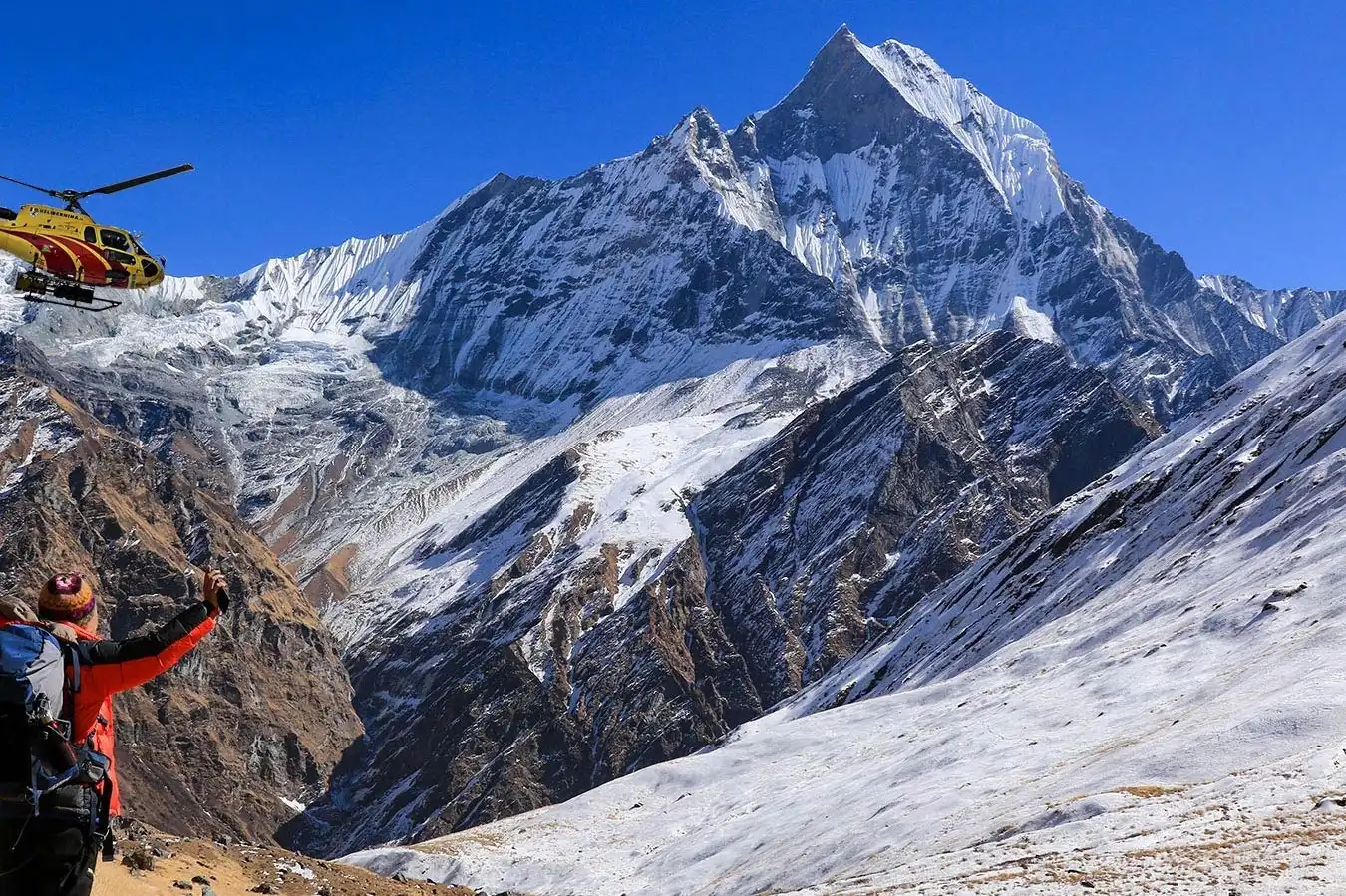
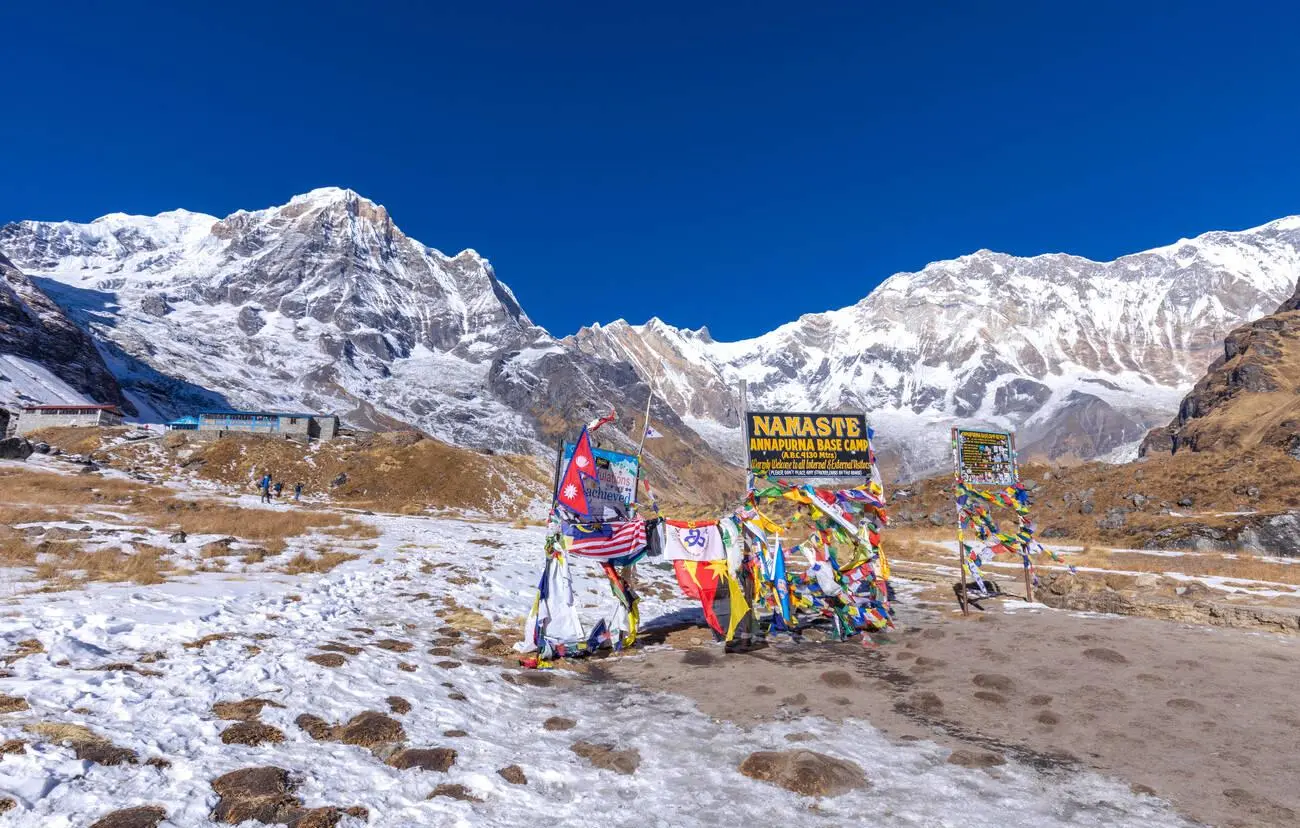
Starting from the lakeside city of Pokhara, the trail winds through traditional Gurung and Magar villages, dense rhododendron forests, terraced farmlands, and alpine meadows before reaching the magnificent Annapurna Base Camp at 4,130 meters. Here, you'll stand surrounded by a 360-degree panorama of towering peaks including Annapurna I (8,091m), Annapurna South, Hiunchuli, and the sacred Machapuchare, also known as Fishtail Mountain.
Himalayan Forever Treks has been organizing this incredible journey for trekkers from around the world, combining local expertise with international safety standards. Our team ensures that every aspect of your adventure is carefully planned, from permits and transportation to accommodation and meals, allowing you to focus entirely on the experience.
The Annapurna region has been welcoming trekkers since Nepal opened its borders to tourism in the 1960s. What makes this particular trek so special is its accessibility combined with genuine high-altitude mountain experience. Unlike more remote trekking routes that require weeks of commitment, the ABC trek condenses the Himalayan experience into a manageable timeframe without compromising on adventure or scenic beauty.
The trail passes through the Annapurna Conservation Area, home to diverse wildlife including the Himalayan tahr, musk deer, and if you're fortunate, the elusive snow leopard. Birdwatchers will delight in spotting colorful pheasants, including the national bird of Nepal, the Danphe. The forest sections are particularly enchanting during spring when rhododendrons bloom in vibrant shades of red, pink, and white, creating a natural floral carpet along the mountainsides.
For those interested in shorter treks in the Annapurna region, the Ghorepani Poon Hill Trek offers stunning sunrise views with less altitude gain. Alternatively, if you have more time, the Annapurna Circuit Trek provides an extended journey around the entire massif, crossing the challenging Thorong La Pass at 5,416 meters.
The journey begins with a scenic flight from Kathmandu to Pokhara, followed by a drive to Jhinu Danda, which serves as your trailhead. This strategic starting point cuts down on walking time through lower elevation villages, allowing you to reach higher altitudes more quickly while still maintaining proper acclimatization.
From Jhinu Danda, the trail ascends to Chhomrong, a large Gurung village perched on a hillside with spectacular views of Annapurna South and Hiunchuli. Chhomrong serves as the gateway to the Annapurna Sanctuary and is the last major settlement before entering the conservation area proper. The village atmosphere here is vibrant, with tea houses, small shops, and friendly locals who have been hosting trekkers for generations.
Beyond Chhomrong, the landscape transforms dramatically. You'll descend steeply to cross the Chhomrong Khola, then climb through dense bamboo forests where sunlight filters through the canopy in golden beams. This section is particularly beautiful in the early morning when mist clings to the hillsides. The trail continues through Bamboo and Dovan before reaching Deurali, where the tree line begins to thin and alpine vegetation takes over.
The final approach to Annapurna Base Camp takes you through Machapuchare Base Camp (MBC), situated at 3,700 meters. This serves as an excellent acclimatization point before the final push to ABC. The landscape here is stark and beautiful, with glacial moraines and mountain streams creating a lunar-like environment beneath the towering peaks.
Those seeking similar high-altitude experiences might also consider the Everest Base Camp Trek, which offers the ultimate base camp experience in the Khumbu region, or the Langtang Valley Trek, known for its stunning valley scenery and cultural richness.
Timing your trek correctly can make the difference between a good experience and an extraordinary one. The Annapurna region experiences four distinct seasons, each offering unique conditions and challenges.
Spring (March to May) is considered the prime trekking season. During these months, daytime temperatures at lower elevations range from 15-20°C, while higher altitudes hover around 5-10°C during the day. The rhododendron forests are at their most spectacular, with blooms covering entire hillsides in brilliant colors. Visibility is generally excellent, though afternoons can bring some cloud cover. The trails are busy but not overcrowded, and all tea houses are fully operational.
Autumn (September to November) rivals spring as the best time to trek. Following the monsoon rains, the air is crystal clear, offering some of the year's best mountain views. Temperatures are slightly cooler than spring, but the stable weather and clear skies make this the most popular season. The post-harvest festival season adds cultural vibrancy to the trek, with local celebrations often visible in the villages you pass through.
Winter (December to February) presents a more challenging but rewarding option. Snow blankets the higher elevations, creating a pristine winter wonderland. However, temperatures at ABC can drop to -15°C or lower at night, and some higher tea houses may close due to heavy snowfall. This season is best suited for experienced trekkers with proper cold-weather gear. The advantage is far fewer people on the trail and stunning snow-covered landscapes.
Monsoon (June to August) is generally avoided due to heavy rainfall, slippery trails, and leeches in the forested sections. However, this season has its own appeal for adventurous trekkers. The landscape is lush and green, wildflowers are abundant, and you'll have the trails largely to yourself. The Manaslu Circuit Trek and Upper Mustang Trek are better monsoon alternatives as they lie in rain shadow areas.
The Annapurna Base Camp Trek is classified as moderate to moderately challenging. While it doesn't require technical mountaineering skills or previous high-altitude experience, it does demand good physical fitness and mental determination. Daily walking times range from 5 to 7 hours, with both ascents and descents that can be steep and sustained.
The maximum altitude of 4,130 meters means altitude sickness is a real consideration. Symptoms can include headaches, nausea, dizziness, and fatigue. Proper acclimatization is built into the itinerary, but individual responses to altitude vary significantly. Staying well-hydrated, ascending slowly, and listening to your body are essential practices.
Physical preparation should ideally begin 6-8 weeks before your trek. Cardiovascular exercises like running, cycling, or swimming will build stamina, while hiking with a weighted backpack simulates trekking conditions. Leg strengthening exercises such as squats, lunges, and stair climbing are particularly beneficial for the constant ascents and descents. Don't neglect core strength, which helps maintain balance on uneven terrain.
For those wanting to test their abilities before committing to ABC, shorter treks like the Poon Hill Trek or Mardi Himal Trek provide excellent introductions to Himalayan trekking with lower maximum altitudes and shorter durations.
Mountain lodges, locally called tea houses, provide accommodation throughout the trek. These family-run establishments offer basic but comfortable facilities that have improved significantly over the years. Rooms typically contain two single beds with pillows and blankets, though sleeping bags are recommended for warmth and hygiene at higher elevations.
Bathrooms are usually shared, with Western-style toilets becoming more common, though squat toilets remain standard at higher altitudes. Hot showers are available at most tea houses for a small fee, though above 3,000 meters, water heating becomes more expensive and sometimes unavailable due to fuel costs. Many trekkers choose to use wet wipes or skip showers for a day or two at higher camps.
The dining rooms serve as social hubs where trekkers from around the world gather around wood-burning stoves to share stories and experiences. These communal spaces create a unique camaraderie that's part of the trekking culture. Charging facilities for cameras and phones are available at most lodges for a fee, though power can be unreliable at higher elevations.
Similar tea house trekking experiences can be found on theEverest Three Passes Trek and Annapurna Base Camp Trek 7 Days, which offers a slightly more relaxed pace with an extra acclimatization day.
Maintaining energy levels through proper nutrition is crucial for successful trekking. Tea house menus offer surprising variety, with influences from Nepali, Tibetan, Indian, and Western cuisines. The staple meal is dal bhat, a nutritious combination of lentil soup, rice, and vegetable curry that comes with unlimited refills. This dish provides excellent carbohydrates and protein for sustained energy.
Breakfast options include porridge, Tibetan bread, pancakes, eggs prepared various ways, and muesli with milk. Lunch and dinner menus feature fried rice, noodle soups (thukpa), momos (dumplings), pasta, pizza, and various vegetable dishes. While the pizza might not match Italian standards, the effort and creativity of mountain cooks are impressive given the remote locations and limited resources.
Hot beverages are essential for hydration and warmth. Ginger-lemon-honey tea is particularly popular for its soothing properties and immune support. Black tea, milk tea, coffee, and hot chocolate are widely available. Avoid tap water; instead, use purification tablets, filters, or purchase bottled water, though the latter creates plastic waste in the mountains.
As altitude increases, appetites often decrease, but forcing yourself to eat maintains energy and helps prevent altitude sickness. Carbohydrate-rich foods are easiest to digest at elevation. Bringing supplementary items like energy bars, nuts, dried fruits, and chocolate provides quick energy boosts between meals.
For comparison, similar dining experiences await on the Annapurna Circuit with Tilicho Lake and Annapurna Sanctuary Trek, where tea house culture thrives.
The Annapurna region is home to the Gurung and Magar ethnic groups, whose rich cultural heritage adds depth to the trekking experience. The Gurung people are renowned as fierce warriors who have served with distinction in the British and Indian Gurkha regiments for over 200 years. Their villages feature traditional stone houses with slate roofs, and many homes display prayer flags and Buddhist shrines.
Village life follows ancient rhythms tied to agricultural seasons. During trekking season, many villagers operate tea houses, while others tend to terraced fields of millet, corn, and rice. Women often carry enormous loads in dokos (traditional baskets) supported by headbands, demonstrating remarkable strength and endurance. Children in school uniforms might greet you with cheerful "Namastes" as you pass through their villages.
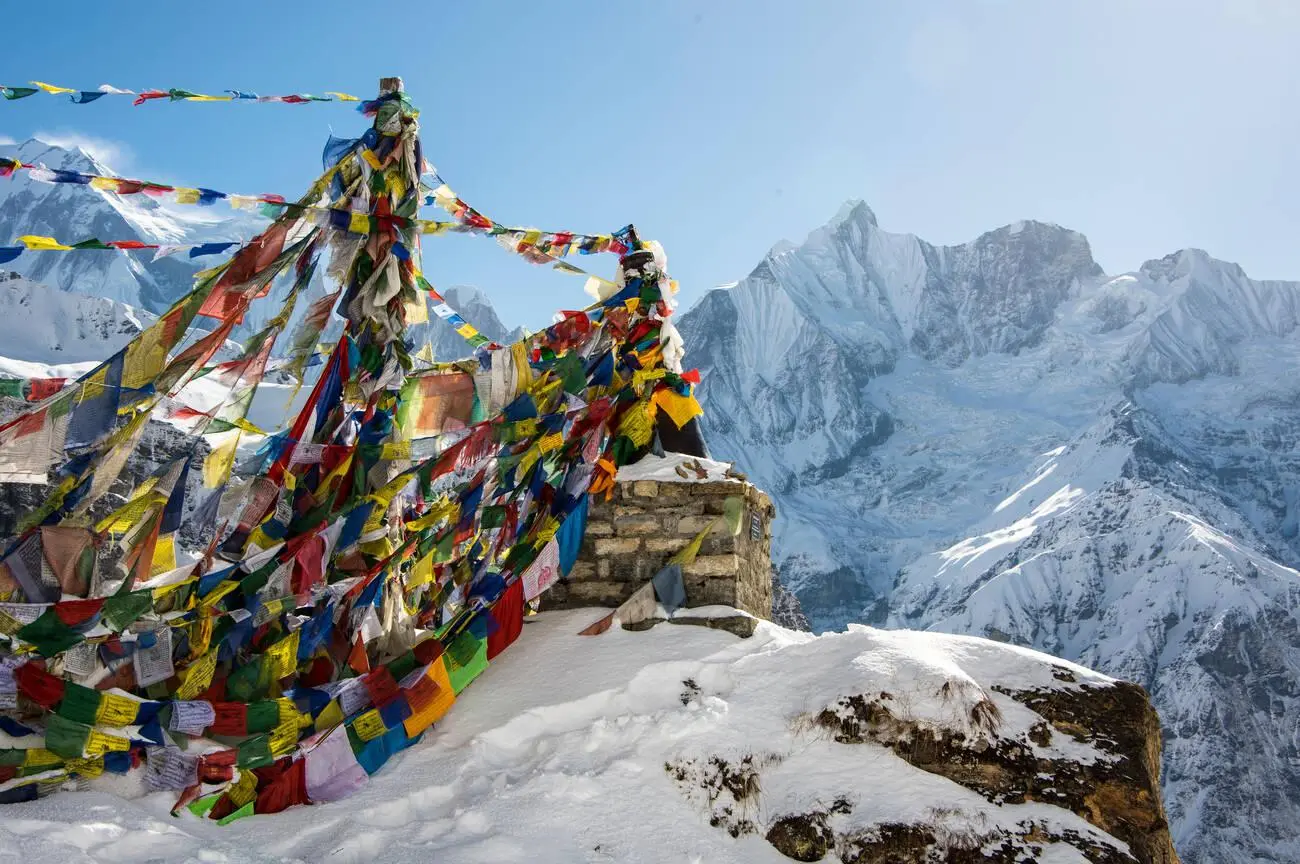
Religious practices blend Buddhism and Hinduism, reflected in the monasteries, stupas, and temples along the route. Prayer wheels, mani stones carved with mantras, and colorful prayer flags create a spiritual atmosphere. Respecting local customs is important: always walk clockwise around religious monuments, ask permission before photographing people, and dress modestly, especially when visiting religious sites.
The hot springs at Jhinu Danda provide a perfect place to relax after the trek. These natural thermal pools, heated by geothermal activity deep beneath the mountains, offer therapeutic benefits for tired muscles. The pools are divided into sections for men and women, reflecting local cultural norms.
Similar cultural immersion opportunities exist on the Tamang Heritage Trail, which focuses specifically on Tamang culture, and the Nar Phu Valley Trek, which explores remote Tibetan Buddhist communities.
Proper equipment is crucial for comfort and safety. Your backpack should be waterproof or include a rain cover, with a capacity of 40-50 liters if using porter services, or 60-70 liters if carrying everything yourself. A good sleeping bag rated to -10°C or -15°C is essential, as blankets provided at tea houses may be insufficient at higher altitudes.
Layering is the key to managing temperature fluctuations. Base layers should be moisture-wicking synthetic or merino wool. Mid-layers include fleece or down jackets for insulation. Your outer layer must be waterproof and windproof. Trekking pants should be comfortable and quick-drying, with zip-off legs offering versatility. Bring at least one pair of thermal bottoms for cold nights.
Footwear requires careful consideration. Well-broken-in hiking boots with good ankle support and waterproofing are non-negotiable. Bring camp shoes or sandals for evening wear at tea houses. Moisture-wicking socks prevent blisters, and having 4-5 pairs allows for rotation and drying time.
Accessories include a warm hat, sun hat with brim, buff or scarf, gloves (both light and heavy), sunglasses with UV protection, and a headlamp with extra batteries. Trekking poles significantly reduce knee strain on descents and provide stability on uneven terrain. A reusable water bottle or hydration system keeps you hydrated without creating plastic waste.
Personal items should include sunscreen (SPF 50+), lip balm with SPF, personal medications, basic first aid supplies, toiletries, toilet paper, hand sanitizer, water purification tablets or filter, and quick-dry towel. Don't forget your camera, extra batteries, and memory cards to capture the stunning scenery.
Rental equipment is available in Pokhara and Kathmandu for items like sleeping bags, down jackets, and trekking poles, offering a cost-effective alternative to purchasing gear you might use only once.
For equipment requirements on other treks, consult resources for the Island Peak Climbingor Mera Peak Climbing, which require more technical gear.
Trekking in the Annapurna Conservation Area requires two permits. The Annapurna Conservation Area Permit (ACAP) costs approximately $30 for foreigners and can be obtained through registered trekking agencies. The TIMS card (Trekkers' Information Management System) provides another layer of safety tracking and costs around $20. Himalayan Forever Treks handles all permit arrangements as part of the service package, eliminating bureaucratic hassles.
These permits fund conservation efforts, trail maintenance, and community development projects. Checkpoints along the route verify permits, so keep them accessible in waterproof pouches. Regulations prohibit single-use plastics within the conservation area, encouraging environmental responsibility. Stick to marked trails, camp only in designated areas, and pack out all trash to minimize environmental impact.
The conservation area protects endangered species, rare plants, and fragile ecosystems. Rangers patrol regularly to prevent poaching and ensure compliance with environmental regulations. Your trekking fees directly support these conservation initiatives and provide income to local communities through employment opportunities.
Similar permit systems apply to other protected areas, including the Everest Base Camp Trek, requiring Sagarmatha National Park permits, and the Manaslu Circuit Trek, which requires special restricted area permits.
The adventure begins with a 25-minute flight from Kathmandu to Pokhara. This spectacular flight offers aerial views of the Himalayas on clear days, with the Annapurna and Dhaulagiri ranges dominating the northern skyline. Sitting on the right side of the aircraft provides the best mountain views during morning flights, while afternoon flights favor the left side due to sun position.
Pokhara, Nepal's second-largest city, serves as the gateway to the Annapurna region. The city sits beside beautiful Phewa Lake with the Himalayas providing a dramatic backdrop. From Pokhara, a private vehicle drive of approximately 2-3 hours takes you to Jhinu Danda, depending on road conditions. The drive follows winding mountain roads with terraced hillsides and rural villages creating a scenic journey.
The road gradually deteriorates as you gain elevation, transitioning from paved highway to dirt track. During monsoon season, landslides occasionally block routes, requiring flexibility in travel plans. Your driver navigates these challenges with practiced skill, ensuring safe arrival at the trailhead.
After completing the trek, the return journey retraces the route: Jhinu Danda to Pokhara by vehicle, then flight back to Kathmandu. Some trekkers choose to spend extra days in Pokhara enjoying its lakeside cafes, adventure activities like paragliding and zip-lining, or simply relaxing after the physical demands of trekking.
Transportation logistics are handled seamlessly by Himalayan Forever Treks, including flight bookings, vehicle arrangements, and backup plans for weather-related delays. This comprehensive service allows you to focus on the experience rather than logistical concerns.
For those interested in alternative approaches, the Jomsom Muktinath Trek combines trekking with a scenic flight through the world's deepest gorge, while the Rara Lake Trek in western Nepal requires multiple domestic flights.
Altitude sickness prevention is paramount. The gradual ascent profile of the 6-day itinerary includes natural acclimatization, but individual responses vary. Symptoms typically appear above 3,000 meters and include headache, nausea, dizziness, fatigue, and difficulty sleeping. Mild symptoms are common and usually resolve with rest and hydration. Severe symptoms like confusion, severe breathlessness at rest, or inability to walk indicate serious altitude sickness requiring immediate descent.
Prevention strategies include ascending slowly, staying well-hydrated (3-4 liters daily), avoiding alcohol and sleeping pills, eating carbohydrate-rich foods, and considering acetazolamide (Diamox) after consulting your doctor. Never ascend with severe symptoms, and descend if symptoms worsen despite rest.
Comprehensive travel insurance covering emergency helicopter evacuation is essential. Mountain rescue can cost $5,000-$10,000 or more, depending on location and weather conditions. Verify your policy covers trekking up to 6,000 meters, as some policies exclude high-altitude activities.
Water safety requires constant attention. Untreated water causes stomach issues that can ruin your trek. Use purification tablets, UV sterilizers, or filter systems. Many trekkers refill bottles with boiled water from tea houses, reducing plastic waste while ensuring safety.
Basic first aid knowledge helps manage minor injuries. Blisters are common; treat them early with moleskin or blister pads before they worsen. Bring medications for headaches, stomach issues, and any personal medical conditions. Anti-inflammatory drugs like ibuprofen help with muscle soreness and mild altitude headaches.
Himalayan Forever Treks guides are trained in wilderness first aid and altitude sickness recognition. They carry comprehensive first aid kits and satellite phones for emergency communication. This safety infrastructure provides peace of mind, allowing you to enjoy the trek knowing expert help is available.
For those concerned about altitude, lower-elevation treks like the Ghorepani Ghandruk Loop or Mohare Danda Trekoffer beautiful mountain experiences without reaching extreme altitudes.
The Annapurna region's popularity brings environmental challenges. Thousands of trekkers annually create waste, strain water resources, and contribute to trail erosion. Responsible trekking practices protect this pristine environment for future generations.
Minimize plastic by carrying reusable water bottles and refilling with treated water. Many tea houses offer filtered water refill stations. Pack out all non-biodegradable waste, including wrappers, batteries, and toiletries. Use designated toilets rather than outdoor areas to prevent contamination of water sources.
Respect wildlife by observing from a distance without feeding or disturbing animals. Stay on marked trails to prevent erosion and protect fragile alpine vegetation. Use biodegradable soap for washing, and do so away from water sources.
Support local economies by purchasing crafts directly from artisans, eating at local establishments, and hiring local guides and porters. Himalayan Forever Treks prioritizes hiring from local communities, ensuring economic benefits reach those most affected by tourism.
Energy conservation is crucial in the mountains where fuel must be transported by porters or pack animals. Limit hot showers, charge electronics efficiently, and dress warmly rather than requesting extra heating. Order meals that others are also ordering to reduce cooking fuel consumption.
These sustainable practices align with principles promoted on environmentally conscious treks like the Khopra Ridge Trek and community-focused routes such as the Pikey Peak Trek.
Himalayan Forever Treks stands out in Nepal's competitive trekking industry through commitment to safety, quality service, and sustainable practices. Our licensed, experienced guides possess intimate knowledge of the Annapurna region accumulated through years of leading treks. They're trained in wilderness first aid, altitude sickness management, and emergency response protocols.
We maintain small group sizes to ensure personalized attention and minimize environmental impact. Our porter policies guarantee fair wages, proper equipment, and reasonable load limits, supporting ethical tourism practices. Equipment checks before departure ensure you're properly prepared, with rental options available for missing items.
Customer satisfaction drives everything we do. Reviews from previous trekkers consistently highlight our guides' knowledge and friendliness, the quality of selected tea houses, and seamless logistical management. We're available 24/7 to address concerns or adjust plans based on weather or personal circumstances.
Our Kathmandu office provides comprehensive pre-trek briefings covering route details, safety procedures, and cultural insights. Post-trek, we welcome feedback to continuously improve services. This commitment to excellence has earned Himalayan Forever Treks recognition as one of Nepal's most trusted trekking operators.
Beyond Annapurna Base Camp, we offer diverse trekking experiences throughout Nepal, including the challenging Everest Three Passes Trek, the culturally rich Langtang Gosaikunda Trek, and expedition climbs like Lobuche Peak. Our website atwww.himalayanforever.com showcases our complete portfolio.
The 6-day Annapurna Base Camp Trek can be extended or combined with other routes for those with more time. The Annapurna Base Camp Trek 12 Days follows traditional routes through Ghandruk and includes extra acclimatization days, offering a more relaxed pace. The Poon Hill Annapurna Base Camp Trek combines the famous Poon Hill sunrise viewpoint with ABC for enhanced scenery.
Adventure seekers might add paragliding in Pokhara, white-water rafting on the Seti or Trisuli rivers, or mountain biking through the Kathmandu Valley. Cultural extensions could include visiting the medieval cities of Bhaktapur and Patan, attending a traditional Nepali cultural show, or participating in a cooking class to learn Nepali cuisine.
Some trekkers combine Annapurna Base Camp with theEverest Base Camp Trek, experiencing both iconic base camps in one epic Nepal journey. Others explore different regions, adding treks likeTsum Valley Trekor the remote Dolpo Trek for a comprehensive Himalayan experience.
Start each day early, typically around 6-7 AM, to maximize morning mountain views before afternoon clouds develop. Pace yourself steadily rather than rushing; the Nepali saying "bistari bistari" (slowly, slowly) perfectly captures the trekking mindset. Take regular breaks to hydrate, snack, and photograph the scenery.
Protect your skin from intense high-altitude UV rays with high-SPF sunscreen, lip balm, and sunglasses. Reapply frequently, especially on snow-covered sections where reflection intensifies exposure. Stay hydrated even when you don't feel thirsty; dehydration exacerbates altitude sickness and reduces energy levels.
Learn basic Nepali phrases to connect with locals: "Namaste" (hello/goodbye), "Dhanyabad" (thank you), "Mitho chha" (delicious), and "Kati ho?" (how much?). These small efforts are appreciated and enrich cultural interactions. Your guide will help with more complex communication.
Keep valuables secure and accessible in a money belt or secure pocket. Bring enough Nepali rupees for expenses along the trail, as ATMs aren't available after Pokhara. Credit cards aren't accepted at tea houses, so calculate cash needs based on estimated expenses for meals, accommodation extras, hot showers, charging fees, and tips.
Photography opportunities abound, but respect local customs regarding personal photography. Always ask permission before photographing people, especially in villages. Many appreciate small tips for posed photos. Bring extra batteries and memory cards, as charging can be expensive or unavailable at higher elevations.
Arriving at Annapurna Base Camp is the trek's culminating moment. The amphitheater of peaks surrounding you creates an overwhelming sense of nature's grandeur. Annapurna I dominates the northern skyline, while Machapuchare's distinctive fish-tail summit rises to the south. Sunrise and sunset transform the mountains into glowing pink and orange masterpieces.
Many trekkers experience strong emotional responses—tears, awe, gratitude—upon reaching base camp. Take time to absorb the moment rather than rushing through photos. Sit quietly, contemplate the journey that brought you here, and appreciate the physical and mental achievement.
The base camp atmosphere combines celebration and exhaustion. Fellow trekkers share congratulations and stories over hot tea in the dining hall. Despite fatigue, the communal energy is infectious, creating bonds that often lead to lasting friendships.
Weather permitting, explore the moraine area around camp, but stay within established safe zones. Glaciers and unstable terrain pose dangers for those venturing off marked areas. Your guide can point out safe photo locations with optimal mountain views.
Ready to embark on your Annapurna Base Camp adventure? Himalayan Forever Treks makes booking easy and transparent. Visit our website at www.himalayanforever.com to explore detailed itineraries, read reviews from previous trekkers, and check current availability.
Contact our team directly through the website's inquiry form, or reach out via email and phone as listed on our contact page. Our experienced staff answers questions about fitness requirements, best travel dates, group joining options, and customization possibilities. We provide honest assessments of whether this trek matches your abilities and interests.
For those joining from overseas, we offer airport pickup services, hotel arrangements in Kathmandu, and comprehensive pre-trek support. Our office provides luggage storage for items not needed on the trek, ensuring you carry only essentials into the mountains.
Join thousands of satisfied trekkers who've discovered the magic of the Himalayas with Himalayan Forever Treks. Whether you're a solo traveler seeking adventure, a couple wanting a romantic mountain experience, or a group of friends ready for challenge, we create personalized journeys that exceed expectations.
The Annapurna Base Camp Trek – 6 Days offers an intensive Himalayan immersion perfect for time-conscious adventurers. In less than a week, you'll transition from subtropical forests to alpine wonderlands, from cultural villages to high-altitude wilderness, from comfort zones to personal achievement.
This trek challenges you physically while rewarding you with scenery that photographs can barely capture. The warmth of Nepali hospitality, the majesty of 8,000-meter peaks, and the satisfaction of reaching base camp create memories that last lifetimes. You'll return home with not just photos and souvenirs, but transformed perspectives on nature, culture, and personal capability.
The mountains are calling, and Himalayan Forever Treks is ready to guide your journey. Don't wait for "someday"—the perfect time to experience the Himalayas is now. Visit www.himalayanforever.com today to begin planning your adventure of a lifetime.
For inspiration and comparison with other treks in Nepal, explore our offerings including the Kanchenjunga Base Camp Trek, the spiritual Gosaikunda Trek, and the off-the-beaten-path Makalu Base Camp Trek. Each journey offers unique experiences in Nepal's diverse Himalayan landscapes.
The adventure of a lifetime awaits in the Annapurna Sanctuary—are you ready to answer the call?
Best Annapurna Trekking Blogs to Read Before You Go
Discover essential insights, tips, and firsthand stories from experienced trekkers in these top Annapurna trekking blogs—perfect for planning your adventure to the world's highest peak.
What to Pack for Trekking in Nepal: The Ultimate Checklist
Pokhara Perfection: Stunning Lakeside Views and Mountain Hikes
A Beginner’s Guide to Annapurna Base Camp Short Trek
A Beginner’s Guide to the Mardi Himal Trek
Top 10 Highlights of the Poon Hill Trek
Top 10 Tips for a Successful Annapurna Base Camp Trek in 2026
Mardi Himal on a Budget: Day-by-Day Trekking Guide
Top 10 Must-Do Adventures in Pokhara: For the Wild at Heart
The Ultimate Guide to Trekking in Nepal’s Off the Beaten Path Routes
Top Seasons for Trekking and Tours in Nepal
Nepal’s Wilderness Awaits: Top Treks for Nature Lovers
The Best Treks in Nepal from September to November
Which Trek Is Right for You: Annapurna Circuit or Manaslu Circuit?
Tips for a Successful Annapurna Base Camp Trek
Top Trekking Packages for 2025/2026
Top Most Popular Places in the Annapurna Region
Top Faqs for Annapurna Base Camp Trek
Mountaineering and Trekking Expeditions in Nepal 2024/25
Toilet facilities in trekking areas in Nepal
Top Ten Trekking Areas in Nepal: A Journey Through the Himalayas
The Annapurna Circuit: A Journey Through One of the World's Most Popular Trekking Routes
Exploring the Top Trekking Destinations in Nepal: A Guide to Unforgettable Adventures
Journey to the Annapurna Base Camp: A Trekker’s Paradise
Exploring Nepal: Adventure Travel, Tours, Treks & Trips 2024/2025
The Magic of Trekking in the Himalayas: A Journey to Remember
Annapurna Base Camp: A Comprehensive Guide
Mode of Trekking: Lodges and Guesthouses throughout the trek (from Jhinu Danda to Annapurna Base Camp and back).
Trekking Grade:Moderate to Adventurous – suitable for trekkers with a good fitness level. Involves daily ascents and descents with a maximum altitude of 4,130 meters at Annapurna Base Camp.
Area of Trekking: Annapurna Sanctuary region, within the Annapurna Conservation Area, in Mid-Western Nepal.
Highest Point: Annapurna Base Camp (4,130 m / 13,550 ft) – surrounded by Himalayan giants like Annapurna I, Machapuchare (Fishtail), and Hiunchuli.
People & Culture: Inhabited mainly by Gurung and Magar ethnic communities, known for their warm hospitality and rich traditions rooted in Buddhism and animism.
Trekking Duration: 6 Days of trekking (starting and ending in Pokhara).
Total Trip Duration:Can be completed within 5–6 days, including travel to/from Kathmandu (if applicable).
Best Seasons:
1. Spring (March to May): Clear skies, blooming rhododendrons, and ideal temperatures.
2. Autumn (September to November): Stable weather, excellent visibility, and vibrant landscapes.
3. Winter (December to February): Possible with proper gear. Expect cold temperatures and shorter daylight hours.
4. Not Recommended: During the monsoon (mid-June to mid-September) due to slippery trails and limited mountain views.
Your Annapurna Sanctuary adventure begins as you fly into the lakeside city of Pokhara, where the mountains first greet you on the horizon. A scenic drive brings you to the trailhead, and your trek commutes with a gentle walk to Jhinu Danda. Here, a hidden treasure awaits: natural hot springs perfect for a soothing pre-trek soak. Refreshed, the trail climbs steadily through vibrant, terraced hillsides and past traditional Gurung villages, where you'll get your first authentic taste of mountain culture. As you round the final bend, the picturesque village of Chhomrong unveils itself, perched majestically on the hillside. Your reward is an unforgettable sunset panorama, with the iconic Machapuchare (Fishtail) and the mighty Annapurna South standing sentinel. This first day beautifully blends comfort, culture, and awe-inspiring scenery.


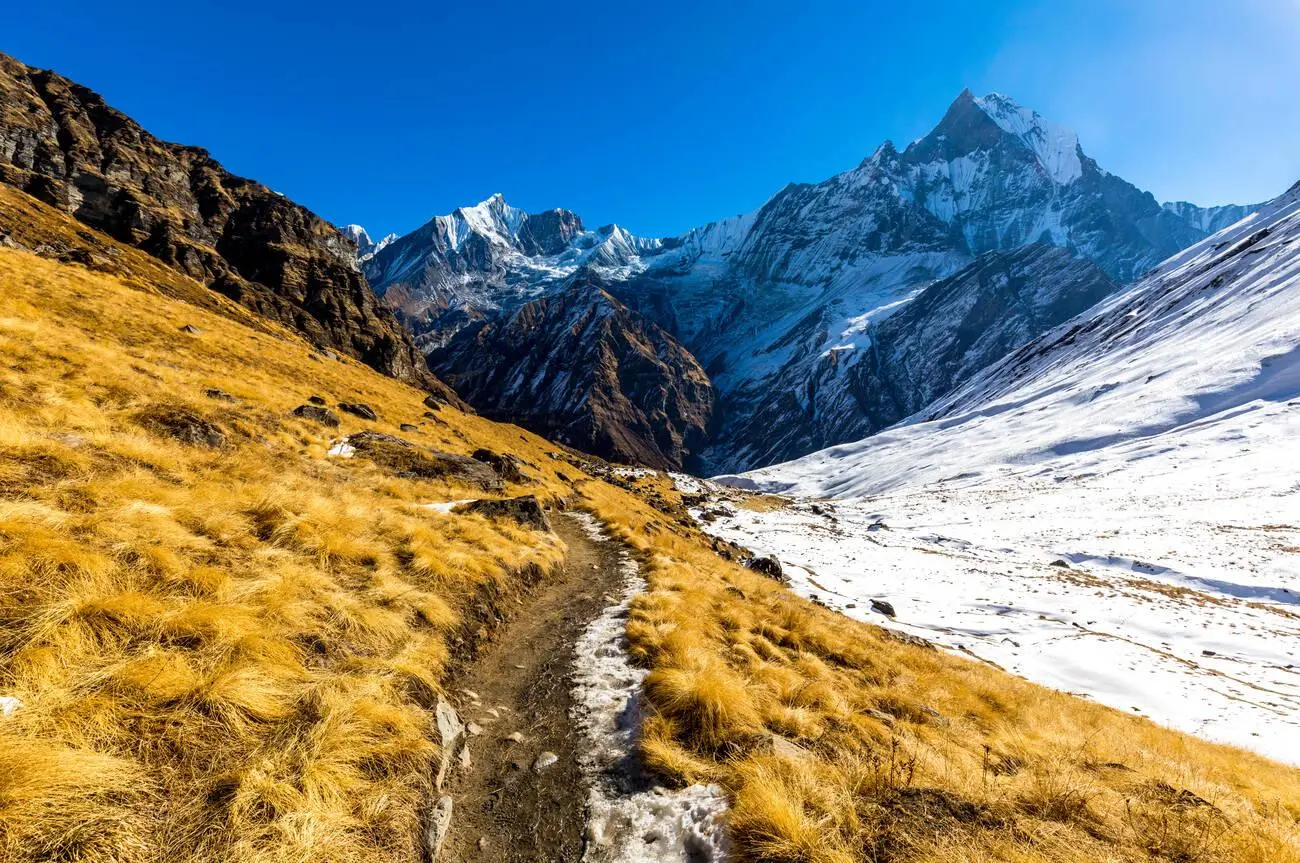
Awaken to the crisp mountain air and stunning views before beginning a day of classic Himalayan trekking. The path descends a long stone staircase into the valley, crossing the rushing Chhomrong Khola on a swaying suspension bridge. From here, the trail ascends into a lush, green world. The quiet forest of oak and rhododendron envelops you, with dappled sunlight filtering through the canopy. The peaceful sounds of birds and distant waterfalls accompany your climb to Sinuwa. Continuing onwards, the landscape transforms into a dense, cool bamboo forest as you approach your destination: Bamboo village. This aptly named stop is a serene haven, offering the perfect tranquil atmosphere to rest and recharge amid the whispers of the forest.Trekking through varied ecosystems is part of the magic. Learn about theflora and fauna of the Annapurna regionyou might encounter.
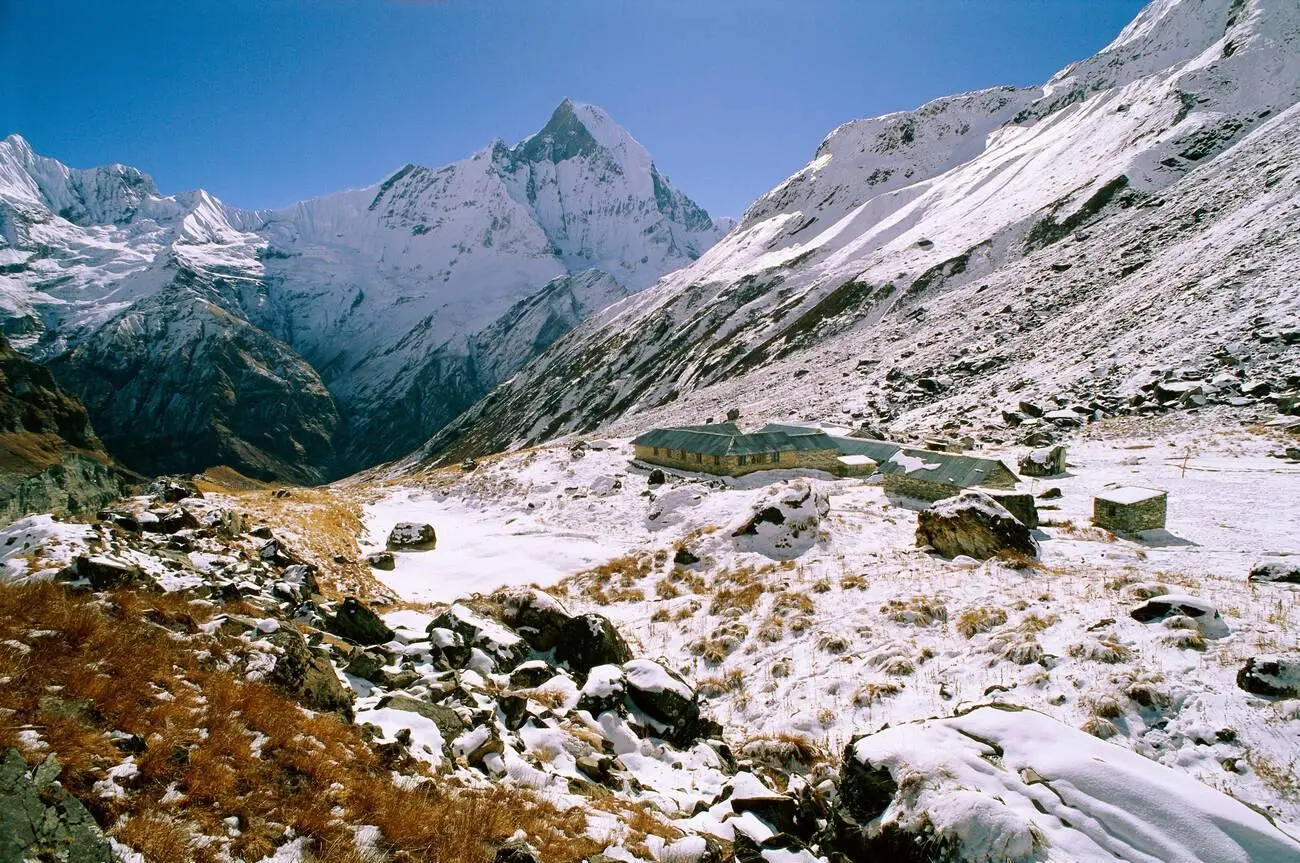
This is the day every trekker dreams of. After an early start, the path climbs steadily into the vast, glacial amphitheater of the Annapurna Sanctuary. You’ll pass the Machapuchare Base Camp, a rocky moraine with incredible close-up views of the iconic Fishtail peak. Then, as you trek further into the heart of the sanctuary, the world opens up in a breathtaking 360-degree panorama of some of the planet’s highest mountains. Suddenly, you arrive at Annapurna Base Camp (ABC), standing at 4,130 meters amidst an unbelievable circle of giants: Annapurna I, Annapurna South, Hiunchuli, and the formidable Machapuchare. The feeling of awe is overwhelming. Spending an afternoon and night here, surrounded by this silent, snow-covered majesty, is an experience that will stay with you forever.Want to know more about the peaks surrounding you?
After a magical sunrise that paints the peaks in golden alpenglow, you’ll enjoy a final breakfast in this spectacular setting. The journey down is a chance to see the landscape from a new perspective. Retracing your route, the descent is physically easier but still requires steady knees as you pass back through Deurali and down into the thicker air of the forest zone. The familiar sights of Himalaya Hotel and Dovan welcome you, and the lush greenery feels incredibly vibrant after the stark alpine beauty of ABC. By afternoon, you’ll arrive back at the peaceful haven of Bamboo village. The day is a long but satisfying walk, filled with reflection on the incredible heights you’ve just experienced, now nestled comfortably back in the green embrace of the valley.Trekking downhill has its own technique!
On your final trekking day, you’ll retrace the beautiful forest path and climb back up to Chhomrong, saying goodbye to the iconic village view. From there, it’s a mostly downhill walk to Jhinu Danda. What better way to celebrate your accomplishment than with a return to its famous natural hot springs? Soaking in the warm, therapeutic waters is the perfect remedy for tired muscles and a blissful finale to your trek. After a relaxing break, a short drive returns you to the vibrant comforts of Pokhara. As you enjoy a well-earned dinner by Phewa Lake, you can look back at the trail behind you with a profound sense of achievement and a camera full of memories from the heart of the Annapurna Sanctuary.Your adventure doesn’t have to end here.
Himalayan Forever Treks made my dream trek come true! The guide was professional and friendly, the views were absolutely breathtaking, and the entire trip was perfectly organized. Highly recommended for anyone short on time but craving the Himalayas!
I felt completely safe and supported throughout the trek. The accommodations were clean, the food was great, and the natural beauty of the Annapurna Sanctuary was beyond words. Huge thanks to Himalayan Forever Treks for such a memorable experience!
From the Kathmandu–Pokhara flight to reaching Annapurna Base Camp, everything was smooth and well-managed. The team at Himalayan Forever Treks was attentive, and the trek was challenging yet rewarding. Will definitely return for another trek!
Himalayan Forever squeezed the Annapurna Base Camp Trek into an incredible 6 days without feeling rushed. Drive from Pokhara to Nayapul, steady climb through Gurung villages like Ghandruk, then up to Sinuwa and Deurali—scenery shifted from lush forests to alpine meadows beautifully. Reaching ABC at dawn with Annapurna I towering and Machhapuchhre framed perfectly was surreal. Guides paced us smartly for altitude, shared local Gurung stories, teahouses cozy with dal bhat. Hot springs dip on return was bliss. Perfect short Annapurna Base Camp Trek Nepal for time-tight adventurers—their expert handling made it seamless.
The Annapurna Base Camp Trek - 6 Days with Himalayan Forever was intense but rewarding. Quick start from Pokhara, trails through rhododendrons and waterfalls to Chomrong, then steep push to MBC and ABC. Sunrise at base camp—Annapurna South glowing pink—was emotional. Guides monitored breathing and pace closely, kept energy high with humor. Gurung hospitality in villages added heart. Teahouses simple yet warm. This fast ABC trek Nepal packs epic views and culture without dragging. Their thoughtful care turned a short trip into a lifetime memory
Himalayan Forever nailed the 6-day Annapurna Base Camp Trek—efficient yet soulful. Drive to trailhead, Ghandruk's stone houses charming, then forested paths to Sinuwa, high alpine to ABC. Standing amid towering peaks at base camp, Machhapuchhre so close, was breathtaking. Guides were pros: altitude checks daily, encouragement constant. Hot springs soak on descent revived us. Meals hearty, teahouses welcoming. Ideal short Annapurna Base Camp itinerary Nepal for busy trekkers wanting the full sanctuary experience. Their genuine warmth made it special.
What a thrilling Annapurna Base Camp Trek - 6 Days with Himalayan Forever! Pokhara drive, quick ascent through Gurung lands, Chomrong views stunning, then relentless climb to Deurali and MBC. ABC sunrise—Annapurna massif in golden light—was pure awe. Guides attentive to health, shared folklore, kept group bonded. Teahouses cozy after tough days. This condensed ABC trek Nepal delivers big rewards in short time. Their supportive planning made the push feel achievable and joyful
Himalayan Forever's 6-day Annapurna Base Camp Trek was perfectly balanced. Scenic start from Nayapul, villages like Ghandruk welcoming, trails steep but scenic to Sinuwa. Pushing to MBC and ABC felt triumphant—sunrise over Hiunchuli and Gangapurna unforgettable. Guides vigilant on acclimatization, full of encouragement. Hot springs on way back heavenly. Short but immersive. Great fast Annapurna Base Camp trek Nepal option—their caring team ensured safety and smiles.
The Annapurna Base Camp Trek - 6 Days via Himalayan Forever was magical. Drive and trek start smooth, Chomrong to Deurali views dramatic, ABC arrival surreal with peaks closing in. Sunrise at base camp—Annapurna I majestic—was the payoff. Guides paced thoughtfully, shared Gurung culture, teahouses warm. Hot springs dip relaxing. This short ABC trek Nepal packs intensity and beauty. Their heartfelt support made every step count
Himalayan Forever made the 6-day Annapurna Base Camp Trek feel epic. Trails through forests and rivers to Sinuwa, then high to MBC and ABC—sunrise views breathtaking. Guides kind, altitude-aware, encouraging. Gurung villages charming. Teahouses cozy. Perfect condensed itinerary for mountain lovers. Their warm organization shines for this fast Annapurna trek Nepal
A wonderful Annapurna Base Camp Trek - 6 Days with Himalayan Forever—Ghandruk charm, steep climbs rewarding, ABC sunrise poetic. Guides supportive, teahouses welcoming. Fast but fulfilling Nepal trek—their care makes it shine
Himalayan Forever's short Annapurna Base Camp Trek was stunning. Trails scenic, base camp views humbling. Guides attentive, hot springs perfect end. Ideal quick ABC Nepal—their genuine warmth unforgettable.
The Annapurna Base Camp Trek - 6 Days through Himalayan Forever felt special. Sunrise at ABC epic, guides caring, trek immersive. Short Nepal adventure done right—their heartfelt service excels.
Himalayan Forever packed the Annapurna Base Camp Trek into 6 unforgettable days. Pokhara drive to Nayapul smooth, trails through Ghandruk's stone paths and rhododendrons enchanting, then steep push to Sinuwa and Deurali. ABC arrival felt victorious—sunrise over Annapurna I and Machhapuchhre was pure poetry. Guides kept altitude in check with daily checks, shared Gurung tales, teahouses cozy with steaming dal bhat. Hot springs on descent pure bliss. This short ABC trek Nepal is intense but magical—their expert pacing made it doable and joyful
The Annapurna Base Camp Trek - 6 Days with Himalayan Forever was fast-paced perfection. From Pokhara to Chomrong, Gurung villages welcoming, then forested climbs to MBC and ABC. Dawn at base camp—Annapurna South and Hiunchuli glowing—was breathtaking. Guides attentive, encouraging through steep sections, full of local knowledge. Hot springs soak revived tired legs. Teahouses simple yet warm. Great condensed Annapurna Base Camp itinerary Nepal for those craving big views quickly. Their caring team ensured safety and smiles.
Himalayan Forever's 6-day Annapurna Base Camp Trek was thrilling. Nayapul start, Ghandruk charm, Sinuwa rhododendrons, then high alpine to ABC. Sunrise views—Annapurna massif closing in—left me speechless. Guides paced smartly, monitored breathing, shared laughs over tea. Hot springs on return heavenly. Meals hearty, teahouses welcoming. This fast ABC trek Nepal delivers sanctuary magic without wasting time. Their genuine support made the rush feel effortless
What an incredible Annapurna Base Camp Trek - 6 Days with Himalayan Forever! Drive and trek start smooth, Chomrong to Deurali dramatic, MBC to ABC intense. Base camp sunrise—Machhapuchhre framed perfectly—was emotional. Guides vigilant on health, full of Gurung stories. Hot springs dip relaxing end. Teahouses cozy after tough days. Perfect short Annapurna Base Camp trek Nepal for busy adventurers. Their thoughtful care turned it into pure joy.
The Annapurna Base Camp Trek - 6 Days via Himalayan Forever was exhilarating. Pokhara to Nayapul drive, Ghandruk views charming, steep climbs rewarding. ABC sunrise—Annapurna I majestic—was the highlight. Guides supportive, shared culture, kept energy up. Hot springs blissful. This short ABC trek Nepal packs intensity and serenity. Their heartfelt service made it memorable
Himalayan Forever's short Annapurna Base Camp Trek was soul-stirring. Ghandruk to Chomrong paths lovely, Deurali to ABC dramatic. Sunrise at base camp humbling. Guides attentive, teahouses cozy. Hot springs end perfect. Condensed but complete Nepal trek—their care elevates it.
A wonderful Annapurna Base Camp Trek - 6 Days with Himalayan Forever—Gurung villages warm, trails scenic, ABC sunrise poetic. Guides caring, hot springs relaxing. Short Nepal adventure done beautifully—their genuine warmth shines.
Himalayan Forever delivered a stunning 6-day Annapurna Base Camp Trek. Sunrise views epic, guides supportive, trek immersive. Fast but fulfilling—their heartfelt team perfect for this short ABC Nepal.
The Annapurna Base Camp Trek - 6 Days through Himalayan Forever felt special. Trails rewarding, base camp sunrise breathtaking. Guides kind, hot springs ideal end. Short Nepal trek excellence—their care unforgettable
Himalayan Forever's 6-day Annapurna Base Camp Trek was pure joy. Sunrise at ABC humbling, guides attentive, teahouses warm. Condensed itinerary shines—their warmth makes it special.
A serene Annapurna Base Camp Trek - 6 Days with Himalayan Forever—views stunning, guides caring. Hot springs perfect finish. Ideal quick ABC Nepal—their team excels
Himalayan Forever made the short Annapurna Base Camp Trek beautiful. Sunrise epic, trek immersive. Their genuine support perfect for this fast Nepal adventure.
The Annapurna Base Camp Trek - 6 Days via Himalayan Forever was magical. Base camp views breathtaking, guides supportive. Short but soulful—their warmth unforgettable.
Himalayan Forever's 6-day Annapurna Base Camp Trek felt rewarding. Sunrise poetic, trails scenic. Their caring team makes this short ABC Nepal shine
A peaceful Annapurna Base Camp Trek - 6 Days with Himalayan Forever—ABC sunrise stunning. Guides kind, trek complete. Their heartfelt service elevates this quick Nepal trek
Himalayan Forever delivered a lovely 6-day Annapurna Base Camp Trek. Sunrise views humbling, guides warm. Perfect short Nepal adventure—their care makes it shine
Clothing:
Backpack & Accessories:
Personal Items:
Important Documents:
Optional:
The trek begins with a domestic flight from Kathmandu to Pokhara, which offers breathtaking views of the Himalayas in just 25–30 minutes. From Pokhara, you’ll take a private vehicle to Jhinu Danda, the starting point of the trek. After completing the trek, you’ll be driven back to Pokhara where you can rest or continue your journey. All ground and air transportation are organized by Himalayan Forever Treks, ensuring a seamless and comfortable travel experience before and after your trek.
Yes, all required permits are arranged and included in the trekking package with Himalayan Forever Treks. You’ll need the Annapurna Conservation Area Permit (ACAP) and the Trekkers’ Information Management System (TIMS) card. These permits are mandatory and help support conservation efforts and ensure trekkers’ safety in the region. Our team will handle all the paperwork and logistics before your trek begins, so you can focus on enjoying your adventure stress-free.
The Annapurna Base Camp Trek is considered moderate to adventurous, making it accessible to trekkers with a reasonable level of fitness and determination. Over the course of 6 days, you’ll be walking 5 to 7 hours daily through varied terrain—from stone staircases and lush forests to high alpine zones. While the trek doesn’t require mountaineering skills, the steady altitude gain up to 4,130 meters means that trekkers should be aware of potential symptoms of altitude sickness and take precautions like proper acclimatization and hydration. With expert guidance from Himalayan Forever Treks, trekkers are well-supported throughout the journey.
Altitude sickness can be a concern once you ascend above 2,500 meters, and since Annapurna Base Camp is located at 4,130 meters, it’s important to take precautions. Symptoms may include headaches, dizziness, nausea, or fatigue. However, since the trek allows gradual altitude gain and includes rest at key points like Deurali, most trekkers manage well with basic precautions. Our guides at Himalayan Forever Treks are trained to recognize and respond to altitude-related issues promptly, and we always advise trekkers to hydrate well, eat properly, and ascend at a steady pace.
Himalayan Forever Treks offers both private treks and small group departures, typically ranging from 1 to 20 trekkers per group. Every trek is led by a licensed, English-speaking guide who is experienced, knowledgeable about the terrain, and trained in first aid and altitude awareness. Additional porters are included to help carry your gear, allowing you to enjoy the trek with minimal load. Our guides also offer cultural insights and help ensure your safety and comfort on the trail.
Preparation for the Annapurna Base Camp Trek should start a few weeks before your trip. Engage in cardio exercises like hiking, walking, jogging, or cycling to build endurance. Strength training, especially for your legs and core, is also helpful. Make sure to break in your trekking boots and get used to carrying a light backpack. Mental preparation is equally important be ready for changing weather and simple accommodation. Himalayan Forever Treks provides a detailed packing list and pre departure guidance to help you get ready for the trek with confidence.
Himalayan Forever Treks is a locally owned company with a strong commitment to delivering exceptional trekking experiences. We provide personalized itineraries, experienced guides, and transparent pricing, ensuring that every detail is handled with care. Our team has deep knowledge of the Annapurna region, prioritizes traveler safety, and works closely with local communities to promote sustainable tourism. Whether you're a solo traveler, a couple, or a group, we tailor each journey to make it meaningful, memorable, and safe.
Accommodation during the Annapurna Base Camp Trek is in local teahouses and guesthouses run by friendly villagers. Rooms are basic, usually twin-sharing, with simple bedding and shared bathroom facilities. Some guesthouses at lower altitudes offer hot showers and Wi-Fi (at an additional cost). Food is freshly prepared and caters to a variety of dietary preferences. You’ll enjoy energy-rich meals like dal bhat (rice and lentils), noodles, pasta, soups, potatoes, eggs, and pancakes. Himalayan Forever Treks ensures that trekkers are provided with clean, hygienic food and safe drinking water throughout the journey.
Yes, travel insurance is highly recommended for this trek. It should cover emergency medical expenses, evacuation by helicopter, and trip cancellations or delays. While Himalayan Forever Treks prioritizes safety and has a strong support network on the trail, unforeseen circumstances like injury or altitude sickness can arise in high-altitude environments. Having comprehensive travel insurance provides peace of mind and financial protection throughout your journey.
| No of people | Price per person |
|---|---|
| 1 - 1 | $1,300 |
| 2 - 4 | $1,175 |
| 5 - 9 | $1,150 |
| 10 - 13 | $1,125 |
| 14 - 20 | $1,100 |
| No of people | Price per person |
|---|---|
| 1 - 1 | $599 |
| 2 - 5 | $550 |
| 6 - 9 | $530 |
| 10 - 14 | $520 |
| 15 - 20 | $510 |

| No of people | Price per person |
|---|---|
| 1 - 1 | $1,799 |
| 2 - 5 | $1,699 |
| 6 - 9 | $1,650 |
| 10 - 14 | $1,620 |
| 15 - 20 | $1,599 |