The Gokyo with Everest Base Camp via Cho-La Pass trek represents one of the most rewarding adventures in the Himalayas, combining two spectacular valleys into a single unforgettable journey. This carefully crafted route takes you through the pristine turquoise lakes of the Gokyo Valley, across the challenging Cho-La Pass, and ultimately to the legendary Everest Base Camp. Unlike the standard Everest Base Camp Trek, this route offers diverse landscapes, fewer crowds on certain sections, and the unique experience of crossing a technical high-altitude pass that tests your determination while rewarding you with breathtaking Himalayan panoramas.
For nearly two decades, Himalayan Forever Treks has been guiding adventurers through this remarkable circuit, perfecting itineraries that balance challenge with safety, and cultural immersion with natural beauty. Our experienced guides, many of whom hail from Sherpa families with generations of mountaineering heritage, bring invaluable local knowledge and genuine warmth to every trek. Whether you're standing beside the world's longest Himalayan glacier, gazing at four of Earth's five highest peaks from Gokyo Ri, or watching the sunrise illuminate Everest from Kalapathar, this journey delivers moments that transform how you see the world and yourself.
Best Everest Trekking Blogs to Read Before You Go
Discover essential insights, tips, and firsthand stories from experienced trekkers in these top Everest trekking blogs—perfect for planning your adventure to the world's highest peak.
The Necessary Permits for Everest Base Camp Trekking
Comfortable Stays on the Way to Everest Base Camp
Step by Step to the Top: Elevation Guide for Everest Base Camp
How to Choose the Right Everest Base Camp Trek Route
Top Tips for a Successful Everest Base Camp Trek
Cost of Everest Base Camp Trek: A Step-by-Step
Is Everest Base Camp Trekking Hard?
Everest Base Camp Trek in April
Everest Base Camp Trek in March
Top Most Popular Places in Everest Region Trekking
Best Time For Everest Base Camp Helicopter Tour
The Ultimate Heli Tour to Everest Base Camp: A bird’s-Eye Adventure
Exploring Namche Bazaar: The Gateway to the Everest Region
Everest Base Camp vis Cho La Pass Trek 2024
Which Lake is Better: Gokyo or Tilicho?
Everest Base Camp Trek vs Annapurna Base Camp Trek
Pikey Peak Trek: The Best View of Everest
Exploring the Everest Region: A Trekking Adventure of a Lifetime
Mastering Everest: Complete Guide to Trekking to Everest Base Camp
Challenges of Exploring Mount Everest
Conquering the Roof of the World: A Comprehensive Guide to Mount Everest
A Complete Guide To Everest Base Camp Trek- 2022/2023
The Ultimate Guide to Trekking in Nepal’s Off the Beaten Path Routes
Everest Base Camp Trek by Road: Tips, Guide & Itinerary
What to Pack for Everest Base Camp Trek
Why Lukla Airport Is Called the World’s Most Dangerous Airport
Fun Facts About the Everest Base Camp Trek
Top Seasons for Trekking and Tours in Nepal
While many trekkers face the difficult choice between the Gokyo Valley Trek and the Everest Base Camp route, this combined itinerary eliminates that dilemma entirely. You'll experience the serene beauty of Gokyo's six sacred lakes, their impossible turquoise waters reflecting snow-capped giants like Cho Oyu, the world's sixth-highest mountain. Then, after crossing the dramatic Cho-La Pass, you continue to Everest Base Camp where mountaineering history comes alive beneath the tumbling chaos of the Khumbu Icefall.
This comprehensive approach provides perspectives on the Khumbu region that single-destination treks cannot match. From Gokyo Ri's summit, you witness a 360-degree panorama featuring Everest, Lhotse, Makalu, and Cho Oyu—four of the planet's five tallest peaks. Later, from Kalapathar, you gain Everest's most iconic close-up view, the morning sun painting its pyramid summit in shades of gold and rose. Each viewpoint reveals different facets of these mountains, creating a more complete understanding of the Himalayan landscape.
The Gokyo Valley section sees significantly fewer trekkers than the main Everest Base Camp highway, particularly during peak seasons when villages like Namche Bazaar, Tengboche, and Dingboche overflow with visitors. Walking the quieter path to Gokyo allows for more intimate interactions with Sherpa families running teahouses, genuine cultural exchanges in villages like Dole and Machhermo, and the peaceful contemplation that draws many to the mountains in the first place.
This balance between solitude and community creates the ideal trekking environment. You'll still encounter fellow adventurers and share meals in dining rooms warmed by yak-dung stoves, but you avoid the conveyor-belt feeling that sometimes characterizes the busiest sections of Everest region trekking. Similar to the experience on our Manaslu Circuit Trek, you'll feel like an explorer rather than a tourist, discovering rather than simply visiting.
The Gokyo with Everest Base Camp via Cho-La Pass trek sits firmly in the challenging category, more demanding than routes like the Annapurna Base Camp Trek or Langtang Valley Trek, but slightly less extreme than the full Everest Three Passes Trekking circuit. You'll spend multiple consecutive days above 4,000 meters, with sleeping elevations reaching 5,164 meters at Gorakshep. Daily walking times typically range from five to eight hours, with the Cho-La Pass crossing requiring potentially ten hours depending on conditions.
Your training should begin at least three months before departure, focusing on cardiovascular endurance through activities like running, cycling, or swimming. Aim for five sessions weekly, gradually increasing duration and intensity. Include elevation gain by hiking with a weighted backpack on weekends, progressively adding weight to simulate trekking conditions. Strength training, particularly for legs and core, prevents injury during the long descents from passes and viewpoints. Exercises like squats, lunges, step-ups, and planks build the muscular endurance needed for sustained climbing.
Mental preparation proves equally important. Long days at altitude, basic accommodations, and unpredictable weather test your psychological resilience. Practice positive self-talk, visualization of success, and strategies for managing discomfort. Remember that every trekker—regardless of fitness level—faces moments of doubt on high-altitude journeys. The difference lies in developing mental tools to push through these challenges while knowing when to rest or descend if genuine health concerns arise.
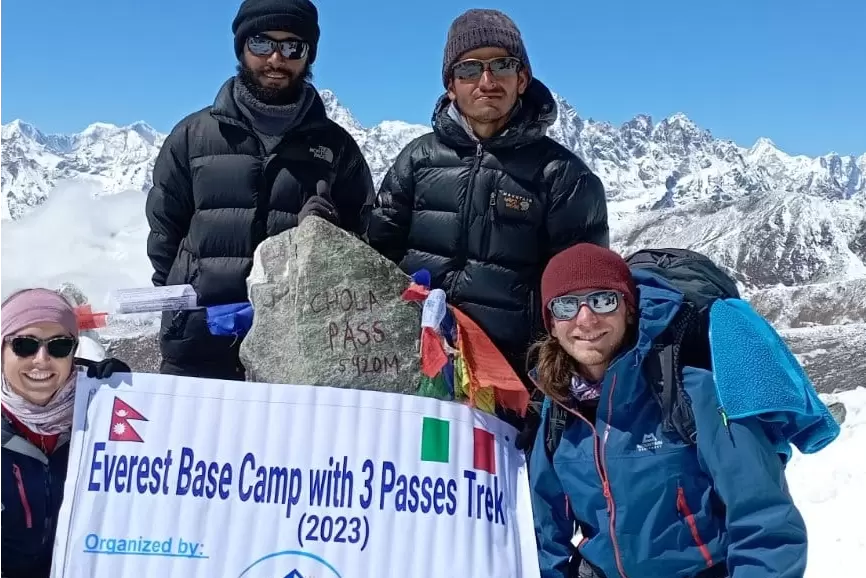
Cho-La Pass, standing at 5,420 meters, represents the trek's most technical and potentially intimidating section. Unlike the gentler ascents to viewpoints or even the climb to Everest Base Camp, Cho-La demands careful navigation of potentially icy terrain, particularly on the western descent toward Dzongla. Early in the trekking season or during winter months, the pass accumulates significant snow and ice, sometimes requiring microspikes or even light crampons for safe passage.
The eastern approach from Thagnak begins with a gradual climb before steepening considerably as you work your way up rocky switchbacks toward the pass. The air grows thinner with each step, making the final push to the prayer flag-draped summit feel like moving through invisible resistance. Weather conditions change rapidly here, with afternoon clouds frequently obscuring the pass and bringing wind, cold, and sometimes snow. This explains why virtually all groups attempt Cho-La crossings in the pre-dawn hours, completing the traverse before weather deteriorates.
The western descent presents the pass's crux—a steep, often icy slope that requires concentration and sure-footedness. Depending on conditions, trekking companies sometimes fix ropes across the most challenging sections, providing handholds for added security. While not technically mountaineering, this descent demands respect and careful attention. Once past this challenging section, the trail eases, leading down moraine and rocky terrain to Dzongla's welcoming teahouses. The sense of accomplishment after successfully crossing Cho-La energizes trekkers despite the day's physical demands, similar to the satisfaction felt completing the Thorong La on the Annapurna Circuit Trek.
Acute Mountain Sickness (AMS) poses the primary health risk on this trek, potentially affecting anyone regardless of fitness level or previous trekking experience. Symptoms typically manifest above 2,500-3,000 meters and range from mild headaches and nausea to life-threatening conditions like High Altitude Pulmonary Edema (HAPE) or High Altitude Cerebral Edema (HACE) if warning signs are ignored.
The fundamental principle of safe altitude gain is allowing your body adequate time to adapt to decreasing oxygen levels. As you ascend, your body must produce more red blood cells to carry oxygen, increase breathing rate, and make numerous other physiological adjustments. These changes cannot be rushed—attempting to gain altitude too quickly virtually guarantees altitude sickness and could force descent or evacuation, ending your trek prematurely.
Well-designed itineraries incorporate the "climb high, sleep low" principle through strategic rest days and route planning. You might hike to higher elevations during the day—pushing your body to adapt—but return to sleep at moderate altitudes where your body can recover overnight. This approach, combined with gradual ascent schedules that limit daily altitude gain, dramatically reduces AMS risk while improving your overall trekking experience.
The Gokyo with Everest Base Camp via Cho-La Pass trek naturally incorporates excellent acclimatization through its route design. After reaching Namche Bazaar at 3,440 meters, you spend a dedicated rest day with optional hikes to higher viewpoints like the Everest View Hotel or Khumjung village. This allows your body to adjust before continuing toward Gokyo.
The gradual ascent up the Gokyo Valley—stopping at progressively higher villages like Dole (4,110m), Machhermo (4,470m), and finally Gokyo (4,790m)—provides time for adaptation. A rest day in Gokyo, often used for climbing Gokyo Ri (5,357m), further enhances acclimatization before the Cho-La crossing. By the time you reach the Everest Base Camp side of the circuit, your body has adapted to altitude gained over ten to twelve days, making the final push to base camp and Kalapathar significantly easier than if you'd rushed directly from Namche.
This gradual approach contrasts sharply with aggressive itineraries that attempt the trek in minimal time. While you might save a few days, the cost comes in reduced enjoyment, increased health risk, and lower success rates for completing major objectives like Cho-La Pass or Kalapathar. Choosing quality over speed ensures you actually savor the experience rather than merely surviving it.
Monitor yourself and your trekking companions continuously for AMS warning signs: persistent headaches that don't respond to pain relievers, unusual fatigue, nausea or loss of appetite, dizziness, difficulty sleeping, or shortness of breath beyond what exercise at altitude normally causes. Early recognition allows for timely intervention—either resting at your current elevation, taking medication like Diamox if appropriate, or descending to lower altitude.
Never ignore symptoms or push through serious discomfort out of determination to reach a particular destination. Mountains remain for future attempts, but health consequences from severe altitude sickness can prove permanent or even fatal. Having an experienced guide, like those from Himalayan Forever Treks, provides professional assessment of symptoms and appropriate response recommendations. Our guides carry comprehensive first aid kits, satellite phones for emergencies, and most importantly, the judgment to prioritize your health over summit goals.
Spring, particularly April and May, represents one of two ideal windows for the Gokyo Cho-La Pass Everest Base Camp trek. Temperatures warm progressively after winter's deep freeze, with daytime highs at lower elevations reaching comfortable 15-20°C, though nights remain cold, particularly above 4,000 meters where temperatures can drop well below freezing. Weather patterns generally stabilize, offering clearer skies and better pass conditions than winter months.
The spring season coincides with Everest climbing expeditions, transforming Base Camp into a colorful tent city bustling with mountaineers from around the globe preparing for summit attempts. While some trekkers prefer quieter periods, witnessing these preparations adds fascinating dimension to your Base Camp visit. You might meet climbers sharing stories about their journey, see helicopters ferrying supplies to higher camps, or even catch glimpses of summit attempts through binoculars from Kalapathar.
Lower elevation forests explode into bloom during spring, particularly the rhododendrons that paint hillsides in vibrant reds, pinks, and whites. The trail between Namche and Tengboche becomes especially spectacular, with massive rhododendron trees creating natural archways overhead. This combination of warming temperatures, blooming flowers, stable weather, and climbing season energy makes spring the most popular trekking period—which also means more crowded teahouses and trails, particularly on the Everest Base Camp section.
Many trekkers and guides consider autumn the absolute best season for this trek. Following the monsoon rains, the atmosphere clears dramatically, offering the year's most spectacular mountain visibility. October particularly shines with stable weather patterns, moderate temperatures, and crystal-clear views of the Himalayan giants. The post-monsoon clarity means photographs capture stunning detail, with every ridge and summit standing out sharply against deep blue skies.
Autumn temperatures prove ideal for trekking—comfortable during the day for hiking in light layers, cool enough at night to require warm sleeping bags but not the extreme cold of winter. The Cho-La Pass typically carries less snow than spring or winter, making the crossing more straightforward, though still demanding respect and proper preparation. Lodges operate at full capacity with fresh supplies, and the trail infrastructure functions smoothly after monsoon maintenance.
The autumn season also coincides with major Nepalese festivals, particularly Dashain and Tihar, which fall in September-November. These celebrations provide opportunities to experience Sherpa culture beyond the trekking context—witnessing families gathering for ceremonies, monasteries holding special pujas, and villages decorated with lights and flowers. Lodge owners often invite trekkers to participate in celebrations, creating memorable cultural exchanges beyond the mountains themselves.
Winter trekking (December-February) appeals to experienced trekkers seeking solitude and pristine conditions despite harsh challenges. Temperatures plummet to -20°C or lower at high elevations, Cho-La Pass accumulates significant snow and ice making crossings technical and potentially dangerous, and many teahouses close for the season, limiting accommodation options. However, for those properly equipped and experienced, winter offers unparalleled solitude, crystal-clear views when weather cooperates, and the satisfaction of experiencing the Khumbu in its most pristine, untouched state.
Monsoon season (June-August) sees few trekkers due to heavy rainfall at lower elevations, clouds obscuring mountain views, leeches on forested trails, and increased landslide risk. However, the trek remains technically possible, particularly focusing on the Gokyo side which sits partially in a rain shadow. Wildflowers bloom prolifically, the landscape turns lush green, and you'll have trails and teahouses virtually to yourself. If you don't mind clouds, rain gear, and flexible planning around weather, monsoon trekking offers unique perspectives similar to those found on our Upper Mustang Trek, which lies in a rain shadow.
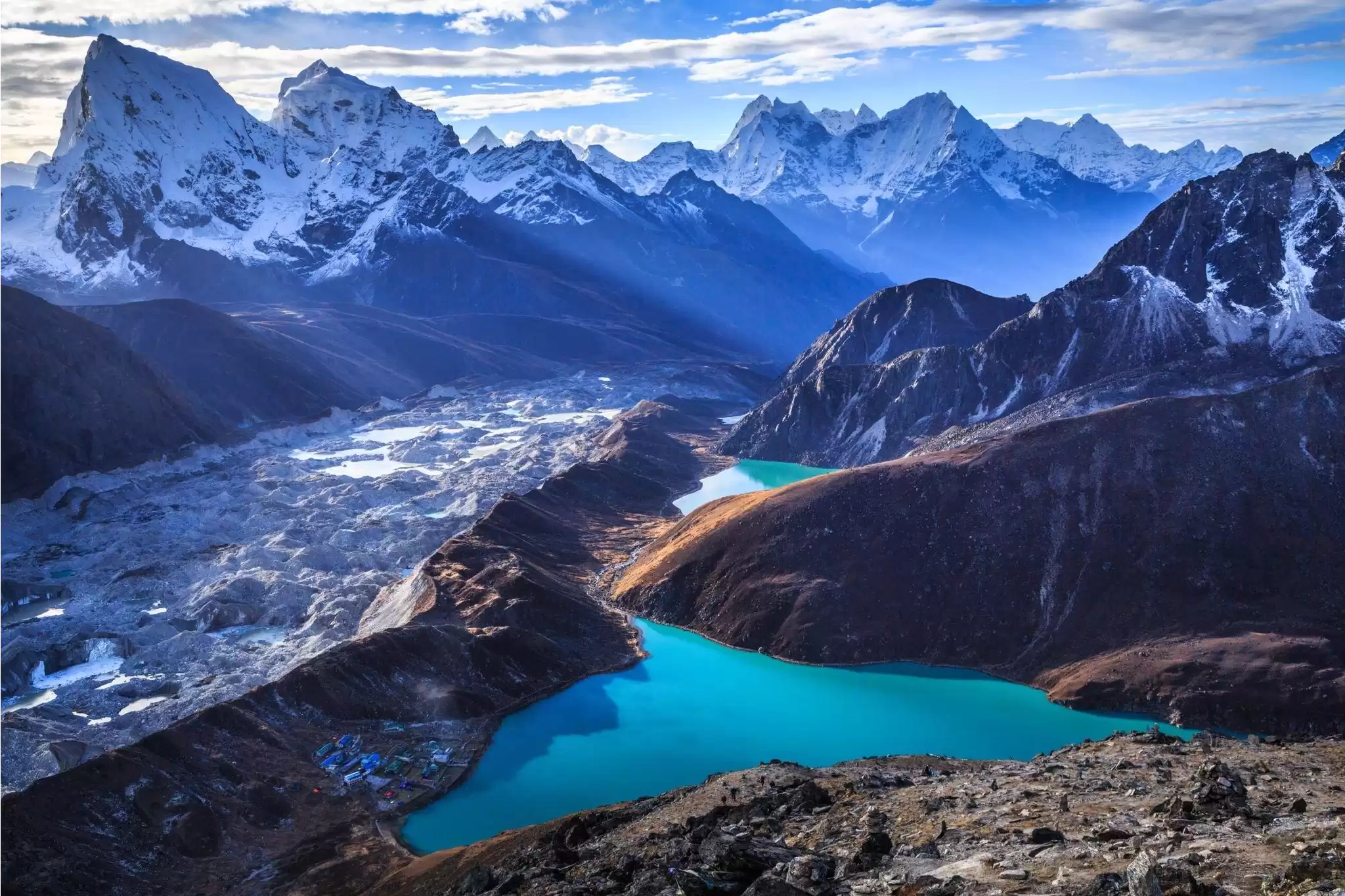
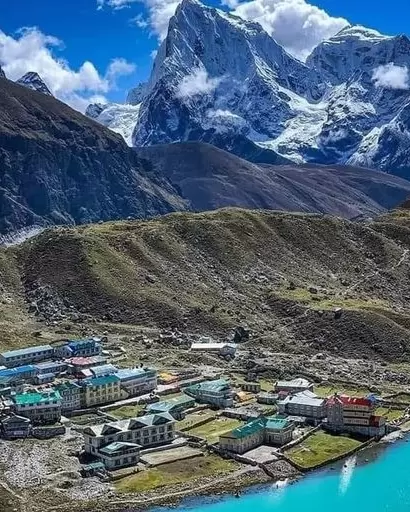
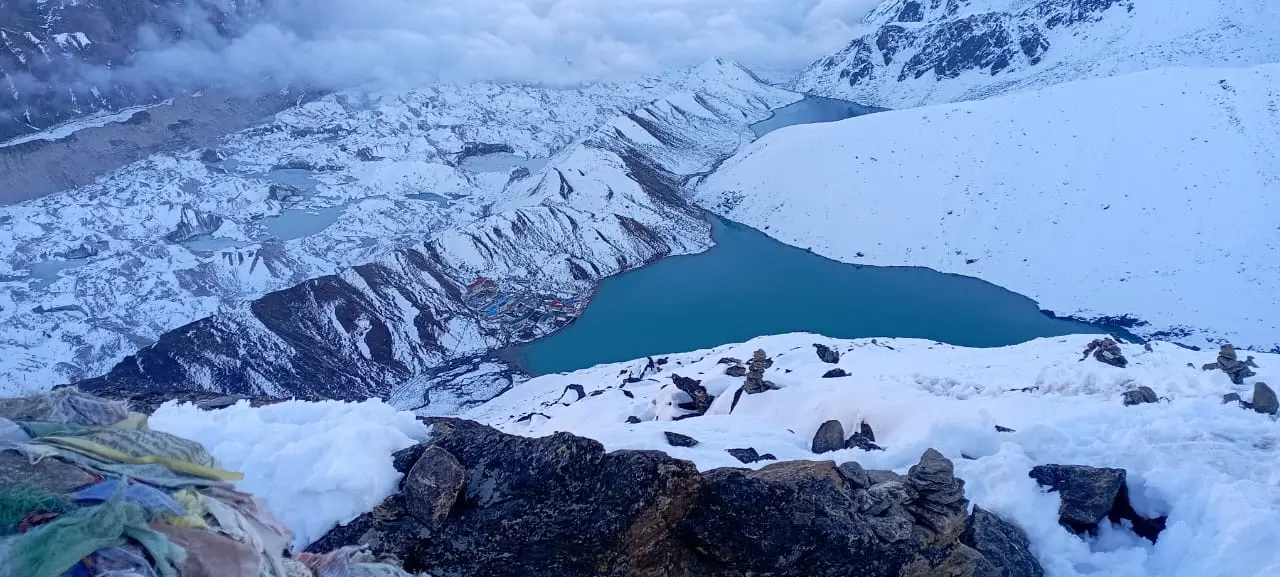
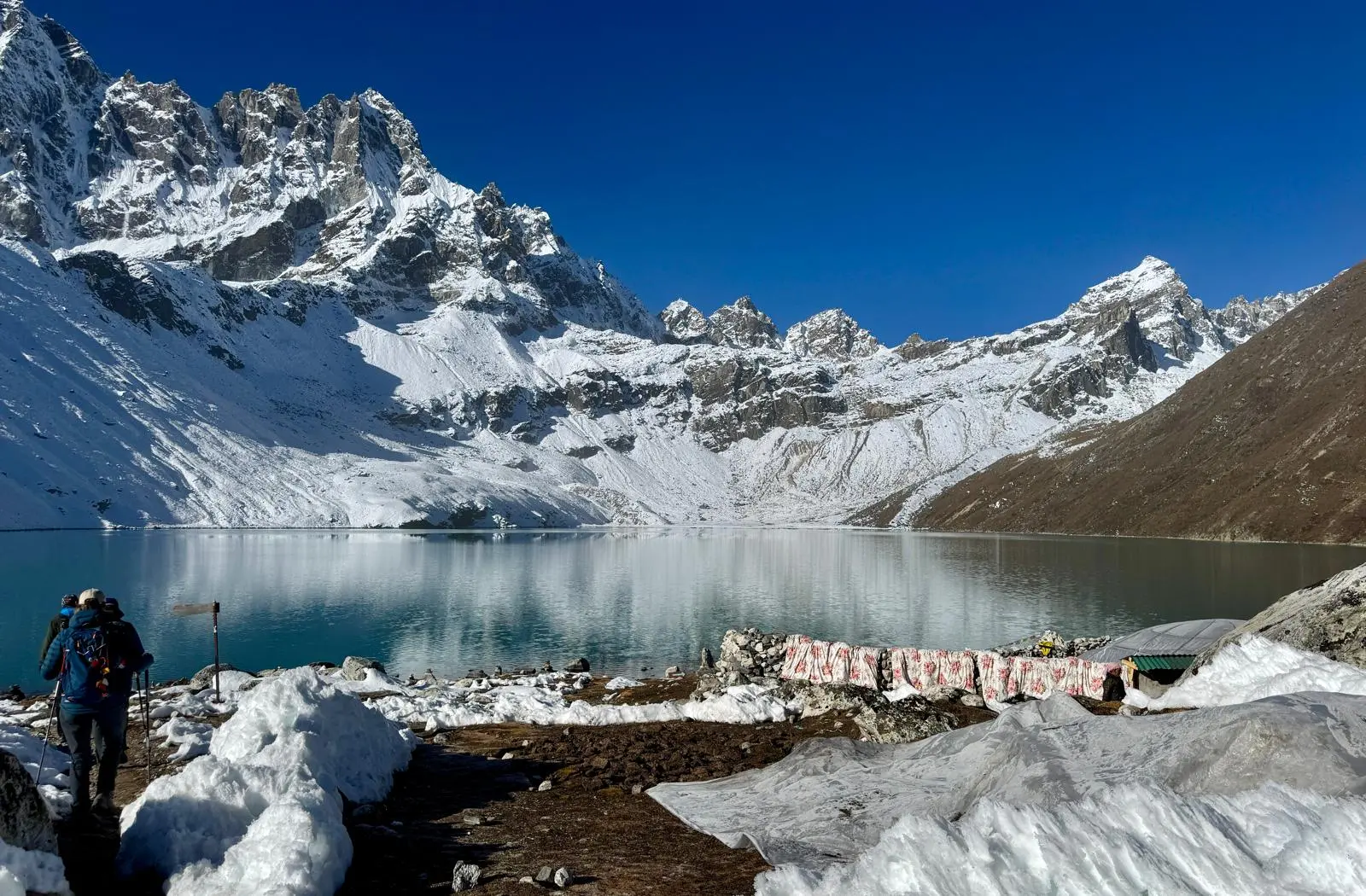
The Gokyo Valley contains six sacred lakes, their distinctive turquoise color created by glacial flour—fine rock particles ground by the Ngozumpa Glacier and suspended in the water. These lakes hold deep spiritual significance for both Buddhists and Hindus, with pilgrimages occurring during full moon festivals. The main village of Gokyo sits beside the third and largest lake at 4,790 meters, providing a serene base for exploration.
The Ngozumpa Glacier, which feeds these lakes, stretches for 36 kilometers, making it the Himalaya's longest glacier. Walking alongside this massive river of ice provides visceral understanding of glacial power—the grinding, cracking sounds of ice shifting, the debris-covered surface hiding blue ice beneath, the meltwater streams carving channels through the moraine. Climate change has caused dramatic retreat of Himalayan glaciers over recent decades, making witnessing these frozen giants even more poignant.
The valley's remoteness and beauty create an almost spiritual atmosphere. Mornings bring mirror-like reflections of Cho Oyu in the lake's still waters, afternoons see clouds playing around the peaks, and evenings offer spectacular sunsets painting the snow mountains in shifting hues. Many trekkers find Gokyo's peaceful energy a welcome contrast to busier sections of Everest region trekking, similar to the tranquility found in our Langtang Valley and Gosainkunda Trek.
The pre-dawn climb to Gokyo Ri represents one of the trek's most rewarding challenges. The rocky peak rises steeply behind the village to 5,357 meters, and most trekkers begin the ascent in darkness, using headlamps to navigate the trail marked with cairns. The hour-long climb in thin air tests your acclimatization and determination, but reaching the summit just as dawn breaks over the Himalayas creates moments of pure magic.
From Gokyo Ri's prayer flag-draped summit, you witness one of Earth's most spectacular panoramas—four of the world's five highest peaks visible simultaneously. Everest dominates the eastern horizon, its pyramid summit catching the first golden light. Lhotse's massive south face rises beside it, while Makalu, distinctively pyramid-shaped, stands further east. To the north, Cho Oyu's bulk straddles the Tibetan border. Closer at hand, peaks like Cholatse, Taboche, and Thamserku complete the 360-degree panorama.
Below, the entire Gokyo Lake system glitters in the morning light, and the Ngozumpa Glacier stretches north like a highway toward Tibet. The view rivals or even surpasses that from Kalapathar, offering different perspectives and a less crowded experience. Many trekkers who climb both viewpoints struggle to choose a favorite—each offers unique magnificence that justifies the effort required to reach them.
Success on Cho-La Pass begins with proper preparation days before the actual crossing. Ensure you're well-acclimatized through gradual ascent and rest days. Pack your gear the night before—you'll want quick access to warm layers, water, snacks, sunglasses, sunscreen, and potentially microspikes depending on season and conditions. Set multiple alarms for your pre-dawn wake-up call, typically 4:00-5:00 AM.
The early start serves multiple purposes beyond avoiding afternoon weather deterioration. The overnight freeze firms up snow and ice on the western descent, making footing more secure than during warm afternoon hours when surfaces become slushy and unstable. Morning also provides the calmest wind conditions—by afternoon, valley winds often intensify, making the exposed pass uncomfortably cold and the descent more challenging.
Eat a substantial breakfast despite the early hour, as you'll burn enormous calories during the 8-10 hour crossing day. Porridge, eggs, toast, and hot tea provide sustained energy. Fill water bottles with warm water if possible—cold water can freeze in your pack, and warm liquid goes down easier at altitude. Many trekkers carry electrolyte supplements to maintain energy and hydration throughout the long day.
The climb from Thagnak begins gradually through rocky moraine before steepening as you work toward the pass. Pace yourself conservatively from the start—the thin air at 4,700+ meters means even fit trekkers move slowly. Use the "pressure breathing" technique: exhale forcefully to empty lungs completely, then inhale deeply. This maximizes oxygen exchange in the thin air.
Take regular short breaks rather than pushing to exhaustion before resting. Every 30-45 minutes, stop for a few minutes to drink water, eat a snack, and let your heart rate recover. These breaks also provide opportunities to add or remove layers as your body heats up during the climb but risks chilling during rest stops. The switchbacking trail eventually leads to a boulder field below the pass, where the final steep section demands hands on rocks occasionally for balance.
Reaching the prayer flag-festooned summit brings immense relief and satisfaction. Take time to catch your breath, capture photographs, and appreciate the panorama before beginning the descent. The summit itself isn't a place to linger long—wind and cold at 5,420 meters quickly sap body heat, and you still face the technically demanding western descent.
The western descent from Cho-La represents the pass's crux and the reason many trekkers hire guides for this trek. The steep slope, often covered in ice even during autumn months, requires careful foot placement and sometimes handholds on fixed ropes placed across the most challenging sections. Your guide will assess conditions and advise whether microspikes or crampons are necessary—follow their judgment without debate.
Descend facing into the slope when particularly steep or icy, using a three-point contact method—always have two feet and one hand or two hands and one foot in contact with the slope. Move deliberately rather than quickly, testing each foot placement before committing your weight. If you slip, try to self-arrest by rolling onto your stomach and digging in with elbows, knees, and boot edges. This technique should be practiced on less serious slopes during lower sections of the trek.
Once past the steepest icy section, the trail continues down rocky moraine before easing onto the valley floor leading to Dzongla. The final hour feels almost relaxing after the intense concentration required above, and reaching Dzongla's teahouses brings celebration and relief. The sense of accomplishment after successfully crossing Cho-La energizes you despite the long day, and evening conversations in the dining room buzz with excited recounting of the day's adventure.
After crossing Cho-La Pass, the route joins the main Everest Base Camp trail at Dzongla, continuing to Lobuche and then Gorakshep—the final settlement before Base Camp at 5,364 meters. The landscape here embodies high-altitude harshness, with minimal vegetation, constant wind, and dramatic temperature swings between sunny days and freezing nights. Gorakshep's teahouses, though basic, provide essential shelter and meals that taste incredible after long trekking days.
The walk from Gorakshep to Everest Base Camp crosses the Khumbu Glacier's western moraine, a moonscape of rocks, boulders, and ice that requires careful navigation. During climbing season, the route sees heavy traffic from mountaineers, support staff, and yaks carrying supplies to base camp. The round trip takes 4-5 hours, with the final section marked by prayer flags and rock cairns guiding you to the camp's constantly shifting location on the glacier.
Base Camp itself sits at 5,364 meters on the Khumbu Glacier below the massive Khumbu Icefall. During climbing season (April-May and September-October), hundreds of colorful tents transform the glacier into a temporary city where expedition teams prepare for summit attempts. Walking among these camps, you might meet mountaineers sharing stories about their journey, see the latest in high-altitude gear and technology, or witness helicopter landings delivering supplies and evacuating sick climbers. The energy here proves infectious—you're standing where Hillary and Tenzing began their historic 1953 ascent, where every Everest climber since has prepared, dreamed, and sometimes abandoned their summit goals.
Most trekkers consider the pre-dawn climb to Kalapathar (5,545 meters) the trek's emotional and visual high point. "Black rock" in Nepali, Kalapathar rises as a dark pyramid beside Pumori, offering unobstructed views of Everest's southwest face from just eight kilometers away. The climb typically begins around 4:00 AM from Gorakshep, with trekkers ascending by headlamp through bitter cold that can reach -15°C or lower.
The hour-long climb tests everything you've trained for—thin air makes each step deliberate, cold numbs fingers and toes despite heavy gloves and boots, and darkness hides the trail's steepness. But reaching the prayer flag-draped summit just as dawn illuminates Everest creates one of life's transcendent moments. The pyramid summit catches the first golden light, which gradually spreads across Nuptse's massive wall, the Khumbu Icefall tumbling down in frozen chaos, and the surrounding giants emerging from darkness into day.
The panorama encompasses Everest, Nuptse, Changtse across the Tibetan border, Pumori rising directly beside you, and countless other peaks creating an ocean of summits in every direction. Many trekkers find tears streaming down their faces—from cold, yes, but also from the overwhelming beauty and the realization that they've achieved something extraordinary. The photographs you capture from Kalapathar will grace your walls forever, but the memory sears even deeper into your consciousness, similar to the powerful moments trekkers experience on our Mera Peak Climb or Island Peak Climbing expeditions.
Namche Bazaar, perched at 3,440 meters in a horseshoe-shaped amphitheater, serves as the cultural and commercial capital of the Khumbu region. This remarkable town evolved from a small trading post where Sherpa merchants traded Tibetan salt for grain from lower valleys into a thriving hub serving thousands of annual trekkers while maintaining its essential Sherpa character. Walking Namche's steep streets, you encounter a fascinating blend of traditional stone houses with carved wooden windows, modern lodges with hot showers and WiFi, Tibetan refugees selling handicrafts, and Sherpa families who've lived here for generations.
The Saturday market, when villagers from surrounding areas gather to buy and sell goods, provides authentic glimpses into local life beyond tourism. Farmers sell vegetables grown in nearby Khumjung's greenhouses, women display hand-knitted wool sweaters and socks, merchants offer everything from trekking gear to yak cheese. The Sherpa Culture Museum, perched on the hillside above town, offers excellent context about Khumbu history, Buddhist traditions, mountaineering heritage, and environmental challenges facing the region.
Namche's bakeries serve fresh cinnamon rolls and apple pie that taste miraculous at altitude, while restaurants offer diverse cuisine from traditional dal bhat to pizza and pasta. The Irish pubs and German bakeries might seem incongruous in remote Nepal, but they reflect Sherpa entrepreneurial spirit and adaptation to trekker desires while maintaining cultural identity. Evening conversations in these establishments connect trekkers from around the world, creating friendships forged in shared adventure.
Buddhism permeates every aspect of Sherpa culture, with monasteries, stupas, chortens, and prayer walls marking the landscape. Tengboche Monastery, the Khumbu's most significant gompa, sits on a ridge at 3,867 meters with Everest, Ama Dablam, and surrounding peaks creating a dramatic backdrop. The monastery hosts morning and evening prayer ceremonies where monks in maroon robes chant sutras accompanied by deep horns, drums, and cymbals—powerful spiritual experiences open to respectful visitors.
The monastery's position feels divinely inspired, as if placed to maximize mountain views while creating sacred space for meditation and prayer. During major Buddhist festivals, particularly Mani Rimdu in autumn, Tengboche fills with Sherpa families who travel from throughout the region to witness masked dances, receive blessings, and participate in ceremonies that connect them to their Tibetan Buddhist heritage. Trekkers fortunate enough to visit during these festivals witness culture and spirituality in living practice rather than museum displays.
Smaller monasteries and gompas dot villages throughout the trek—Khumjung's gompa supposedly houses a yeti scalp, Pangboche's monastery claims to be among the region's oldest, Thame's gompa served as home to many famous mountaineering Sherpas. Prayer wheels along trails should be spun clockwise, mani walls passed on the left, and religious sites approached with respect and appropriate dress. These aren't merely tourist attractions but active spiritual centers serving communities who've maintained Buddhist practice through centuries of isolation and hardship.
The Sherpa people's legendary hospitality stems from both cultural tradition and practical necessity in one of Earth's harshest inhabited environments. Their warmth, humor, and resilience despite challenging living conditions inspire trekkers worldwide. Learning basic Nepali phrases—"Namaste" (hello/thank you), "Dhanyabad" (thank you), "Mitho chha" (delicious)—shows respect and often results in warmer interactions and cultural exchanges beyond standard trekker-lodge owner transactions.
Many Sherpa families have deep mountaineering heritage, with members working as guides, high-altitude porters, or in expedition support. Conversations reveal incredible stories—fathers who climbed Everest multiple times, brothers working on different expeditions simultaneously, families whose lives revolve around the climbing seasons. The respect and admiration global mountaineering communities hold for Sherpa skill, strength, and mountain knowledge creates justifiable pride in these communities.
Understanding this heritage, Himalayan Forever Treks employs only experienced Sherpa guides and ensures fair wages, proper equipment, insurance, and working conditions for all staff. When you trek with us, you're not just hiring services—you're supporting families, communities, and sustainable tourism that benefits local people rather than exploiting them. This ethical approach to trekking creates richer experiences for everyone involved.
The trek's elevation range from Lukla (2,840m) to Kalapathar (5,545m) creates dramatic temperature variations requiring versatile layering systems. Base layers should include moisture-wicking thermal tops and bottoms—merino wool or synthetic fabrics that manage sweat during climbs while providing warmth during rest stops. Pack at least two sets, allowing one to dry while wearing the other.
Mid-layers like fleece jackets, down vests, or insulated jackets provide core warmth without excessive bulk. A lightweight fleece works for moderate elevations and active trekking, while a heavier insulated jacket becomes essential above 4,500 meters and for pre-dawn starts to viewpoints. Your outer shell jacket and pants must be waterproof and windproof, protecting against rain, snow, and the fierce winds common on passes and high ridges.
Lower body layers include comfortable trekking pants—many trekkers prefer zip-off convertible pants allowing shorts option at lower elevations. Thermal leggings worn under trekking pants add warmth at high altitudes. Multiple pairs of hiking socks, including warmer options for sleeping and high camps, prevent blisters and keep feet comfortable. Don't forget crucial accessories: warm beanie, sun hat, buff or neck gaiter, insulated gloves (bring liner gloves plus heavier mittens for extreme cold), and quality sunglasses with UV protection and side shields.
Quality, well-broken-in trekking boots represent your most important gear investment. Choose boots with good ankle support, waterproof construction, and Vibram or similar aggressive tread for rocky terrain. Break them in thoroughly during training hikes—new boots on a three-week trek guarantee painful blisters. Consider bringing camp shoes (lightweight sneakers or Crocs) for evenings at lodges, giving your feet relief from heavy boots.
Trekking poles dramatically reduce knee stress during long descents and provide stability on uneven terrain, river crossings, and potentially icy sections. Adjustable poles allow length modifications for ascents versus descents. Many trekkers find them indispensable, particularly carrying daypacks with camera equipment, water, and layers.
A comfortable, properly fitted daypack (30-40 liters) carries daily essentials while porters handle your main duffel bag. Your daypack should include water (at least 2 liters capacity), snacks, extra clothing layers, camera equipment, first aid kit, toiletries, and personal items. Proper fit with padded shoulder straps and hip belt prevents shoulder pain during 6-8 hour trekking days.
Depending on season and conditions, microspikes or light crampons provide crucial traction on icy sections, particularly Cho-La Pass. Consult with Himalayan Forever Treks about conditions for your specific trekking dates—autumn crossings often don't require crampons, while spring and winter usually do. Your guide can often arrange rental in Namche if you don't own these items.
A quality sleeping bag rated to at least -15°C proves essential, as lodge blankets may prove insufficient at high elevations where nighttime temperatures drop well below freezing. A sleeping bag liner adds warmth, improves hygiene, and protects your sleeping bag's interior. A headlamp with extra batteries enables pre-dawn viewpoint climbs and navigating dark teahouses during evening power outages.
Sun protection becomes critical at high altitude where UV exposure intensifies dramatically. High-SPF sunscreen (50+) and lip balm with SPF prevent painful burns. The sun's intensity, combined with reflection off snow and glaciers, can cause severe burns even on overcast days. Water purification tablets or a filter system ensures safe drinking water throughout the trek, reducing plastic bottle consumption and saving money while protecting against waterborne illnesses.
Sagarmatha National Park protects one of the world's most fragile high-altitude ecosystems, where recovery from environmental damage takes decades or longer. As trekkers, we carry responsibility to minimize our impact and preserve this landscape for future generations. Pack out all trash, including toilet paper from emergency bathroom stops—what goes up the mountain must come down. Use refillable water bottles with purification systems instead of buying hundreds of plastic bottles, which create enormous waste problems in remote areas without recycling infrastructure.
Stick to established trails to prevent erosion and vegetation damage. The temptation to cut switchbacks or create shortcuts causes lasting harm to fragile alpine plants that take years to establish in harsh conditions. Respect wildlife by observing from distance rather than approaching or feeding animals, which disrupts natural behaviors and can endanger both animals and humans. The protected species within Sagarmatha National Park—snow leopards, red pandas, Himalayan tahr, musk deer—deserve habitat free from human disturbance.
Teahouse toilets, while basic, should be used rather than going in nature whenever possible. When emergency situations require outdoor relief, move at least 50 meters from trails and water sources, dig a small hole, and pack out toilet paper. Water sources serve communities downstream—contamination affects Sherpa families and fellow trekkers. These responsible practices ensure the Khumbu region remains pristine and beautiful for generations of future adventurers.
Understanding and respecting Sherpa Buddhist culture enriches your trekking experience while showing appreciation for communities hosting you in their homeland. Always walk clockwise around monasteries, stupas, mani walls, and chortens—this follows Buddhist practice and shows cultural awareness. Remove shoes before entering monasteries, homes, and sometimes lodges. Dress modestly, especially when visiting religious sites—shorts and tank tops are inappropriate in monasteries.
Ask permission before photographing people, particularly monks, elders, and children. Many locals have grown weary of cameras thrust in their faces without courtesy or compensation. A smile, basic Nepali greeting, and request gesture creates respectful interaction. Some ceremonies and religious practices are private or sacred—don't photograph these even if technically possible. When granted photography permission, consider offering to send copies to subjects via email or through their lodge.
Support local economy directly by staying in teahouses, eating in their dining rooms rather than cooking your own food, and hiring guides and porters through reputable companies that ensure fair treatment. Himalayan Forever Treks maintains strong relationships with lodge owners, paying fair rates that support families while ensuring quality accommodation for trekkers. This sustainable tourism model benefits communities economically while preserving culture and environment.
The Gokyo Cho-La Pass Everest Base Camp trek follows well-established teahouse routes, eliminating the need for camping equipment required on more remote adventures like the Lower Dolpo Trek or Kanchenjunga Base Camp Trek. Teahouses provide basic but adequate accommodation—twin-bedded rooms with thin mattresses, shared bathroom facilities, and minimal heating. Expect increasingly basic conditions as you gain altitude, with lodges at Gorakshep and Gokyo offering essential shelter rather than comfort.
Lower elevation teahouses in places like Namche Bazaar provide hot showers (for a fee), WiFi, varied menu options, and relatively comfortable sleeping arrangements. As you climb higher, amenities decrease while costs increase, reflecting difficult supply logistics. Above 4,500 meters, expect cold-water washing only, intermittent electricity, and unheated sleeping rooms where nighttime temperatures can drop well below freezing. This makes a quality sleeping bag essential regardless of blankets provided.
The dining room serves as the social heart of each teahouse, with a central stove burning yak dung or wood creating welcome warmth during cold evenings. Trekkers gather around tables sharing experiences, comparing routes, playing cards, and forming friendships with people from across the globe. This communal atmosphere creates some of the trek's most memorable moments—conversations ranging from deep philosophical discussions to silly laughter over card games, all united by shared adventure in the mountains.
Teahouse menus offer surprising variety considering the remote locations and supply challenges. Dal bhat, Nepal's staple meal of lentil soup with rice, provides excellent value with unlimited refills and balanced nutrition for sustained trekking energy. The trekking mantra "dal bhat power, 24 hour" reflects this dish's sustained energy provision. Many trekkers eat dal bhat twice daily, appreciating the reliable nutrition and unlimited portions.
Alternative menu items include momos (Tibetan dumplings), fried rice, noodle soups, pasta, pizza, and surprisingly good baked goods at lower elevations. Western dishes improve in quality at places like Namche with its Italian pizzerias and German bakeries, but become simpler at higher lodges where limited ingredients restrict culinary creativity. Fresh vegetables and fruits disappear above Namche except for potatoes and occasional greenhouse produce, with menus shifting to preserved and carbohydrate-heavy options.
Hydration proves crucial at altitude, requiring conscious effort to drink 3-4 liters daily despite reduced thirst sensation in cold, dry air. Boiled water costs money at lodges but proves essential—the alternative of untreated water risks serious gastrointestinal illness that could end your trek. Bringing purification tablets or a filter system reduces costs and environmental impact while ensuring safe hydration. Hot drinks—ginger lemon tea, masala tea, hot chocolate—provide comfort during cold evenings while contributing to daily fluid intake.
While altitude sickness receives the most attention, trekkers face various other health issues during multi-week journeys at elevation. Gastrointestinal problems from contaminated water or food rank among the most common complaints. Stick to freshly cooked hot meals, avoid raw vegetables and unpeeled fruit at higher elevations, use only purified water for drinking and teeth brushing, and maintain hand hygiene before eating.
Dehydration accelerates altitude sickness and reduces physical performance, yet cold temperatures suppress thirst sensation. Force yourself to drink regularly throughout the day, monitoring urine color—dark urine indicates insufficient hydration. Electrolyte supplements help maintain mineral balance lost through exertion and altitude-increased urination. Energy bars, nuts, chocolate, and other high-calorie snacks maintain blood sugar and energy during long trekking days.
Sunburn and snow blindness threaten unprepared trekkers at high altitude where UV exposure intensifies dramatically. Apply high-SPF sunscreen liberally and reapply every two hours, particularly on nose, ears, lips, and back of neck. Quality sunglasses with UV protection and side shields protect against intense glare reflecting off snow and glaciers. Even on cloudy days, UV radiation penetrates, making consistent sun protection essential rather than optional.
Himalayan Forever Treks ensures guides carry comprehensive first aid kits including medications for altitude sickness, gastrointestinal issues, pain relief, wound care, and other common ailments. Our guides receive training in wilderness first aid, altitude illness recognition, and emergency response protocols. However, serious medical situations require professional intervention—helicopter evacuation to Kathmandu hospitals provides the only realistic option for severe illness or injury.
Mobile phone coverage exists in major villages, allowing emergency communication when necessary. Satellite phones carried by expedition companies provide backup communication in areas without cellular service. Helicopter rescue coordination involves your insurance company, trekking agency, and local rescue services. Weather conditions, particularly clouds and wind, determine helicopter flight feasibility—rescues can be delayed days during bad weather, making prevention and early intervention for health issues crucial.
The rescue infrastructure in the Khumbu region has improved dramatically over recent decades, with helicopter landing zones at all major villages and professional rescue coordination. However, the best approach remains prevention—proper acclimatization, conservative pacing, good hygiene, adequate hydration, and listening to your body's warning signals prevent most serious health issues. Pride or determination should never override health concerns, as mountains remain for future attempts while health consequences can prove permanent.
The Gokyo Cho-La Pass Everest Base Camp trek occupies a unique position in Nepal's trekking spectrum. It surpasses the standard Everest Base Camp Trek in challenge and comprehensiveness while remaining more accessible than the full Everest Three Passes Trekking circuit. This middle ground appeals to trekkers wanting more than the standard route without committing to the extreme demands of crossing three high passes.
Compared to the Gokyo Valley Trek alone, this route adds the iconic Everest Base Camp and Kalapathar, ensuring you experience the region's two most celebrated destinations. The Cho-La Pass crossing adds adventure and challenge that viewpoint-only treks lack, creating genuine accomplishment beyond simply walking to famous locations. This combination of scenic beauty, cultural immersion, technical challenge, and iconic destinations creates a comprehensive Khumbu experience.
For those seeking luxury, the Everest Base Camp Comfort Trek offers upgraded accommodations and shorter daily distances. However, comfort comes at adventure's cost—the Cho-La crossing's rawness and challenge provide satisfaction that pampered trekking cannot match. The sense of achievement after successfully navigating this technical pass, combined with the diverse landscapes experienced, creates powerful memories and genuine personal growth.
Trekkers who complete this route often seek comparable challenges elsewhere in Nepal. The Manaslu Circuit Trek offers similar difficulty with fewer crowds and distinctive cultural experiences circling the world's eighth-highest mountain. The Larkya La pass (5,160m) presents challenges comparable to Cho-La while the circuit's remoteness creates more wilderness atmosphere than the busier Everest region.
The Annapurna Circuit Trek, particularly when combined with Annapurna Base Camp, provides excellent high-altitude training. The Thorong La pass (5,416m) prepares trekkers for Cho-La's demands while the circuit's diverse landscapes and cultures create rich experiences. The 10 days Annapurna Circuit Trek offers a condensed version for those with limited time.
For peak climbing progression beyond trekking, Island Peak Climbing or Mera Peak Climb represent natural next steps. These technical peaks require mountaineering skills like crampon use, rope work, and glacier travel while building on the altitude acclimatization and mountain experience gained during trekking. Many mountaineers begin with treks like this before progressing to increasingly technical climbing objectives.
Begin planning your Gokyo Cho-La Pass Everest Base Camp trek at least six months before your intended departure, particularly for autumn (September-November) trekking when demand peaks. This timeline allows adequate training, gear acquisition, permit processing, and booking coordination. Peak season dates fill quickly as trekking companies limit group sizes for quality and safety reasons.
Contact Himalayan Forever Treks through our website or email [[email protected]] to discuss your preferred dates, group size, and any special requirements. Our team can answer questions about itinerary customization, fitness requirements, gear recommendations, and logistical details. We offer both fixed departure group treks and private custom itineraries tailored to your schedule and preferences.
Physical training should begin three to four months before departure, focusing on cardiovascular endurance, leg strength, and altitude simulation if possible. Weekend hikes with gradually increasing duration and weight provide excellent preparation. Consider completing a shorter trek like the Ghorepani Poon Hill Trek or Mardi Himal Trekseveral months before your Everest trek to test gear, gauge altitude response, and build mountain-specific fitness.
Himalayan Forever Treks provides comprehensive packages covering permits, guides, porters, accommodation, meals during trekking, airport transfers, and pre-trek briefings. Our experienced Sherpa guides bring local knowledge, cultural insights, and crucial safety expertise that dramatically enhances both enjoyment and security. Porter services carry your main gear, allowing comfortable daily trekking with light daypacks.
We maintain strong relationships with quality teahouses throughout the route, ensuring reliable accommodation even during busy seasons. Our guides coordinate lodge bookings, meal orders, and logistical details, allowing you to focus on trekking and experiencing the mountains rather than managing arrangements. This supported approach creates more relaxed, enjoyable adventures compared to independent trekking's constant planning and coordination.
International flights, Nepal visa fees, travel insurance, personal equipment, drinks beyond basic tea/coffee at meals, hot showers, battery charging, WiFi, tips for guides and porters, and personal expenses remain trekker responsibility. We provide detailed packing lists, gear recommendations, and pre-departure information helping you prepare thoroughly. Our office staff in Kathmandu (phone: +977-9841326613) remains available for questions throughout your planning and trekking journey.
With over two decades of experience leading treks throughout Nepal's Himalayas, Himalayan Forever Treks has built a reputation for safety, quality, and genuine cultural engagement. Our Sherpa guides bring generational mountain knowledge combined with professional training in altitude medicine, wilderness first aid, and client care. We prioritize proper acclimatization through carefully designed itineraries over rushed schedules that increase altitude sickness risk and reduce enjoyment.
Our commitment to ethical treatment of guides and porters—providing fair wages, proper equipment, insurance, and working conditions—creates better experiences for everyone involved. When you trek with Himalayan Forever, you support sustainable tourism that benefits local communities rather than exploiting them. This approach builds genuine relationships and creates richer cultural exchanges beyond typical tourist-local interactions.
We offer flexible itinerary customization, combining different routes like adding the Pikey Peak Trek beforehand for additional acclimatization, or continuing to Lobuche East Peak Climb for those seeking mountaineering challenges. Alternative Everest region options include the Everest Trek Return by Helicopter for time-constrained trekkers, or the scenic Everest Short Trek for those wanting Everest region experiences without extended time commitments.
The Gokyo with Everest Base Camp via Cho-La Pass trek represents a pinnacle achievement in Himalayan trekking, combining stunning natural beauty, significant physical challenge, deep cultural immersion, and iconic destinations into one comprehensive adventure. Standing beside Gokyo's turquoise lakes with Cho Oyu reflected in still waters, pulling yourself across Cho-La's icy western descent with hands gripping fixed ropes, watching sunrise illuminate Everest's pyramid from Kalapathar—these moments transform how you understand both the mountains and yourself.
This journey demands preparation, respect for altitude and weather, and acceptance that mountains dictate terms rather than human schedules. But for those willing to train properly, embrace basic teahouse living, and push through physical and mental challenges, the rewards prove immeasurable. The friendships forged with fellow trekkers and Sherpa staff, the profound beauty of Himalayan landscapes, and the satisfaction of achieving difficult goals create memories and personal growth lasting far beyond the trek's conclusion.
The mountains teach patience, humility, and appreciation for both natural majesty and human resilience. They reveal our capability to overcome significant challenges while reminding us of our smallness in nature's grand scheme. This paradox forms the essence of Himalayan trekking and ensures that those who complete the Gokyo Cho-La Pass Everest Base Camp trek carry its lessons throughout their lives.
Whether you seek personal challenge, spiritual connection, photographic opportunities, or simply the chance to walk among Earth's highest peaks, this trek delivers abundantly. It stands as one of the world's great adventures—accessible yet demanding, popular yet offering solitude, challenging yet deeply rewarding.
Ready to begin your Himalayan adventure? Contact Himalayan Forever Treks today to discuss your Gokyo Cho-La Pass Everest Base Camp trek. Our experienced team stands ready to answer questions, provide detailed planning information, and help you prepare for the journey of a lifetime. Reach us through our website, email [[email protected]], or phone/WhatsApp at +977-9841326613. You can also visit our office in Thamel, Kathmandu to meet our team personally and discuss your mountain dreams. The Himalayas are calling—will you answer?
Mode of Trekking: Lodges and Guest-Houses till Lukla to Lukla.
Trekking Grade:Moderate to Adventurous due to high altitude.
Area of Trekking: Far North Mid-East, around Khumbu-Everest region.
Highest points: Kalapathar Hill top at 5,643 m / 18,514 feet and Everest Base Camp 5,364 m / 17, 598 feet. Gokyo-Ri 5,357 m / 17, 575 feet and Cho-La Pass 5, 420 m / 17, 782 ft. high.
People and culture: Populated by Highlanders the Sherpa tribes follows strong Tibetan Buddhism and similar cultures.
Trekking duration: 14 Nights and 15 Days (from Lukla to Lukla).
Total Trip: 17 Nights / 18 Days from arrival to main departures.
Best Seasons:Nearly months of the year, except for monsoon wet months of mid-June to mid-September. The best seasons are spring and autumn / fall, the spring time begins from March to May and autumn from September to November.
Interested people can enjoy the trek during winter times of Christmas and New Year Holidays, however much cold temperatures. But most days are bright and clear with sunshine, short daylight hours during autumn and winter times.
On arrival at Kathmandu, Nepal International Airport our guide and staff will meet you with traditional welcome. After knowing the staff of Himalayan Forever Treks, a short drive to your hotels. Located in the heart of a city within an exciting Thamel area, an interesting place where most good hotels and restaurants situated. Reaching at the hotel, check your lovely rooms, after getting refreshed join in for group briefing. Provided by your guide or Group Leader, offers useful and important information of the trek, hotels and local lodge.
Includes details of the local culture with do’s and don’ts, evening a group welcome dinner in a nice Nepali Restaurants.


Trekking Preparation Day is spent before the trek to ensure everything is ready. It includes a trek briefing, gear check, permit preparation, and final packing. This day helps you stay safe, confident, and fully prepared for an enjoyable trekking adventure in the Himalayas
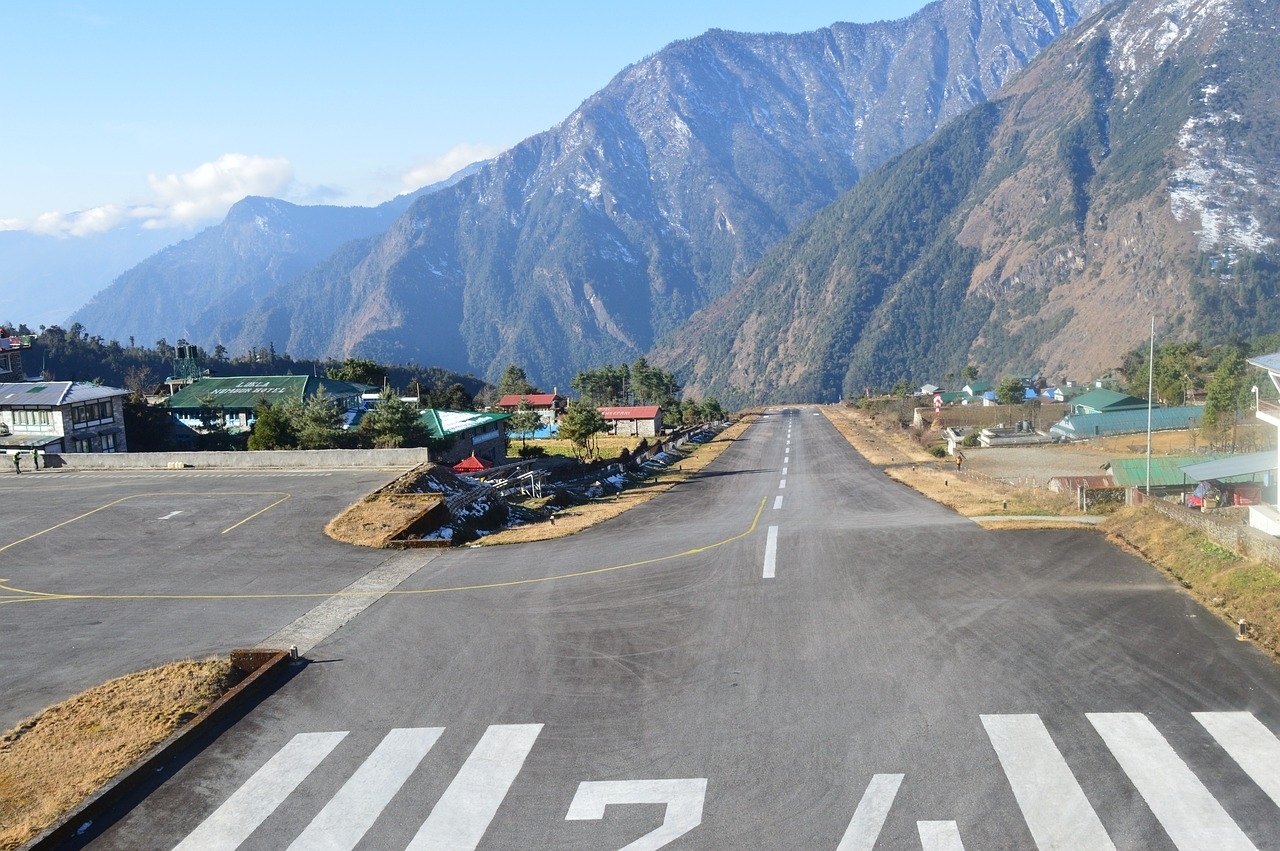
Morning transfer to Manthali town small airport for panoramic flight to Lukla, board in a small aircraft. The flight heads east with stunning views of Himalayan peaks facing Mt. Everest, as the plane makes a smooth exciting landing at Lukla Tenzing & Hillary Airport.
A moderate town, where walk starts heading down to Dudh Koshi River valley through several Sherpa villages. Festooned with prayer flags, Buddhist monument and prayer wall then reaching our first overnight stop at Phakding village.
A long today’s walk to Namche Bazaar, morning after breakfast the trail follows on moderate path. Walking short down and ups crossing a long bridge to reach a nice village of Monjo. The enter Sagarmatha National Park; (Sagarmatha a name for Everest in Nepal, while the native Sherpa calls as Chomolungma of Tibetan origin language). From the park entrance cross another bridge over the same river Dudh Koshi to Jorsalle, the last settlement before Namche Bazaar. Stopping for lunch, afternoon walk on river bed amidst lovely forest, then starts the climb on crossing a high bridge. A steep winding for few hours reaches Namche Bazaar for two overnight halt in the comfort of nice lodge.
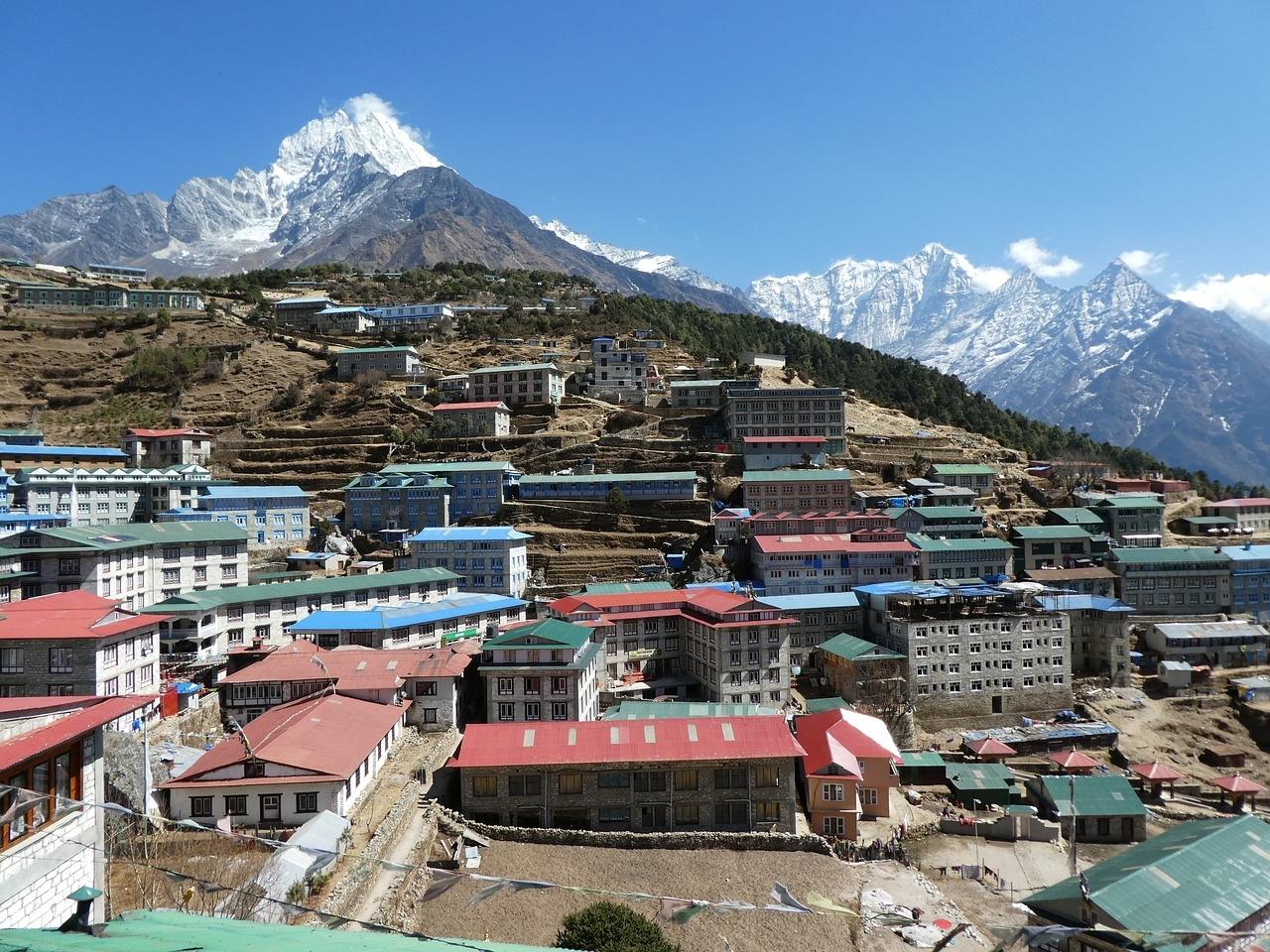
An ideal spot Namche Bazaar for rest day to support acclimatization and short hike to view-points. Morning having breakfast facing views of Kwangde and Thamersarkhu peaks, while at Namche there are several side hikes.
Suggested scenic places for hikes around Namche and beyond:Visit the park museum on top of Namche Bazaar, offers interesting information of the Khumbu Sherpa’s cultures. Along with panorama of Everest, Lhotse, Ama Dablam, Thamersarkhu and Kantega with Kwangde peaks.
Hike to Everest View Hotel at above 3,880 m high a refreshing spot for views of Mt. Everest, while having warm cup of hot drinks. For energetic people can enjoy longer hike to Khumjung and Khunde villages, located on a glacial valley.
Rest of the day enjoy leisure afternoon browsing the streets of Namche Bazaar full of shops, stores, restaurants and fresh bakeries.
On leaving Namche Bazaar following the major trail, the after few hours our route diverts away from the main path. As climb leads on steep trail for few hours to the top of Mong Hill. A small place on a high ridge facing superb views of snow peaks. Enjoying the views the trail heads down to Dudh Koshi River reaching a quiet area at Phortse Tenga for lunch stop. Located on a river gorges amidst forest surroundings.
After lunch climb into a narrow covered in dense tree lines, then finally the day ends reaching Dole. A nice small settlement with several good lodges for overnight halt.
Enjoying the comfort of a nice homely type lodge, having breakfast walk starts with short climb above Dole. Today is a short day walk of few hours to Machermo, from the high ridge with river down below. The high trail follows along the high ridgeline reaching a small settlement of Luza. As walk continues above Dudh Koshi River, a nice pleasant trek facing views of surrounding snow peaks. Overlooking grand views of Mt. Cho-Oyu towards North, standing on a high ridge facing Machermo settlement down below. A gentle downhill walk to a small river gorge and short climb to Machermo for lunch and overnight stop.
A nice place with several good lodges with views of Machermo peak, afternoon relax and enjoy short walks around the high view-points.
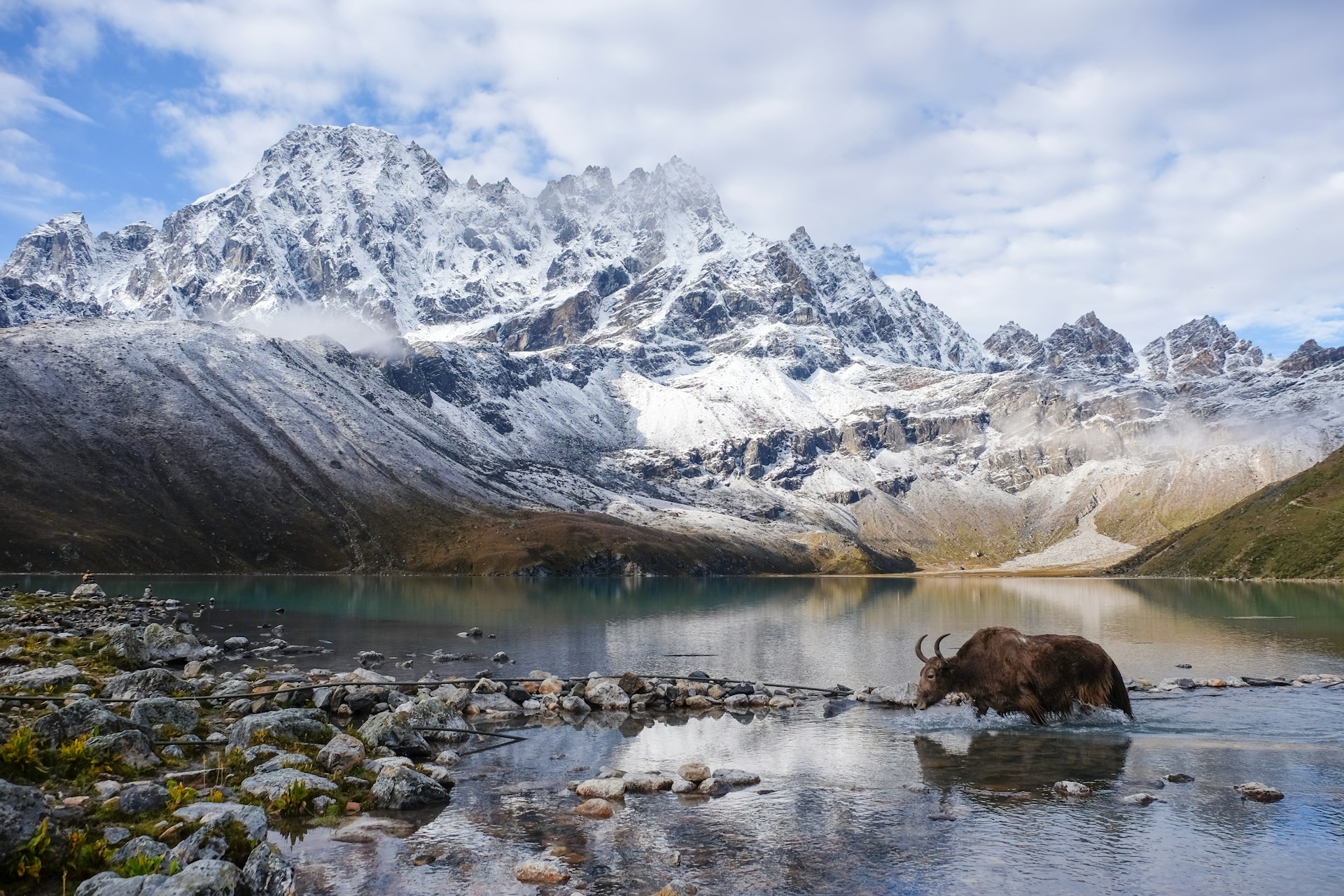
Enjoy the breakfast, and get ready for another half day walk to Gokyo Valley.Our main destinations and highlights of the trip, a short climb to a high ridge. As walk follows on the gradual trail to a small isolated place at Panga with few small lodges. From here climb towards Gokyo valley reaching first lake and then coming across second lake. Then reach the main third lakes of Gokyo our final destination for lunch and overnight halt.
Most all nice lodges, situated high above the Gokyo Lake, facing charming views of Mt. Cho-Oyu in the north direction. Getting organized in a nice small rooms of the lodge, having breakfast. Afternoon free at leisure for short hike around the lake and its scenic surrounding.
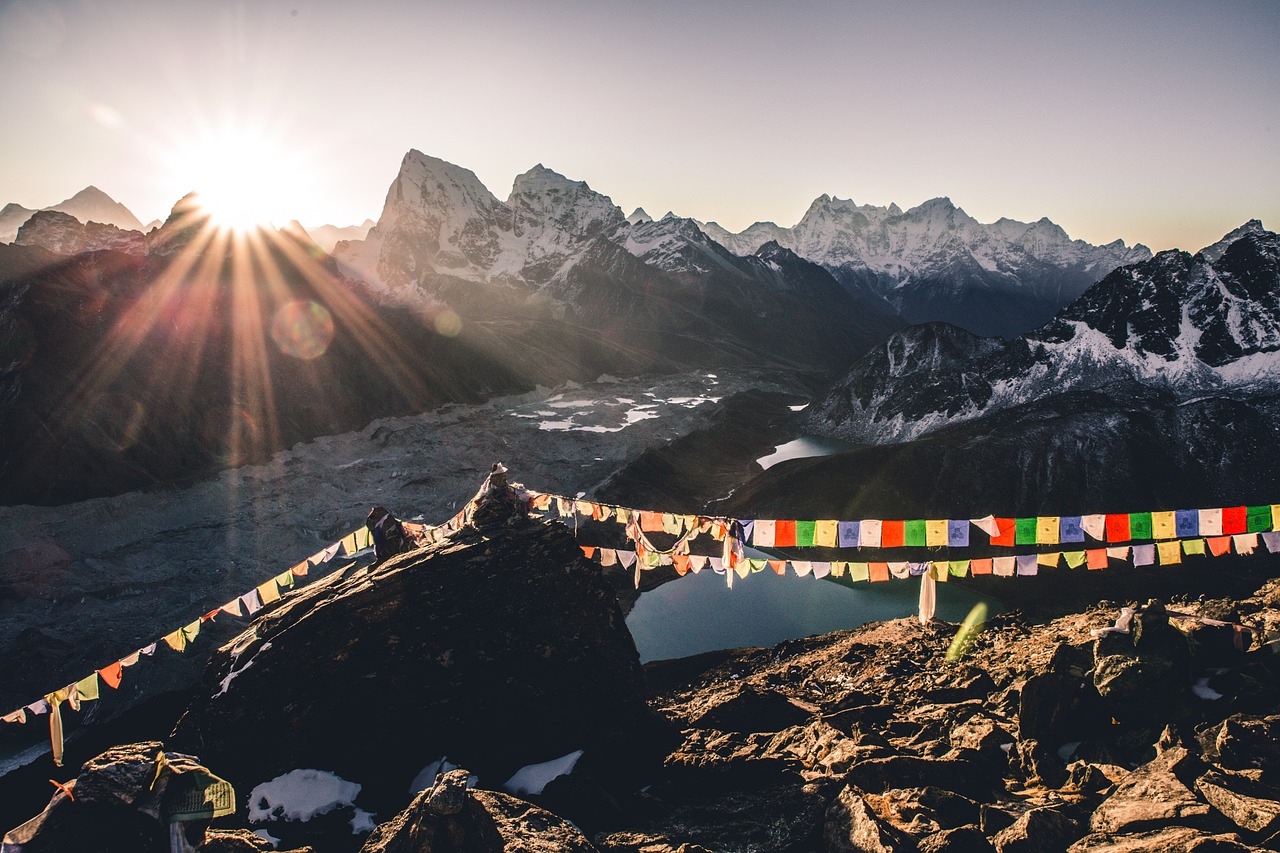
Rise early morning for exciting hike to the top of Gokyo-Ri. A steep climb after a few minutes easy walk, the uphill begins walking from the southern bank of the lake. The climb on grassy and rocky slope sided hill, as walk continues reaching on top of Gokyo-Ri. The highest point of the adventure, catch the striking sunrise as it hits the world’s highest peaks. Includes glorious panorama of giant snow-capped mountain range with Mt. Everest, Lhotse, Cho-Oyu and Mt. Makalu towards east. Staying for an hour enjoying the views of Gokyo scenic valley and its emerald colored lakes. Includes grand views of Ngozumpa glacier, the longest glaciers of Nepal and whole Himalayan range. After a grand vista from Gokyo-Ri, walk down back to the lodge for breakfast and lunch.
Afternoon a leisure walk of few hours heading south east past the lakes to Na and beyond, reaching Thagnak. A small settlement for overnight stop, in a nice small lodge, located at the base of Cho-La.
Starting early morning carrying packed lunch for the long day, the climb follows over steep slopes on rocky path. As uphill continues till top of Cho-La pass is reached, a well hidden ridge, close to Cholatse peaks. Enjoy the views of Nirekha and Lobuche peaks as far towards Mt. Cho-Oyu. From the pass after a refreshing rest a long downhill leads to Dzongla for overnight halt. A small settlement situated off from the main trail, with stunning views of Cholatse and Taboche peaks.
From Dzongla, an easy short pleasant morning walk up to a ridge, and then on nice gradual climb above Thugla ridge. From here the trails from Pheriche, Dingboche and Cho-La pass joins on route Everest base camp. The walk leads on a nice gradual up to Lobuche for overnight halt.
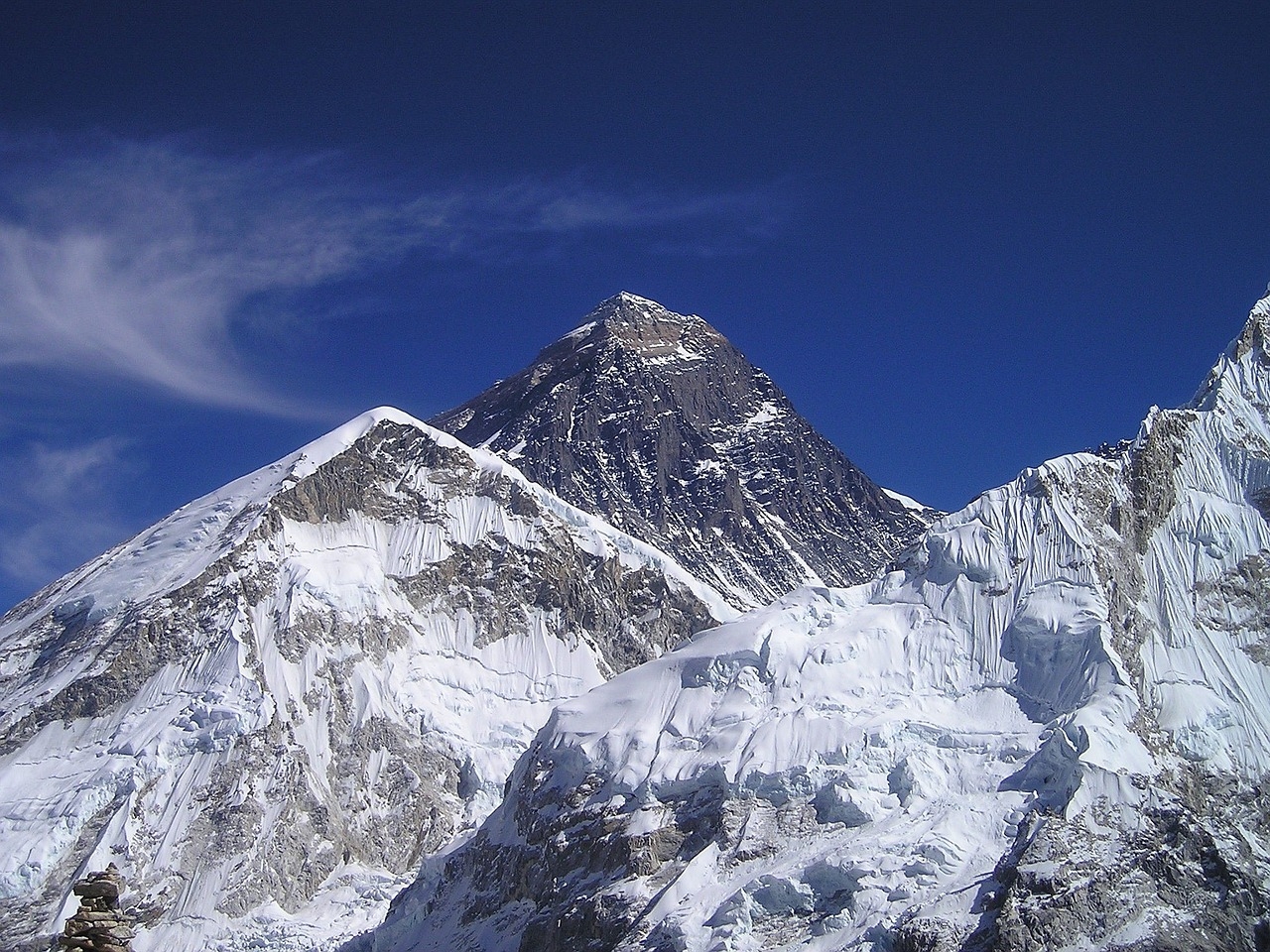
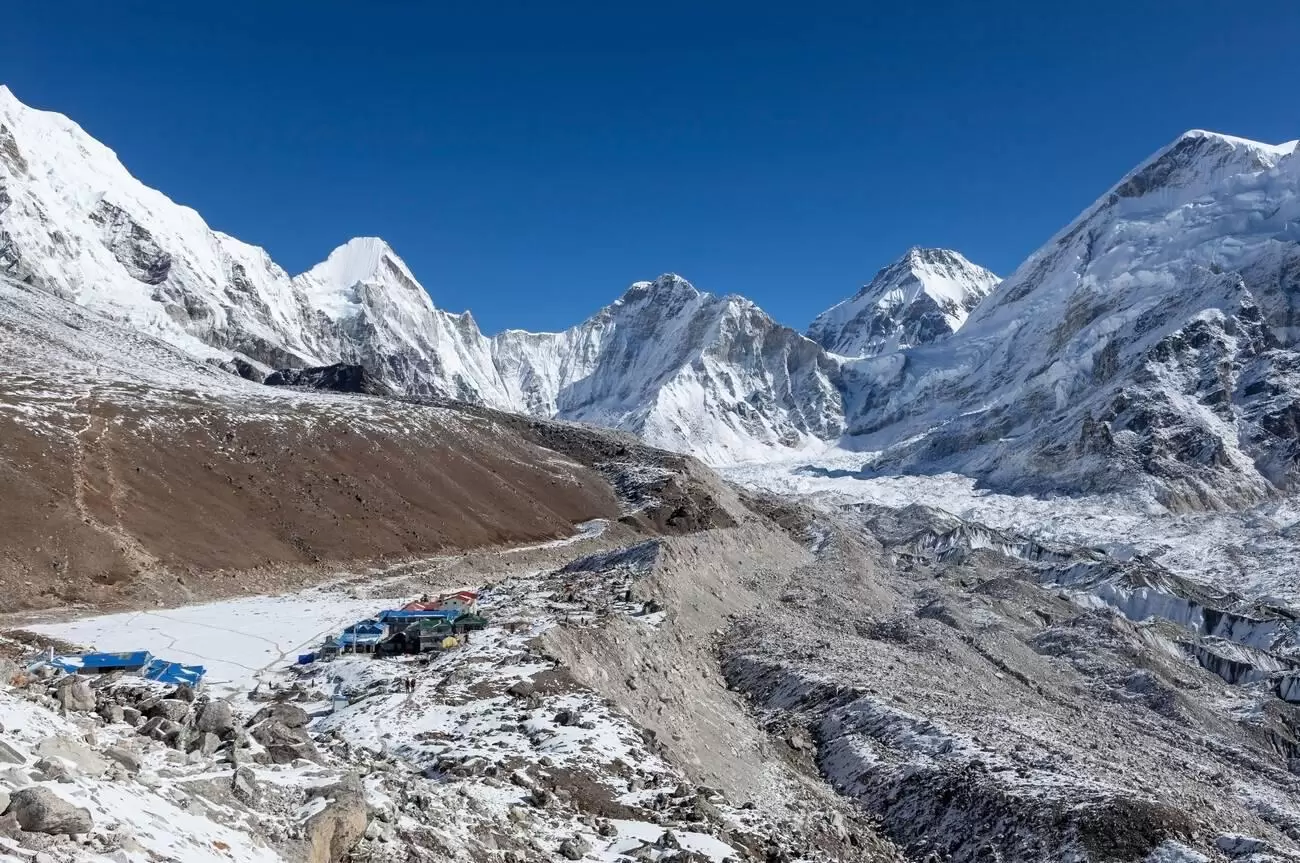
Another Big Day of the adventure, start the morning walk from the lodge at Lobuche. As well carrying a pack lunch for the long day to Everest base camp, a slow gentle walk to start the fresh cool morning. The trail follows up and then walk on rocky moraine, above Khumbu glaciers. After few hour of steady hike reaching Gorakshep, a small settlement located on a valley below high Kalapathar hill. Facing close views of Mt. Pumori, enjoy a short refreshing break and then walk continues over rocks and boulders. Then finally reaching the highlight of the adventure at Everest base camp, enjoy the dramatic scenery of arctic landscapes.
The base camp, can be busy and active during the mountaineering expedition times of late spring. Enjoy the remorseless fields of ice, snow and glaciers with massif Khumbu Ice Fall. The views of Mt. Everest is not visible, blocked by Lhotse and Nuptse peaks, achieving our goal and highlights. Return walk to Gorakshep for overnight stop, after a long exciting day of the adventure.
Start the morning as early as possible for the last big climb of the adventure to Kalapathar rocky hill top. After a strenuous climb reaching on the highest point of the adventure, Kalapathar one of the famous, popular scenic ridge.
From Kalapathar, enjoy breathtaking panorama of gigantic peaks that surrounds top of Kalapathar, facing closest views of Mt. Everest. After completing all major highlights descend to Gorakshep for breakfast, and continue walk downhill, feeling in high spirits. The trail follows past Lobuche and Thugla, from here onwards on another route to Pheriche valley. A pleasant walk to join the trail of Dingboche to Pangboche, head downhill to Pangboche for overnight stop.
Morning grand views of Ama Dablam at close distance, towers above Pangboche village. Leaving Pangboche walk down to a bridge and climb up to Tengboche and the monastery. A great exciting place surrounded by range of peaks, with time to visit the impressive Tengboche Monastery. On leaving Tengboche after a pleasant stop, walk down to Imjatse River. Crossing a short bridge an hour climb to Shanasha village then on winding nice trail to Kyang-Jima. A lovely small settlement with several guest houses and lodges amidst tranquil surrounding. From Kyang-Jima, enjoy superb views of Everest, Ama Dablam with Tharmasarku and Kwangde at close range.
After a pleasant overnight with glorious morning views of stunning peaks, an hour walk to Namche Bazaar. Having time at Namche Bazaar as well for lunch stop, afternoon down to Dudh Koshi River. On reaching the river bank a slow short climb to enter the park entrance and exit. Then ending the wonderful day reaching lovely small village at Monjo for overnight halt.
Last day trek of the adventure, enjoy the walk with few short down and ups to Phakding. From Phakding retracing the same route with last final climb to Lukla for lunch and overnight stop. Enjoy the afternoon exploring the Lukla town lined with shops, restaurants and stores.
Having early breakfast, a short walk to Lukla’s Tenzing & Hillary airport as plane reach from Ramechap or Kathmandu. Board on the small aircraft for swift short flight back to land at Manthali small airstrip. A pleasant and exciting drive brings you back at Kathmandu, rest of the day at leisure and for individual activities and shopping souvenirs of Nepal.
Last day in Nepal and at Kathmandu, get ready for final departure as per your international flight time. Himalayan Forever Trek guide and staff transfer you to the airport. Bidding farewell to the guide and staff as you depart for homeward bound flight, after a wonderful experience and adventure on Gokyo with Everest Base Camp via Cho-La Pass Trekking.



The Gokyo with Everest Base Camp via Cho-La Pass Trek requires several permits to enter the Sagarmatha National Park and the Gokyo region. Trekkers need the Sagarmatha National Park Entry Permit and the Trekkers' Information Management System (TIMS) card, which are obtainable through authorized trekking agencies like Himalayan Forever. These permits help manage conservation efforts and ensure safety within the national park.
The trek typically starts with a flight from Kathmandu to Lukla, the gateway to the Everest region. From Lukla, trekkers begin their journey on foot, following well-marked trails that wind through traditional Sherpa villages, lush forests, and alongside glacial rivers. The transportation primarily involves trekking, with no motorable roads beyond Lukla, emphasizing the pristine and remote nature of the trekking route.
The starting point for the Gokyo with Everest Base Camp via Cho-La Pass Trek is Lukla (2,860 meters), reached by a scenic mountain flight from Kathmandu. Lukla serves as the gateway to the Everest region and the starting point for trekkers embarking on their journey towards Gokyo, Everest Base Camp, and beyond.
The trek concludes back in Lukla, where trekkers catch a return flight to Kathmandu. The departure point marks the end of the trekking adventure through the majestic Himalayas, offering a final glimpse of the stunning landscapes and cultural experiences encountered along the journey.
Communication facilities along the Gokyo with Everest Base Camp via Cho-La Pass Trek route are available in larger villages like Namche Bazaar, Dingboche, and Lukla. Most lodges and tea houses offer Wi-Fi and satellite phone services for a fee. However, due to the remote and mountainous terrain, connectivity may be sporadic. Mobile network coverage can be sporadic or absent at higher altitudes, necessitating reliance on satellite phones or trekking agency communication devices for emergencies. Trekkers are advised to inform their contacts about potential communication challenges beforehand.
The Gokyo with Everest Base Camp via Cho-La Pass Trek is considered challenging due to its duration, altitude gains, and the crossing of Cho-La Pass (5,420 meters). Trekkers should have a high level of fitness, previous trekking experience, and be prepared for long daily hikes of 6-8 hours over varied terrain, including steep ascents and descents. Proper acclimatization, hydration, and adherence to safety protocols are crucial to mitigate altitude-related risks.
Accommodation along the Gokyo with Everest Base Camp via Cho-La Pass Trek route includes basic tea houses and lodges offering shared facilities. Meals served at tea houses feature a variety of local and international dishes, including dal bhat (rice and lentils), soups, noodles, and Tibetan bread. Tea houses provide trekkers with hearty meals to replenish energy after a day of trekking, ensuring comfort and sustenance throughout the journey.
The Gokyo with Everest Base Camp via Cho-La Pass Trek typically spans around 16-18 days, depending on the chosen itinerary and acclimatization stops. The trekking route leads trekkers through diverse landscapes, including lush forests, glacial moraines, and alpine valleys. Highlights include the turquoise lakes of Gokyo, the iconic Everest Base Camp, and the challenging traverse of Cho-La Pass, offering panoramic views of Himalayan giants like Everest, Lhotse, and Makalu.
The optimal seasons for the Gokyo with Everest Base Camp via Cho-La Pass Trek are spring (March to May)and autumn (September to November). During these periods, the weather is generally stable with clear skies, mild temperatures, and minimal precipitation. These conditions provide ideal trekking conditions, excellent visibility of the surrounding peaks, and opportunities to witness local festivals and cultural events along the route.
Himalayan Forever's team for the Gokyo with Everest Base Camp via Cho-La Pass Trek comprises experienced trekking guides and support staff who are well-versed in the region's terrain, culture, and safety measures. They ensure a safe and memorable trekking experience by providing expert guidance, logistical support, and cultural insights throughout the journey.
Key attractions along the Gokyo with Everest Base Camp via Cho-La Pass Trek include:
These attractions highlight the trek's diversity and showcase some of the Himalayas' most spectacular natural wonders.
Trekkers undertaking the Gokyo with Everest Base Camp via Cho-La Pass Trek should be well-prepared for high-altitude trekking, unpredictable weather conditions, and physically demanding terrain. Adequate acclimatization, hydration, and adherence to trekking guidelines are essential for a safe and enjoyable experience in the Everest region.
Himalayan Forever is committed to delivering exceptional trekking experiences with a focus on safety, sustainability, and client satisfaction. With their experienced team, personalized itineraries, and dedication to preserving local cultures and environments, Himalayan Forever ensures trekkers have a memorable, safe, and culturally enriching journey through the Himalayas.
The Gokyo with Everest Base Camp via Cho-La Pass Trek offers a once-in-a-lifetime adventure through some of the most breathtaking landscapes on Earth. Trekkers can expect to witness majestic Himalayan peaks, experience Sherpa hospitality in traditional mountain villages, and challenge themselves with high-altitude passes and serene lakeside campsites. The trek combines adventure with cultural immersion, providing trekkers with unforgettable memories and a profound connection to the Himalayan region.
What are the altitude gains and highest points on the Gokyo with Everest Base Camp via Cho-La Pass Trek?
The trek reaches altitudes of approximately 5,420 meters at Cho-La Pass and offers optional side trips to viewpoints like Kala Patthar (5,545 meters) for panoramic views of Everest.
Is it possible to extend the Gokyo with Everest Base Camp via Cho-La Pass Trek or customize the itinerary?
Yes, Himalayan Forever offers flexible itineraries that can be tailored to include additional days for acclimatization, side trips, or specific interests of trekkers.
What type of clothing and gear are recommended for the Gokyo with Everest Base Camp via Cho-La Pass Trek?
Sturdy trekking boots, layered clothing suitable for varying temperatures, a down jacket, and a good quality sleeping bag are recommended. A detailed packing list is provided by Himalayan Forever prior to the trek.
Are there ATM facilities along the Gokyo with Everest Base Camp via Cho-La Pass Trek route?
ATM facilities are limited and generally available only in major towns like Namche Bazaar and Lukla. It's advisable to carry sufficient cash for expenses during the trek, as credit card acceptance is limited.
Is altitude sickness common on the Gokyo with Everest Base Camp via Cho-La Pass Trek?
Altitude sickness can affect trekkers due to the high elevation of the trek. Proper acclimatization, hydration, and awareness of symptoms are crucial. Our guides are trained to monitor and assist in such situations.
What should I pack for the Gokyo with Everest Base Camp via Cho-La Pass Trek?
Essential items include sturdy trekking boots, layered clothing for varying temperatures, a sleeping bag suitable for cold nights, sunscreen, a hat, and a refillable water bottle. Trekking poles are recommended for stability on uneven terrain.
Can I trek solo on the Gokyo with Everest Base Camp via Cho-La Pass Trek?
While solo trekking is possible, it's recommended to trek with a guide for safety, navigation, and cultural insights. Guides also facilitate permit arrangements, accommodation bookings, and provide support in case of emergencies.
How do I prepare physically for the Gokyo with Everest Base Camp via Cho-La Pass Trek?
Physical preparation should include cardiovascular exercises, strength training, and hiking practice with a weighted backpack to improve stamina and endurance for trekking at high altitudes.
The Gokyo with Everest Base Camp via Cho-La Pass Trek offers adventurers a challenging yet immensely rewarding experience in the legendary Everest region. With Himalayan Forever, trekkers can embark on this unforgettable journey with confidence, knowing they are supported by experienced guides and a dedicated team committed to creating exceptional trekking experiences in Nepal's Himalayas.
The trek from Gokyo to Everest Base Camp via Cho-La Pass was an odyssey of Himalayan grandeur. Conquering Cho-La was a thrilling challenge, and the awe-inspiring landscapes of Gokyo, coupled with the iconic Everest Base Camp, created an unforgettable journey.
The trek through Cho-La Pass and Gokyo was a luminous adventure. The alpine beauty of Cho-La, the serene Gokyo Lakes, and the majestic Everest Base Camp made this trek a journey through the heart of the Everest region, filled with awe and wonder.
Summiting Cho-La was a spectacle, and the panoramic views from the pass were breathtaking. The trek to Gokyo and Everest Base Camp showcased the diverse landscapes of the Everest region. A trek that combines summiting challenges with nature's splendor.
The Cho-La Pass route to Everest Base Camp was an extravagant display of nature's beauty. From the challenging ascent of Cho-La to the elegance of Gokyo's turquoise lakes, every step was a revelation. This trek offers the best of both worlds in the Everest region.
The trek combining Cho-La Pass, Gokyo, and Everest Base Camp was an alpine affair to remember. The allure of the high mountain passes, the aesthetic beauty of Gokyo's lakes, and the iconic Everest Base Camp created a trek that was both challenging and visually stunning.
Himalayan Forever made our Gokyo with Everest Base Camp via Cho La Pass trek an absolute highlight. The turquoise Gokyo Lakes were mesmerizing—those reflections of Cho Oyu took my breath away—and climbing Gokyo Ri for sunrise views of Everest, Lhotse, Makalu, and Cho Oyu was unreal. Then crossing Cho La Pass felt epic: icy, steep, but the guides had us prepped with tips and encouragement. Reaching Everest Base Camp afterward, then Kala Patthar sunrise, completed the dream. Guides were Sherpa locals who shared real stories, and teahouses kept us fueled with hearty dal bhat. For the best Gokyo EBC trek via Cho La in Nepal, their warmth shines
What a perfect combo—the Gokyo with Everest Base Camp via Cho La Pass trek with Himalayan Forever exceeded everything. Gokyo's peaceful lakes and Ngozumpa Glacier views felt like a hidden gem, far quieter than the main trail. Gokyo Ri's panorama was stunning, then the adrenaline of Cho La Pass (that glacier crossing!) led us straight to the classic EBC path. Kala Patthar's golden Everest view was the payoff. Guides monitored altitude like pros, kept morale high with humor, and porters were absolute heroes. Food stayed tasty even high up. If you're searching for a rewarding high-pass adventure in Nepal, this company's care makes it unforgettable
The Gokyo with Everest Base Camp via Cho La Pass trek via Himalayan Forever was demanding yet deeply rewarding. Gokyo Lakes shimmered under the peaks, and Gokyo Ri gave the most epic 360° views I've seen. Cho La Pass tested us—icy steps, wind—but guides led confidently with safety first. Arriving at Everest Base Camp felt triumphant, and Kala Patthar's sunrise made every sore muscle worth it. Sherpa hospitality in villages and monasteries added heart. Meals were nourishing, teahouses welcoming. For trekkers wanting the full Khumbu experience with high passes in Nepal, Himalayan Forever's supportive team delivers
Himalayan Forever handled our 18-day Gokyo EBC via Cho La Pass trek flawlessly. The Gokyo Valley's tranquility—those six sacred lakes—was a peaceful contrast to the intensity ahead. Gokyo Ri views were breathtaking, then Cho La's glacier crossing brought real adventure before linking to Everest Base Camp. Kala Patthar sunrise over Everest was poetic. Guides shared cultural insights, paced us for acclimatization, and kept the group bonded. Porters' strength inspired us daily. This route's diversity—lakes, pass, base camp—makes it special. If you're eyeing top Gokyo Cho La Everest treks in Nepal, their genuine warmth stands out
Himalayan Forever made the Gokyo Everest Base Camp via Cho La Pass trek feel personal and profound. Gokyo Lakes' calm beauty and Ngozumpa Glacier were highlights, Gokyo Ri offering panoramic magic. Cho La Pass challenged with ice and exposure, but the views and sense of achievement were huge. Then Everest Base Camp amid the Khumbu Icefall, Kala Patthar sunrise—pure awe. Guides' Sherpa knowledge enriched everything, health checks kept us safe. Food varied and hearty. This trek's loop avoids repetition and crowds. Searching for premier Gokyo Cho La EBC treks in Nepal? Their heartfelt service makes it shine
The Gokyo with Everest Base Camp via Cho La Pass trek through Himalayan Forever was incredible. Gokyo's peaceful valley and lakes provided a serene build-up, Gokyo Ri's views rivaling anything. Crossing Cho La—steep, icy, rewarding—felt like a milestone before hitting the EBC trail. Base Camp buzz and Kala Patthar sunrise were unforgettable. Guides encouraged us through tough bits, shared laughs over tea. Teahouses offered warmth after cold days. This route's blend of quiet Gokyo and iconic Everest is perfect. For challenging yet soulful Himalayan treks in Nepal, Himalayan Forever excels with care and expertise
Himalayan Forever delivered an outstanding Gokyo EBC via Cho La Pass trek. Gokyo Lakes reflected towering peaks beautifully, Gokyo Ri sunrise was mesmerizing with Everest and friends. Cho La Pass added thrill—glacier views, high winds—but guides navigated expertly. Reaching Everest Base Camp, then Kala Patthar's epic vista, capped it. Sherpa culture through monasteries and villages added depth. Meals sustained us well. This combined adventure offers more variety than standard routes. If you're planning a top Gokyo Cho La Everest Base Camp trek in Nepal, their warm, professional touch makes it exceptional
Himalayan Forever's Gokyo with Everest Base Camp via Cho La Pass trek was everything and more. Gokyo's turquoise serenity and Ri views set the tone, Cho La's challenging crossing brought excitement, then Base Camp and Kala Patthar delivered the Everest payoff. Guides were attentive, knowledgeable, and kind—altitude management spot-on. Group bonds formed over teahouse evenings. This route's beauty, challenge, and culture are unmatched. For adventurers seeking the best high-pass Gokyo EBC experience in Nepal, Himalayan Forever's genuine support turns it into a lifelong memory. Still in awe.
Himalayan Forever made our Gokyo with Everest Base Camp via Cho La Pass trek feel like the perfect adventure blend. Gokyo Lakes were stunning—those turquoise colors against the glaciers were unreal—and Gokyo Ri sunrise with Everest, Lhotse, Makalu, and Cho Oyu in one frame was breathtaking. Cho La Pass was the highlight: icy steps, wind whipping, but the guides led us safely with steady encouragement. Then dropping into Lobuche and hitting Everest Base Camp, followed by Kala Patthar sunrise—it all flowed beautifully. Guides shared Sherpa wisdom that made it deeper. For the best Gokyo Cho La EBC trek in Nepal, their care is unmatched
The Gokyo Everest Base Camp via Cho La Pass trek with Himalayan Forever was incredible. Gokyo Valley's calm lakes and Ngozumpa Glacier offered peaceful days before the intensity of Cho La— that glacier crossing felt adventurous and raw. Guides prepped us well, checked vitals, and kept spirits up with stories. Reaching Everest Base Camp afterward was triumphant, and Kala Patthar's dawn views over the summit ridge were emotional. Gokyo Ri's panorama rivaled anything. Food stayed comforting even at altitude. This route's mix of quiet beauty and high-pass thrill is unbeatable. Highly recommend Himalayan Forever for a heartfelt Himalayan trek in Nepal
Himalayan Forever turned the Gokyo with Everest Base Camp via Cho La Pass trek into something special. Gokyo Lakes shimmered like jewels, Gokyo Ri gave us the best seat for the big four peaks, and crossing Cho La—pre-dawn start, snowy ridge—was exhilarating. The descent to Dzongla felt like a victory lap before Everest Base Camp and Kala Patthar sunrise stole the show. Guides were attentive, knowledgeable about local culture, and made teahouse evenings warm. Porters carried loads with smiles. This combined trek offers more variety and fewer crowds. If you're planning a top Gokyo Cho La adventure in Nepal, their genuine support shines
My Gokyo Everest Base Camp via Cho La Pass trek with Himalayan Forever was pure joy and challenge. Gokyo's serene lakes and glacier edge were a peaceful reset, Gokyo Ri views humbling. Cho La Pass tested us—icy, exposed—but the guides' calm leadership made it manageable. Arriving at Everest Base Camp amid the tents and icefall, then Kala Patthar sunrise, felt like the ultimate reward. Sherpa hospitality through villages added heart. Meals were hearty and varied. This route's loop is smarter than standard EBC. For serious trekkers seeking the best high-pass Gokyo EBC trek in Nepal, Himalayan Forever delivers warmth and expertise
Himalayan Forever handled our Gokyo with Everest Base Camp via Cho La Pass trek flawlessly. Gokyo Lakes' tranquility and Ri's panoramic sunrise set an amazing tone, then Cho La's thrilling glacier crossing linked us to the classic EBC path. Base Camp buzz and Kala Patthar views were iconic. Guides paced acclimatization perfectly, shared laughs over garlic soup, and ensured safety at every step. Teahouses provided cozy refuge. This trek's diversity—lakes, high pass, Everest—makes it stand out. If you're googling premier Gokyo Cho La Everest treks in Nepal, their human-centered approach makes it unforgettable
Himalayan Forever made the Gokyo with Everest Base Camp via Cho La Pass trek feel balanced and profound. Gokyo Lakes offered calm reflection, Gokyo Ri's 360° vista was stunning with four 8,000ers. Crossing Cho La—steep glacier steps—was the adrenaline peak, leading smoothly to Lobuche and Everest Base Camp. Kala Patthar sunrise sealed it. Guides checked health daily, shared cultural insights, and made tough moments lighter. Teahouse warmth after cold nights was welcome. This combined adventure is richer than standard routes. Searching for the best Gokyo Cho La EBC trek Nepal has? Their genuine service elevates it
What an outstanding Gokyo Everest Base Camp via Cho La Pass trek with Himalayan Forever. Gokyo's peaceful valley and lakes were a highlight, Gokyo Ri views breathtaking. Cho La Pass challenged with ice and exposure, but guides navigated expertly. Then Everest Base Camp amid the Khumbu Icefall, Kala Patthar sunrise—pure awe. Sherpa culture through monasteries added soul. Meals sustained us through altitude. This route's variety and scenery are unmatched. For adventurers wanting a top-tier high-pass trek in Nepal, Himalayan Forever's warmth and professionalism make it shine
Himalayan Forever delivered a flawless Gokyo with Everest Base Camp via Cho La Pass trek. Gokyo Lakes' serenity and Ri summit views were mesmerizing, Cho La's glacier crossing thrilling, then Base Camp and Kala Patthar sunrise felt epic. Guides were patient, knowledgeable, and kind—altitude management spot-on. Group energy carried us through. This trek's beauty, challenge, and culture are incredible. If you're after the ultimate Gokyo Cho La Everest adventure in Nepal, their heartfelt organization turns it into a lifelong memory. Grateful for every step
The Gokyo Everest Base Camp via Cho La Pass trek with Himalayan Forever was everything I hoped. Gokyo's turquoise lakes and glacier edge felt magical, Gokyo Ri sunrise humbling. Cho La Pass—icy ridge, high winds—was exhilarating, linking perfectly to Everest Base Camp and Kala Patthar views. Guides shared Sherpa tales, kept us safe, and made teahouse nights cozy. Food powered us through. This route's contrast of quiet Gokyo and iconic Everest is brilliant. For the best challenging Himalayan trek in Nepal, Himalayan Forever stands out with real care. Still buzzing from those moments!
Himalayan Forever guided our Gokyo with Everest Base Camp via Cho La Pass trek with such genuine care. Gokyo Lakes were a dream—those turquoise pools reflecting Cho Oyu felt almost unreal—and Gokyo Ri sunrise gave us the full sweep of the world's highest peaks. Cho La Pass was the big test: icy glacier, biting wind, but the guides led with confidence and kept us laughing through the tough bits. Dropping into the EBC side and reaching Base Camp, then Kala Patthar sunrise, was the perfect climax. Sherpa stories around the teahouse stove made it special. For the best Gokyo Cho La EBC trek in Nepal, their warmth is unbeatable
The Gokyo Everest Base Camp via Cho La Pass trek with Himalayan Forever was beautifully balanced. Gokyo's serene lakes and glacier views offered calm before the storm, Gokyo Ri's panorama was jaw-dropping with Everest front and center. Crossing Cho La felt adventurous—snowy ridge, steep steps—but the descent to Dzongla was rewarding. Then Everest Base Camp amid the icefall and Kala Patthar sunrise brought that rush. Guides were attentive to altitude, shared local wisdom, and made every meal feel like a celebration. This route's variety and fewer crowds make it shine. Highly recommend for a top high-pass Himalayan trek in Nepal
Himalayan Forever made the Gokyo with Everest Base Camp via Cho La Pass trek feel epic yet supportive. Gokyo Lakes shimmered like magic, Gokyo Ri sunrise views of four 8,000ers were humbling. Cho La Pass was thrilling—glacier crossing, high exposure—but guides paced us perfectly and checked on everyone. Reaching Everest Base Camp afterward, then Kala Patthar's golden light on Everest, was emotional. Teahouse evenings with hot tea and Sherpa tales were cozy highlights. This combined trek offers deeper scenery and culture than standard routes. If you're after the ultimate Gokyo Cho La adventure in Nepal, their heartfelt team delivers
My Gokyo Everest Base Camp via Cho La Pass trek with Himalayan Forever was unforgettable. Gokyo's peaceful turquoise lakes and Ngozumpa Glacier were a gentle start, Gokyo Ri summit views stunning. Cho La Pass challenged with ice and wind, but the guides' calm expertise made it doable. Linking to Everest Base Camp felt triumphant, and Kala Patthar sunrise over the summit ridge brought tears. Guides shared Sherpa life stories that added soul. Meals were nourishing, teahouses welcoming. This route's contrast of serenity and intensity is brilliant. For serious trekkers seeking the best Gokyo Cho La EBC trek Nepal offers, Himalayan Forever excels with real care
Himalayan Forever turned our Gokyo with Everest Base Camp via Cho La Pass trek into pure wonder. Gokyo Lakes reflected towering peaks perfectly, Gokyo Ri sunrise was mesmerizing. Crossing Cho La—pre-dawn cold, icy steps—was exhilarating, leading to the classic EBC trail. Base Camp buzz and Kala Patthar dawn views sealed it as one of the best days ever. Guides were like trusted friends: vigilant on health, full of encouragement and mountain lore. Group bonds formed over dal bhat and laughter. This trek's beauty and challenge are unmatched. If you're planning a premier high-pass Gokyo EBC adventure in Nepal, their warm professionalism makes it exceptional
Clothing
Handwear
Footwear
Gear
Miscellaneous
Everest villages and settlements have hydroelectricity or solar power, where trekkers can charge electronic items. A fee is charged for each gadgets as per hour basis, the price differs from one place to another.
Everest region of Khumbu area offers best lodge or hotel accommodation with comprehensive food menu to choose from. From Lukla onwards to Gokyo and up to Gorakshep with several options from budget, moderate to luxury standard.
Trekkers can enjoy rooms with attached bath / toilets, but higher region the toilets and bathe are common. Foods are served in a large warm dining room, the foods served as per the menu from Continental, Chinese, Indian, Tibetan and Nepali. Some lodge restaurants also serves fresh homemade bakeries products.
The most famous and popular is Nepali Dal / Bhat (boiled or steam rice, served with various lentil soups, vegetable or meat mild curry, includes pickles of choice).
The ideal trekking seasons are spring (March to May) and autumn (September to November) when the weather is stable, and the views are clear.
Yes, trekkers need permits, including the Sagarmatha National Park entry permit, the TIMS (Trekkers’ Information Management System) card, and the Gokyo Lakes permit.
While independent trekking is possible, hiring a guide and/or porter is recommended for safety, navigation through Cho-La Pass, and cultural insights.
The trek overall is not too tough or difficult, the trail is well defined having several nice lodges and settlements. The only hardest is walk fast on high altitude, where one should take it slowly having rest to enjoy the walk each day. The toughest is the climb to high Gokyo-Ri and Kalapathar Hill top just for few hours.
Which is an optional hike, but tough and hard will be the long climb to the top of Cho-La pass. By the time your Cho-La pass, where you will be acclimatized after staying in Gokyo with climb of Gokyo-Ri. The steep descent can be quite tricky sometimes from Cho-La pass to reach Dzongla. The toughest and challenging will be if there is much snow on the pass, otherwise the walk is normal with touch of altitude.
Yes, the famous Gokyo-Ri and popular Kalapathar Hill, one of the best view-points around the Himalayan region. While visiting Gokyo and Everest base camp, climb to Kalapathar Hill, not to be missed, offers grand vista and closest views of Mt. Everest. From Gokyo-Ri one can enjoy views of four world highest peaks at one single glance.
This trek combines the scenic Gokyo Valley, Gokyo Lakes, and Everest Base Camp, including the challenging Cho-La Pass. It offers breathtaking views of Everest and surrounding peaks.
The trek typically takes around 16-20 days, depending on the chosen route, acclimatization days, and individual trekker's pace.
The highest point is the summit of Gokyo Ri, which stands at an elevation of approximately 5,360 meters (17,585 feet). The Cho-La Pass is also a high point at around 5,420 meters (17,782 feet).
The trek passes through Sherpa villages, offering a rich cultural experience. Trekkers can visit monasteries, interact with locals, and witness traditional customs.
Focus on cardiovascular fitness, endurance, and leg strength. A gradual acclimatization process is crucial, and proper trekking gear is necessary.
Side trips to places like the Fifth Gokyo Lake and Renjo-La Pass can be added for those with extra time, providing additional scenic views.
Our expert guide will help and support in every within his knowledge and capability. If the situation is very critical due to high altitude or AMS (Acute Mountain Sickness), needs immediate evacuation. For normal headache and touch of altitude, the patient needs to be carried down to same height.
If he / she does not improve the best fastest means call for chopper for emergency evacuation. Bringing the sick person to Kathmandu for further treatment on the best hospitals. Where all extra expenses should be borne by the clients to be claimed through your insurance back home.
Yes, it's strongly recommended to have travel insurance that covers high-altitude trekking and emergency evacuations.

| No of people | Price per person |
|---|---|
| 1 - 1 | $1,550 |
| 2 - 4 | $1,275 |
| 5 - 7 | $1,250 |
| 8 - 12 | $1,225 |
| 13 - 20 | $1,200 |

| No of people | Price per person |
|---|---|
| 1 - 1 | $1,875 |
| 2 - 4 | $1,575 |
| 5 - 9 | $1,550 |
| 10 - 12 | $1,525 |
| 13 - 20 | $1,500 |
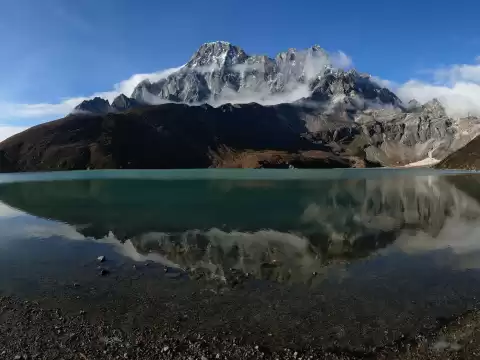
| No of people | Price per person |
|---|---|
| 1 - 1 | $1,550 |
| 2 - 4 | $1,275 |
| 5 - 8 | $1,250 |
| 9 - 12 | $1,225 |
| 13 - 20 | $1,200 |