
Top Faqs for Annapurna Base Camp Trek
18 Oct 2024
The Annapurna Base Camp Trek is one of the most iconic trekking routes in Nepal, offering an extraor...

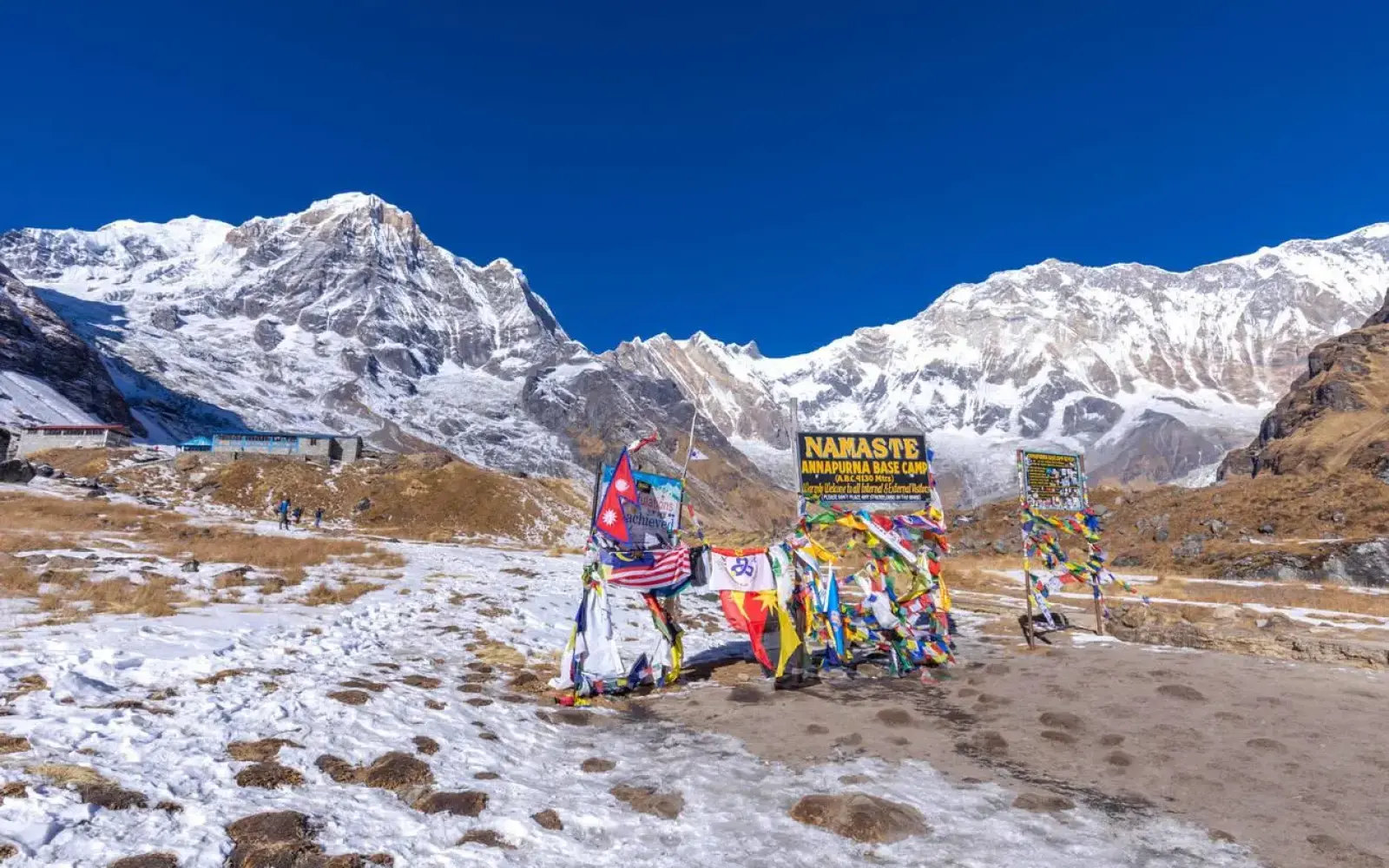
The Annapurna Base Camp Trek from Pokhara is one of Nepal’s most rewarding Himalayan journeys, combining spectacular mountain scenery, traditional Gurung and Magar villages, lush forests, terraced hillsides, and high-altitude landscapes. Organized by Himalayan Forever Treks, this six-day itinerary is designed for trekkers who want to experience the famous Annapurna Sanctuary while beginning and ending their journey in Pokhara.
The trail gradually climbs from the lower foothills to Annapurna Base Camp at 4,130 meters, offering changing landscapes and impressive views of the Annapurna range. Along the way, trekkers pass through Chhomrong, Bamboo, and Deurali before reaching the dramatic mountain amphitheater surrounding base camp.
The Annapurna Base Camp Trek from Pokhara provides an opportunity to explore one of the most iconic trekking regions in Nepal within a relatively short period. Pokhara serves as the natural starting point for the adventure, with a scenic drive taking trekkers toward Jhinu Danda before the walking section begins. From there, the route enters the Annapurna Sanctuary and follows mountain trails through villages and forests.
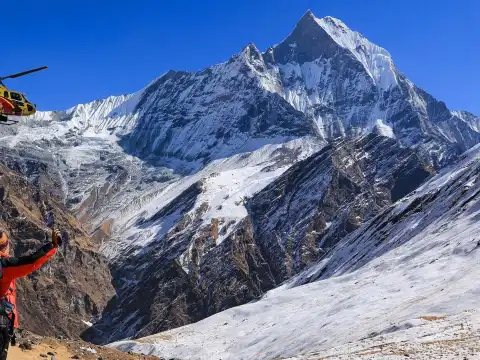
With Himalayan Forever Treks, the itinerary combines cultural encounters with progressively higher mountain terrain. The trek passes through Chhomrong, Bamboo, and Deurali before reaching Annapurna Base Camp, where towering peaks surround the sanctuary. The return journey follows a descending route toward Bamboo and Jhinu Danda before the final drive back to Pokhara.
Choosing the Annapurna Base Camp Trek from Pokhara allows travelers to experience several aspects of Nepal in one journey. The route moves through diverse environments, beginning with green hills and cultivated terraces and gradually entering alpine landscapes. The contrast between peaceful villages, forested trails, waterfalls, and enormous Himalayan peaks makes the trek particularly memorable.
Another attraction is the combination of adventure and cultural exploration. Trekkers encounter local settlements and traditional mountain lifestyles while enjoying views of some of the region’s major peaks. Himalayan Forever Treks can provide trekking arrangements and logistical support, helping travelers focus on the walking experience and surrounding landscapes.
The main trekking seasons for Annapurna Base Camp are generally spring and autumn. Spring, particularly March through May, brings relatively stable trekking conditions and blooming rhododendrons along many sections of the trail. The forests and hills can be especially colorful during this period, while mountain views are often favorable.
Autumn, particularly September through November, is another popular period because the monsoon season has generally ended and the atmosphere is often clearer. Winter can bring cold temperatures and snow at higher elevations, while the summer monsoon can produce rain, wet trails, clouds, and possible landslides in some areas. Weather conditions can change quickly in the mountains, so trekkers should prepare according to the season.
Pokhara is one of Nepal’s principal tourism centers and an important gateway to the Annapurna trekking region. Located beside Phewa Lake and surrounded by green hills and mountain scenery, the city offers travelers a convenient place to prepare for trekking. Visitors can arrange permits, equipment, transportation, accommodation, and other preparations before heading toward the trail.
For the Annapurna Base Camp itinerary, Pokhara also provides the connection between urban comforts and the Himalayan trail. After completing the trek, travelers return to Pokhara, where they can rest and explore the city. This combination makes Pokhara a practical base for travelers seeking both a mountain adventure and time in one of Nepal’s most popular tourist destinations.
The six-day route begins with a journey from Pokhara to Jhinu Danda, followed by a trek to Chhomrong. The following days lead progressively higher through Bamboo and Deurali before reaching Annapurna Base Camp. After enjoying the mountain scenery at the sanctuary, the route descends through Bamboo to Jhinu Danda, followed by a drive back to Pokhara.
The itinerary combines demanding uphill sections with descending trails and changing mountain environments. The altitude increases significantly between the lower villages and Annapurna Base Camp, so trekkers should maintain a steady pace, stay hydrated, and pay attention to signs of altitude-related discomfort. Himalayan Forever Treks can assist with the organization and logistics of the journey.
Major highlights: Chhomrong, Bamboo, Deurali, Annapurna Base Camp, and Jhinu Danda
The Annapurna Base Camp Trek from Pokhara offers trekkers an opportunity to experience traditional Himalayan villages and observe the everyday lifestyle of local communities. As the trail climbs from Jhinu Danda toward Chhomrong, Bamboo, and Deurali, the surroundings gradually change from subtropical foothills and terraced farmland to mountain forests and alpine landscapes. Stone houses, prayer flags, small teahouses, cultivated fields, and narrow village paths add cultural character to the journey.
With Himalayan Forever Treks, trekkers can experience the region beyond its mountain scenery by spending time in welcoming villages along the route. Chhomrong is one of the prominent settlements on the trail, providing beautiful views of the surrounding mountains and serving as an important stopping point for trekkers heading toward the Annapurna Sanctuary.
The changing Himalayan landscape is one of the defining features of the Annapurna Base Camp Trek. Starting around the lower foothills, the trail passes through green valleys, forests, waterfalls, and terraced hills before entering the higher alpine environment. As the elevation increases, vegetation becomes more sparse, and the surrounding peaks become increasingly prominent.
At Annapurna Base Camp, trekkers arrive in a spectacular mountain sanctuary surrounded by enormous Himalayan peaks. Depending on weather and visibility, the area provides views of Annapurna I, Annapurna South, Hiunchuli, Machhapuchhre, and other mountains of the Annapurna range. The combination of towering peaks and the enclosed sanctuary creates a distinctive high-altitude landscape.
The Annapurna Base Camp Trek from Pokhara brings together natural scenery, mountain culture, and a challenging Himalayan walking experience. The journey from Jhinu Danda to Chhomrong introduces trekkers to the lower mountain villages, while the trail through Bamboo and Deurali gradually leads into the higher elevations of the Annapurna Sanctuary.
Reaching Annapurna Base Camp at 4,130 meters is the central highlight of the trek. The surrounding mountains create a dramatic amphitheater, making the destination an unforgettable setting for photography and mountain observation. The return through Bamboo and Jhinu Danda provides a different perspective of the landscapes experienced during the ascent.
The Annapurna region is home to diverse Himalayan communities whose traditions and livelihoods are closely connected with the surrounding mountains. During the trek, visitors encounter villages where agriculture, tourism, livestock raising, and local trade remain important parts of everyday life. Traditional architecture, cultivated terraces, local food, and community customs contribute to the cultural experience of the journey.
Trekking with Himalayan Forever Treks also provides opportunities to appreciate the cultural side of the Annapurna region while traveling responsibly through local communities. Respecting local traditions, dressing appropriately in villages, asking permission before photographing people, and supporting locally operated teahouses and services can help make the trek more meaningful and sustainable.
The Annapurna region contains a remarkable variety of vegetation because of its substantial differences in altitude and climate. Lower sections of the trail feature subtropical vegetation and cultivated areas, while higher sections transition into temperate forests, rhododendron woodlands, bamboo forests, and alpine vegetation. In spring, blooming rhododendrons can add vibrant colors to sections of the trekking route.
The region also provides habitat for a variety of Himalayan wildlife. Although sightings are not guaranteed, trekkers may encounter birds and smaller forest animals along the trail, while the wider Annapurna Conservation Area supports species such as Himalayan tahr, musk deer, and other mountain wildlife. Trekkers should observe animals from a distance and avoid disturbing their natural environment.
The Annapurna Base Camp Trek from Pokhara is generally considered a moderate to challenging Himalayan trek. The trail includes stone staircases, steep ascents and descents, forest paths, suspension bridges, and sections at high altitude. The itinerary reaches Annapurna Base Camp at 4,130 meters, so trekkers need reasonable fitness and should be prepared for reduced oxygen at higher elevations.
The six-day itinerary with Himalayan Forever Treks involves several consecutive days of walking, making stamina and preparation important. Previous high-altitude trekking experience is helpful but not essential for well-prepared trekkers. Maintaining a comfortable pace, taking adequate breaks, drinking enough water, and following the guidance of trekking staff can make the experience more manageable.
Accommodation along the Annapurna Base Camp route is primarily provided by local teahouses and trekking lodges. These establishments offer basic rooms, generally with beds and blankets, while bathrooms may be shared depending on the location. Facilities become more basic as the trail climbs toward the higher elevations, but staying in mountain lodges provides an opportunity to experience the local trekking culture.
Food is available at teahouses throughout the route, with menus commonly including traditional Nepali dishes and familiar international trekking meals. Dal bhat, consisting of rice, lentils, vegetables, and accompanying dishes, is a popular choice because it provides a substantial source of energy. Other options may include noodles, soups, pasta, potatoes, eggs, bread, and hot drinks.
Trekkers visiting Annapurna Base Camp need to complete the required trekking documentation before entering the trekking area. The Annapurna Conservation Area requires an appropriate conservation-area entry permit, and trekkers may also need the applicable trekking registration or identification documentation required for the route. Requirements can change, so travelers should confirm the latest regulations before departure.
Proper preparation is equally important. Trekkers should arrange transportation, accommodation, appropriate clothing, travel insurance, and necessary documents before beginning the journey. Himalayan Forever Treks can assist with trek planning and logistical arrangements, allowing travelers to prepare for the route according to their itinerary and requirements.
Packing appropriately is essential for a comfortable Annapurna Base Camp adventure because temperatures and weather conditions can change significantly with elevation. Lightweight, moisture-wicking clothing is useful for lower sections, while warm insulating layers become increasingly important as the trail climbs toward Deurali and Annapurna Base Camp. A waterproof jacket and rain protection are also valuable because mountain weather can change quickly.
Footwear should be comfortable, broken-in, and suitable for uneven mountain trails. Trekkers should also carry personal medications, basic first-aid supplies, sun protection, a reusable water bottle, and essential toiletries. Keeping the backpack reasonably light can make long ascents and descents more comfortable.
The Annapurna Base Camp Trek from Pokhara brings together Himalayan landscapes, traditional villages, diverse forests, and spectacular mountain scenery in one remarkable journey. From the lower trails around Jhinu Danda and Chhomrong to the high-altitude environment of Annapurna Base Camp, each stage introduces a different aspect of the Annapurna region.
Reaching 4,130 meters at Annapurna Base Camp provides a memorable culmination to the trek, while the return toward Bamboo and Jhinu Danda offers time to appreciate the landscapes from a different perspective. With careful preparation and the support of Himalayan Forever Treks, trekkers can experience the mountains, communities, and natural beauty of the Annapurna region while creating lasting memories of their journey through Nepal.
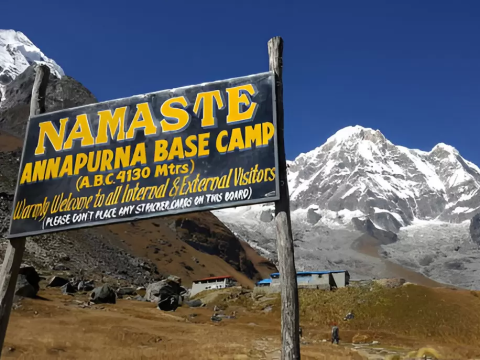
The Annapurna Base Camp Trek is one of the most iconic trekking routes in Nepal, offering an extraor...
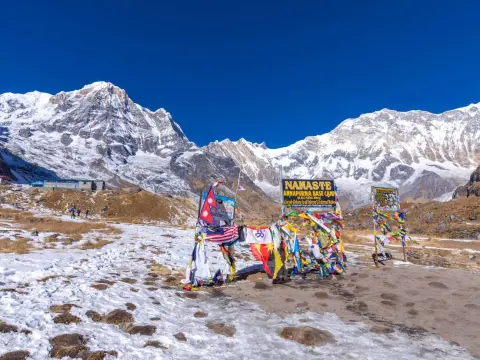
The Annapurna Base Camp (ABC) Trek is one of Nepal’s most iconic trekking adventures, attracting tho...

The Annapurna Base Camp Trek 2026 is one of Nepal’s most iconic trekking adventures, taking trekkers...



